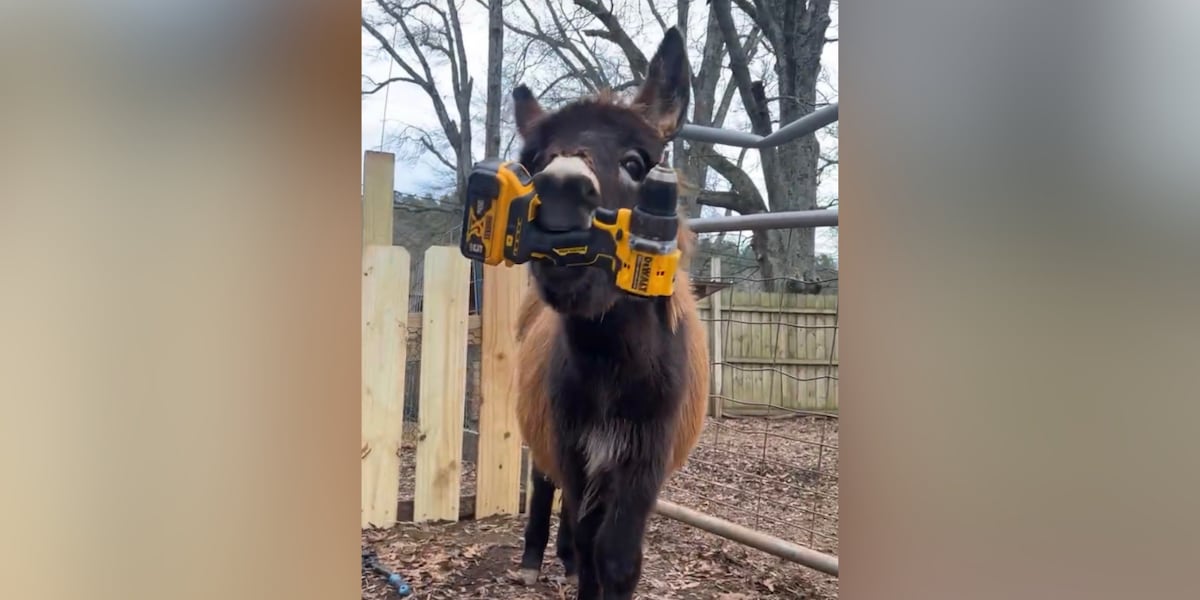
A beloved pet donkey named HeeHaw was tragically shot and killed by a police officer in Cedartown, Georgia, while officers were searching for a missing child. His owner, Hannah Israel, expressed deep sorrow over the loss, stating her farm feels “definitely not the same” without him.
Israel received the devastating news around 12:45 a.m. and learned that HeeHaw was shot after he approached the officers while braying. She emphasized that his behavior was friendly rather than aggressive, describing HeeHaw as a beloved companion who followed her everywhere like a dog.
The incident has left Israel and her family traumatized, sparking questions about how police entered their property. The officer involved is currently on paid administrative leave, and the situation has been turned over to the Georgia Department of Agriculture for investigation. Israel is advocating for better police training regarding interactions with animals and has hired a lawyer to pursue legal action. Additionally, the family has started a GoFundMe to support their legal fees.