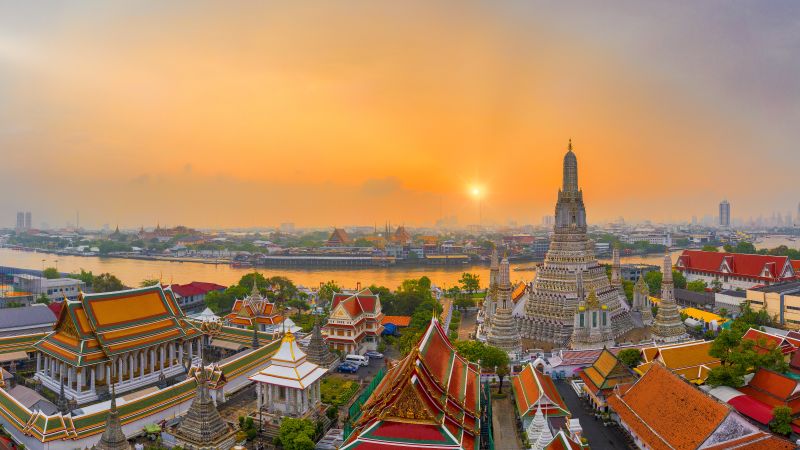
Global Perspectives on Thailand’s Cultural Influence
Editor’s Note
Global Perspectives is a live event series by CNN that gathers international leaders, executives, entrepreneurs, and innovators to discuss shaping global leadership across various sectors. The next event is on October 14 in Bangkok.
The Rise of Asia’s Soft Power
Asia’s soft power, particularly from Japan and South Korea through cultural phenomena like anime and K-pop, has significantly heightened global interest in the region, escalating competition for tourists.
In Southeast Asia, Thailand has historically been a top destination. However, with neighboring countries enhancing their travel infrastructure and policies, Malaysia recently surpassed Thailand as the most visited nation in the region. To reclaim its status, Thailand is leveraging its soft power strengths.
Thailand’s Soft Power Influence
Thailand’s “T-wave,” a designation for its soft power influence, has evolved beyond its culinary reputation. Under former Prime Minister Srettha Thavisin, a National Soft Power Strategy Committee was formed in 2023 to promote 13 key cultural areas including food, festivals, music, film, fashion, and tourism.
The Thai government has financially backed the film industry with incentives that attracted major productions, such as HBO’s “The White Lotus” and Universal’s “Jurassic World: Rebirth,” benefiting from Thailand’s scenic landscapes.
A Cultural Resurgence
The impact of “The White Lotus,” filmed on Koh Samui, resulted in an 88% surge in online searches and a 300% increase in tourism to the island, according to a local tourism executive. The show exemplified how entertainment can effectively bolster the narrative surrounding Thailand as a travel destination.
Lalisa Manobal, known as LISA from BLACKPINK, represents Thailand’s cultural prowess. Her role in “The White Lotus” and her viral solo track, “SaWaDiKa,” reflect how cultural figures can project a nation’s image globally.
The music video for “SaWaDiKa,” which features traditional Thai elements such as Muay Thai and tuk-tuks, makes Thailand’s cultural symbols accessible to a wide audience through popular music.
Thailand as a Wellness Destination
While cultural appeal draws many tourists, Thailand’s wellness industry offers another competitive advantage in Southeast Asia. The country is regarded as a wellness hub, with a diverse market spanning from hot springs to detox retreats.
According to tourism officials, Thailand’s wellness market is rapidly growing, with plans to position the country as a global wellness destination that provides holistic experiences.
Economic Prospects and Cultural Appeal
Despite the enthusiasm surrounding the T-wave, it remains uncertain if Thailand can translate cultural appeal into sustained economic growth comparable to South Korea’s K-wave. Experts emphasize the importance of broader economic development and government investment beyond tourism-led growth.
Thailand aspires to be a hub for digital and AI industries, but execution will be crucial. The country’s unique cultural offerings could be a more sustainable advantage in attracting tourists and businesses alike. Ultimately, Thailand’s true allure lies in its rich culture, cuisine, and landscape.


