Discovery of an Ancient Capybara Tooth Shakes Up Our Understanding of the Atacama Desert
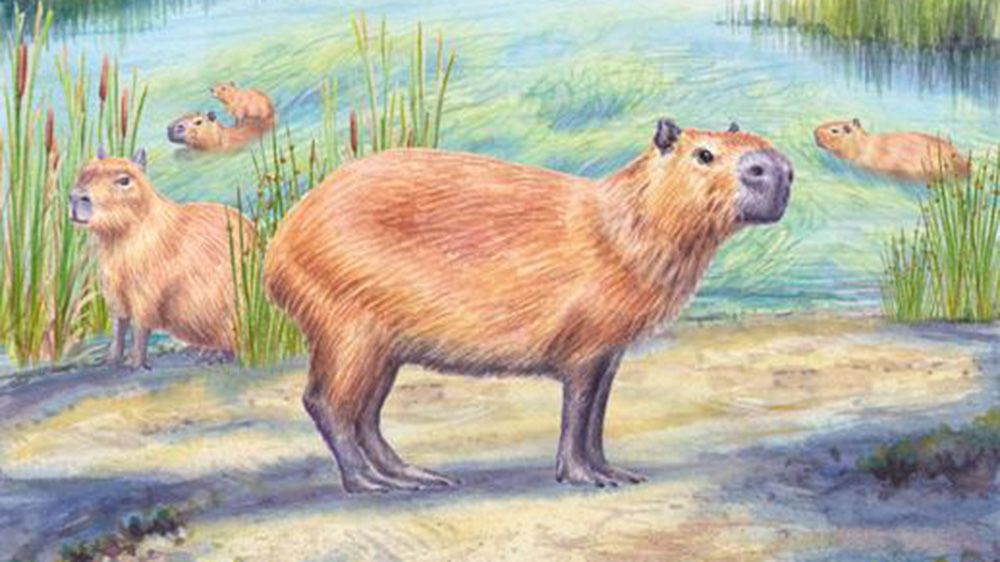
Researchers have recently unearthed a tooth fossil from a large, water-loving ancestor of modern capybaras, dating back approximately 9 million years in the Atacama Desert of northern Chile. This discovery challenges the long-held belief that the Atacama has been persistently arid for the last 40 million years.
Background on the Atacama Desert
Situated in northern Chile, the Atacama Desert is one of the driest places on Earth, receiving less than 0.08 inches (2 mm) of rain per month in its hyperarid regions. It is flanked by the Chilean Coast Range to the west, which blocks Pacific moisture, and the Andes to the east, preventing Atlantic rain.
Recent studies indicate that the hyperarid core of the Atacama began forming between 47.8 million and 33.9 million years ago, significantly earlier than the construction of the Andes, suggesting that these mountain ranges did not cause the desertification.
Significance of the Fossil Find
The tooth belonged to an extinct capybara relative, Hydrochoerus Cardiatherium. This is perplexing because capybaras today are semiaquatic creatures, reliant on freshwater habitats. According to Priscilla Martinez, a co-author of the study, “Finding a capybara tooth in a marine deposit in what today is one of the driest regions on Earth is just freakish.”
This particular fossil was found alongside evidence of a shallow marine environment that existed between 7 million and 10 million years ago. In addition, researchers discovered microscopic plant remains indicating a subtropical forest environment once flourished in the region, which could have supported diverse life forms like crocodiles and various plant species.
Theories on Capybara Migration
While the presence of this capybara relative poses questions about the climatic history of the Atacama, it also raises intriguing possibilities regarding its migration patterns. Researchers theorize that, rather than crossing the towering Andes, these ancient capybaras may have traveled along the western coast of South America, utilizing rivers and wetlands as pathways.
Conclusion
This groundbreaking discovery adds to a growing body of evidence suggesting that the Atacama Desert wasn’t always as inhospitable as it is today. Future studies are likely to reveal more insights into the climate history of this unique desert region and how its ancient ecosystems functioned, debunking myths about its continuous aridity over millions of years. The findings were published in the journal Scientific Reports on September 5.
For further reading, you can access the original study here.


