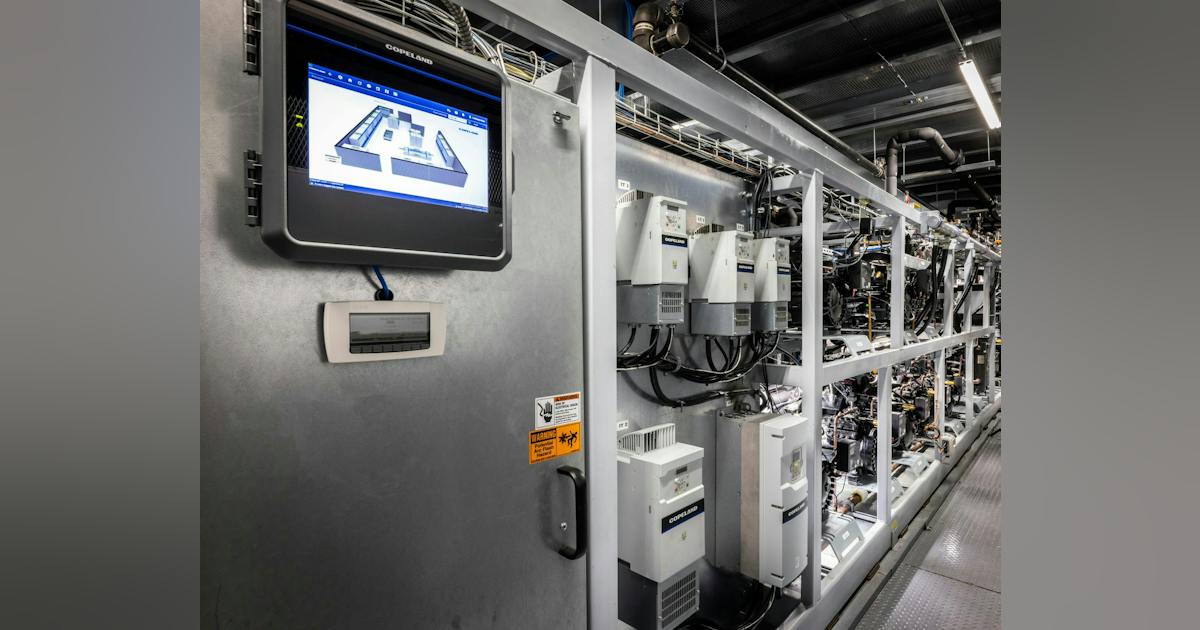
This article provides a comprehensive overview of CO2 refrigeration systems, particularly their growing prevalence in North American food retail and the opportunities they present for HVACR contractors. Key points include:
Growth of CO2 Refrigeration
- Over 4,000 stores currently use CO2 transcritical booster systems; growth is projected to reach 176% by 2028.
Importance of Design and Installation
- Proper design, installation, startup, and maintenance are crucial for the system’s long-term performance.
- Quality installation prevents excessive service issues and reinforces confidence in CO2 technology.
Differences from Legacy HFCs
- CO2 (R-744) operates at higher pressures (over 1,400 psig) and has unique characteristics:
- Low critical point: Below 75°F, it runs in subcritical mode; above, in transcritical mode.
- High triple point: Charging below 60.4 psig can cause solidification (dry ice).
Essential Installation Practices
- Ensure clean, properly installed piping to facilitate startup.
- Best practices include:
- Brazing with inert gas.
- Deburring pipes to avoid debris.
- Protecting open pipe ends.
- Following installation specs closely.
Pre-Startup Verification
- A thorough point-to-point check is necessary to confirm all controls and connections function correctly before powering up the system.
- Important checks include confirming piping ratings, performing pressure tests, and ensuring all valves and sensors are properly connected.
Startup Sequence
- Follow a specific sequence starting with vapor charging to avoid causing issues at the triple point.
- Monitor:
- Flash tank fill.
- Liquid line opening.
- Compressor staging based on load.
Commissioning Process
- Commissioning is critical for system stability. Evaluate performance under real-world conditions for at least 30 days to ensure smooth operation.
First-Year Maintenance
- Early system performance indicates potential issues; focus on monitoring filter conditions to assess overall cleanliness and health.
Long-Term Reliability
- After the first year, management should shift to maintaining an operational baseline to ensure continued reliability.
Summary
CO2 refrigeration presents a unique, sustainable opportunity for HVACR contractors to capitalize on. Proper training, adherence to best practices, and ongoing evaluation can lead to efficient, reliable systems and reduced maintenance challenges.


