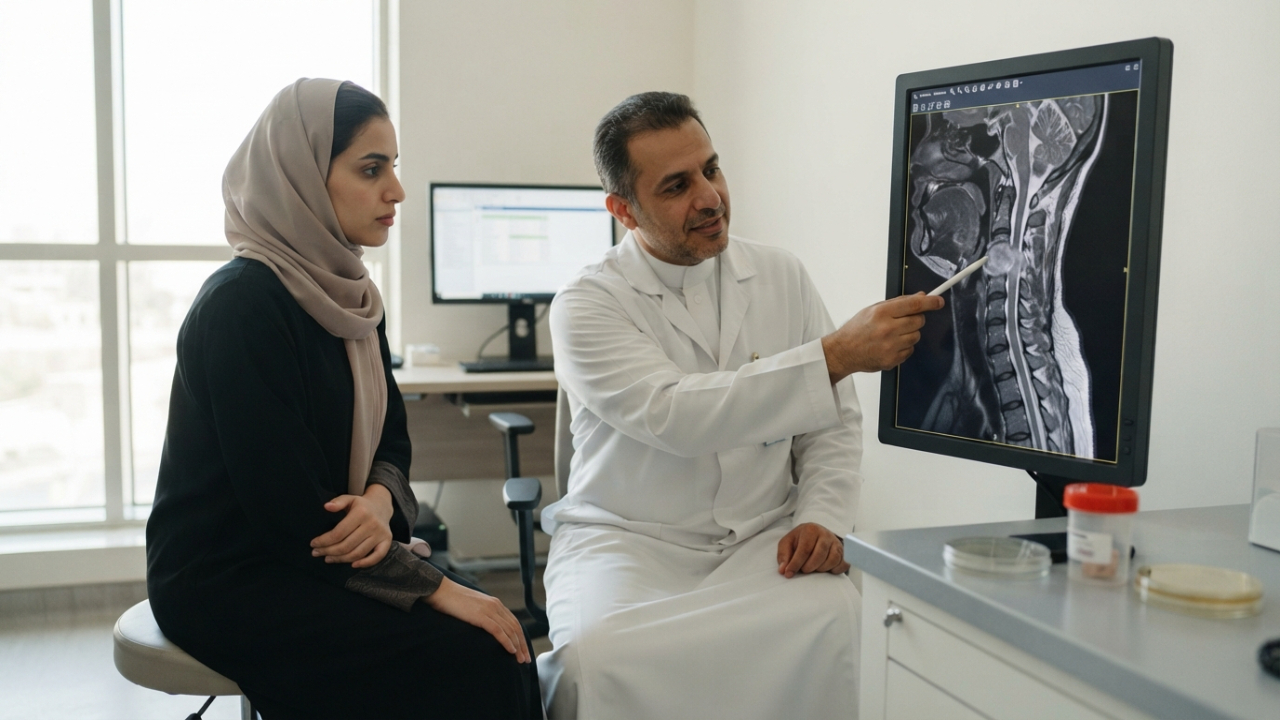
This article reports a rare case involving a 29-year-old Saudi woman diagnosed with an infection caused by Mycobacterium riyadhense. Initially treated as neurosarcoidosis due to non-necrotizing granulomas found in a biopsy, the true cause of her symptoms was revealed two months later when a lab culture confirmed the presence of the bacterium.
Key Points:
- Initial Symptoms: The woman presented with severe neck pain, numbness, weakness, urinary urgency, and swallowing difficulties.
- Imaging Findings: MRI revealed a mass in the spinal canal, initially thought to be lymphoma.
- Treatment and Diagnosis: Steroids were started to reduce swelling, leading to a temporary improvement. Subsequent biopsies and tests initially ruled out infections, supporting a neurosarcoidosis diagnosis.
- Identification of the Infection: After two months of culture incubation, M. riyadhense was confirmed through biochemical analysis and genetic sequencing.
- Treatment Outcomes: A four-drug tuberculosis regimen led to complete symptom relief, although the patient discontinued treatment after 10 months.
Questions Addressed:
- What is Mycobacterium riyadhense? A slow-growing, nontuberculous mycobacterium, primarily found in Saudi Arabia and often affecting the lungs.
- Was the mass in her brain? No, it was located in the spinal canal and compressed the spinal cord.
- Why was the initial diagnosis neurosarcoidosis? Due to the presence of granulomas in the biopsy and absence of infection markers.
- How was the correct diagnosis made? A prolonged culture revealed the presence of the bacterium.
- Is this infection contagious? No, M. riyadhense does not spread between individuals.
- Is there a treatment? Yes, a tuberculosis treatment regimen was effective.
The case emphasizes the complexity of diagnosing infections that mimic inflammatory diseases and the importance of thorough testing.


