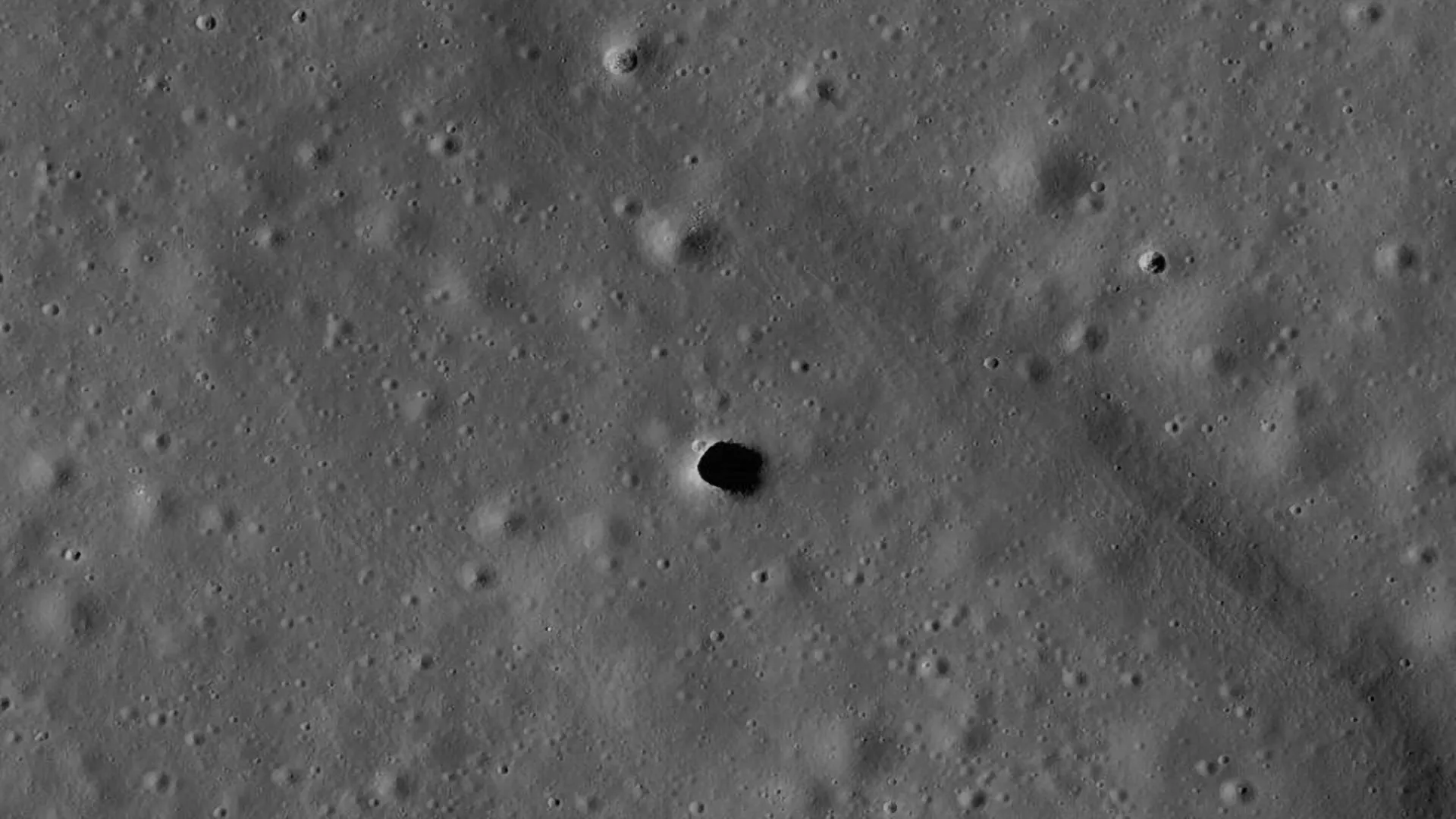
NASA has selected a Planetary Science Institute-led proposal to investigate whether a large cave extends underground from the Marius Hill Pit on the Moon. This project, known as GIMLI (Geophysical Instruments for Marius Lunar pit Investigation), aims to provide astronauts with natural protection from radiation and temperature extremes. Funded by NASA’s PRISM program, GIMLI will utilize a lander and rover supported by the Commercial Lunar Payloads Services initiative.
PSI’s Associate Director Than Putzig leads the project, collaborating with Honeybee Robotics to design and build the necessary equipment. The team will employ ground-penetrating radar, seismic sensors, and a gravimeter to explore potential underground voids. Cameras will document the lunar surface and pit walls.
Even if no cave is found, the mission may enhance understanding of the Marius Hill Pit’s formation and lunar geology, revealing insights into volcanic activity. Notably, confirming the presence of a lava tube would deepen knowledge of the Moon’s volcanic history, paralleling terrestrial formations. The project includes partnerships with various academic institutions and aims to explore both subsurface properties and the exposed geological layers of the lunar region.


