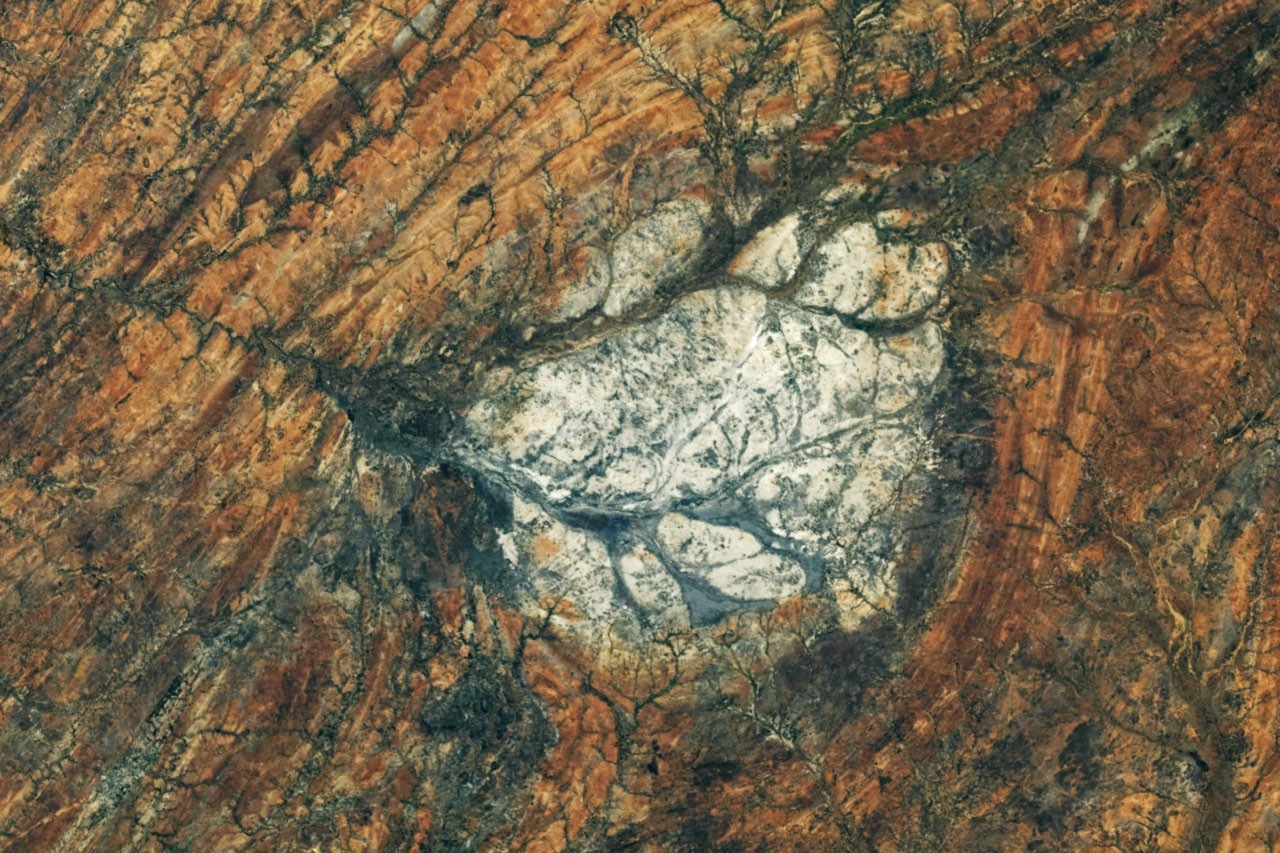
The Saririaky Anorthosite Massif: A Geological Marvel
From the vantage point of an astronaut aboard the International Space Station, a striking patch of bright rock in southern Madagascar stands out against the arid landscape. This igneous rock, known as anorthosite, is more commonly associated with the Moon, where it comprises the highly reflective areas known as the lunar highlands.
Key Features of Anorthosite
Anorthosite is an intrusive igneous rock formed from the slow cooling of magma beneath the Earth’s surface, resulting in large mineral crystals. The Saririaky anorthosite massif, captured in a photograph dated August 28, 2026, showcases this unique rock type. Scientists estimate that its formation took place during the late Precambrian period, over 600 million years ago, covering an area of about 100 square kilometers.
Geological Insights
Research indicates that the Saririaky massif lies within a ductile shear zone, characterized by high pressures and temperatures that have metamorphosed the surrounding rocks. This deformation process can be linked to the formation of the supercontinent Gondwana, which saw the collision of several landmasses, including parts of Africa, India, and Antarctica.
Interestingly, there is a hypothesis that another anorthosite massif, located about 60 kilometers to the north, may have been separated from the Saririaky massif during this geological activity, forming a boudinage structure.
The Connection to the Moon
Anorthosites on Earth are invaluable for lunar research. The lunar anorthosites date back more than 4 billion years, having crystallized from the Moon’s early magma ocean. While samples from the Apollo missions provided important insights, their limited quantity has led researchers to examine terrestrial analogs. The anorthosites found in the Beartooth Mountains of Montana are particularly relevant due to their close compositional similarity to their lunar counterparts.
Visual Documentation
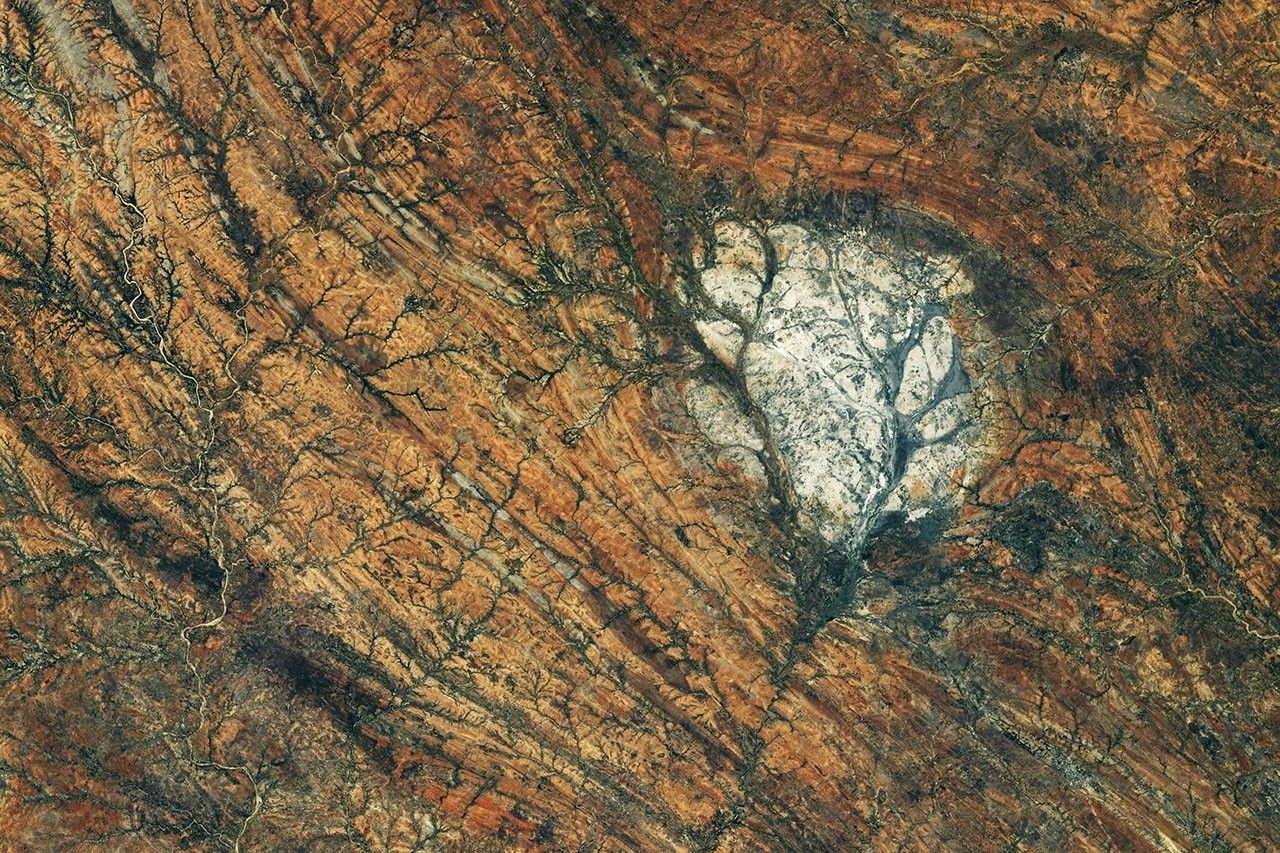
Around the distinctive white outcrop, you can see the surrounding orange rocks marked by linear north-south patterns, illustrating the area’s dynamic geological history.
References
- Ashwal, L.D., et al. (1998). Geology, petrology and isotope geochemistry of massif-type anorthosites from southwest Madagascar. Contributions to Mineralogy and Petrology, 133, 389-401.
- Earth & Solar System (2017) Impact Shock State of the Lunar Highlands. Accessed October 2, 2026.
- Martelat, J., et al. (2000). Strain pattern and late Precambrian deformation history in southern Madagascar. Precambrian Research, 102, 1–2.
- NASA Earth Observatory (2020) Montana’s Moon-Like Rocks. Accessed October 2, 2026.
This unique feature in Madagascar offers not only a stunning glimpse from space but also a window into Earth’s complex geological processes that link it to our celestial neighbor, the Moon.


