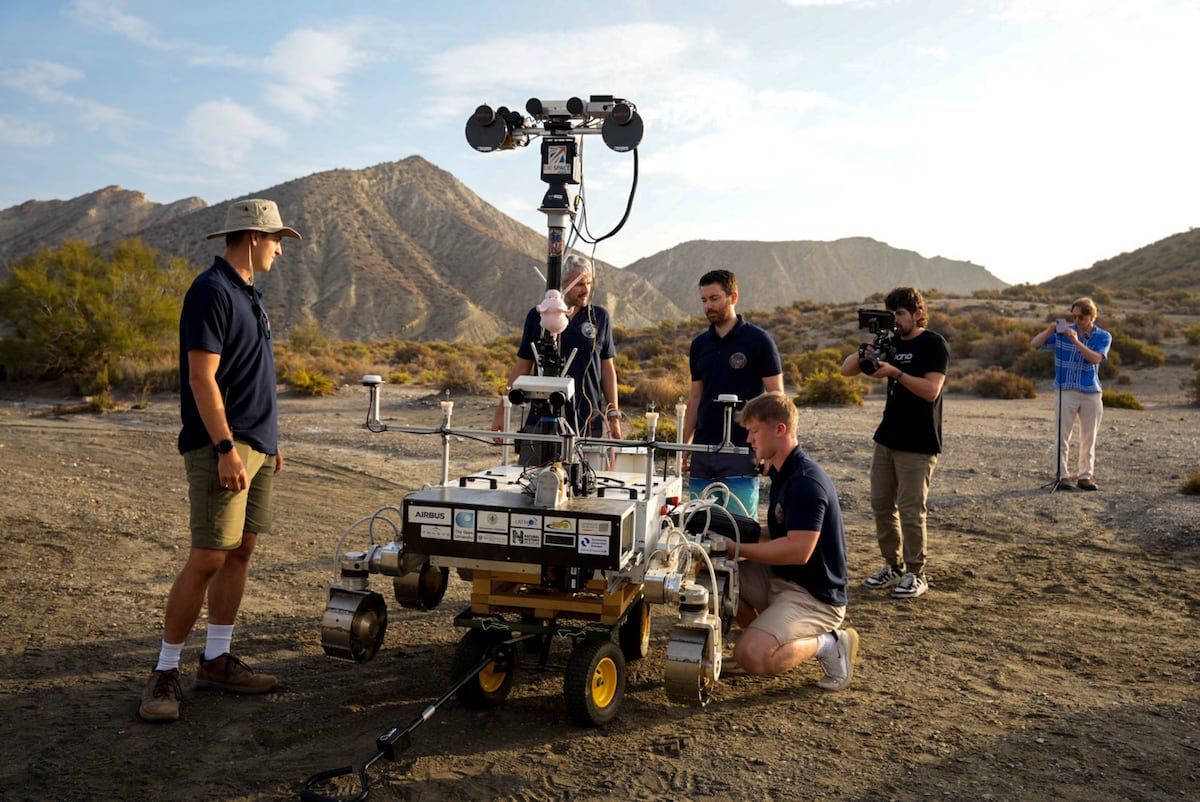
A team of engineers and scientists is testing a prototype rover named Charlie in the Tabernas desert in Almería, Spain. This rover is part of the ExoMars mission, which aims to land the first European rover on Mars in 2030 to search for signs of past or present life.
The testing environment was chosen for its geological and terrain similarities to Mars. Benoit Pouffary, chief exploration engineer with ESA, stated that Almería provides a faithful representation of Martian conditions. The rover underwent tests over two weeks, assessing how it navigated various terrain types, while operators controlled it from a mission center in Turin, Italy.
Charlie, designed to improve upon previous Mars exploration technology, will not actually travel to Mars. Instead, the data and learnings gained from its testing will inform the Rosalind Franklin rover, scheduled for launch in 2028. Rosalind Franklin will drill into the Martian surface to collect and analyze samples for potential signs of life.
The tests highlighted the complexities of operating in Mars-like conditions, with Charlie demonstrating intricate navigational skills. Although the distance between Almería and Turin is much shorter than that to Mars, the team gained valuable insights into remote operation, preparing them for future exploration efforts.


