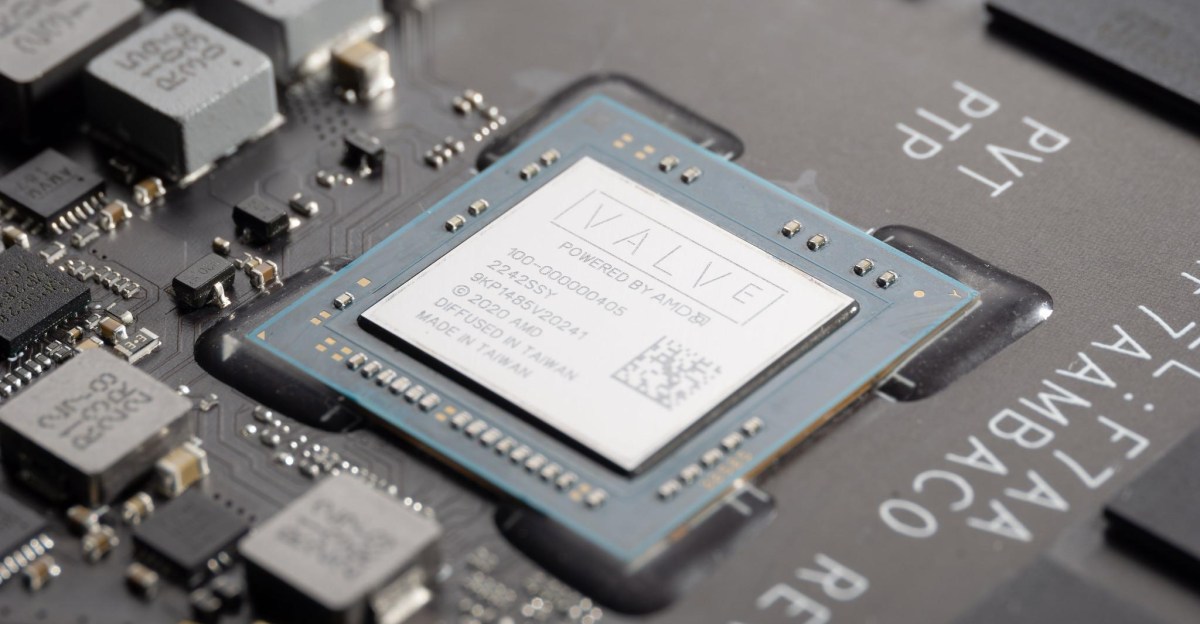
The Steam Deck, now four and a half years old, has many gamers eagerly awaiting a sequel, the Steam Deck 2. Valve has indicated that this upgrade hinges on the availability of a chip offering a significant performance and efficiency leap. Recently, there have been indications that such a chip, codenamed “AMD Gainsborough,” has emerged, though some skepticism remains.
Leaker sources, including Moore’s Law is Dead and IT Home, report that AMD’s latest drivers have revealed this previously unknown chip, which is semi-custom and built on TSMC’s N3P process. The codename “Gainsborough” alludes to a character from Final Fantasy VII, following the naming tradition established by the original Steam Deck’s chip, “Aerith.” AMD has been sending test equipment for Gainsborough, suggesting that a customer, possibly Valve, is evaluating its fit for a device.
The Gainsborough chip is sized at 25mm by 25mm, the same size as AMD’s upcoming Ryzen Z3 and Z3 Extreme handheld chips. This parallel hints at potential specs, including a power envelope targeting around 15 watts, in line with the current Steam Deck.
However, there are a few caveats. First, semi-custom chips may not end up in the original devices they were intended for—evidence suggests that the Steam Deck’s own chip was originally designed for other applications. Second, the codenames “Aerith,” “Sephiroth,” and “Gainsborough” are chosen by AMD, not Valve, as revealed during a visit to Valve’s headquarters. Lastly, while 25mm by 25mm may seem small, it’s larger than the original Steam Deck’s Aerith chip, which hints at possible design efficiency elements that could make it suitable for the next generation of handheld devices.