Binghamton University Launches Innovative Research Cluster to Combat AI-Generated Fake Media
Binghamton University has just established a new research cluster within its Department of Electrical and Computer Engineering (ECE) aimed at tackling the growing issue of fake images and videos produced by artificial intelligence (AI). Rather than focusing solely on advanced detection methods, researchers are emphasizing the importance of real-world physics in determining the authenticity of digital content.
The Cyber-Physical AI Trust and Integrity (CAITI) research cluster, announced recently, seeks to understand and enhance the trustworthiness of digital evidence—an increasingly vital aspect of modern society. According to Professor Indranil Bhattacharya, Chair of ECE, the department has long been investigating the physical foundations necessary for establishing trust in technology, covering areas from sensor forensics to hardware security.
Innovations in AI Detection
What sets CAITI apart is its focus on “physical anchors” that indicate how content was produced. Unlike generative AI models, which fail to leave these subtle markers, real recordings will inherently reflect their physical context—characteristics such as unique sensor imperfections and electrical grid fluctuations will always be present in genuine recordings.
Yu Chen, a leading professor in the CAITI cluster, stated, “As AI improves in synthesizing various forms of media, our reliance on software alone for trust diminishes. We must incorporate physical anchors as primary roots of credibility in the digital space.”
A Collaborative Endeavor
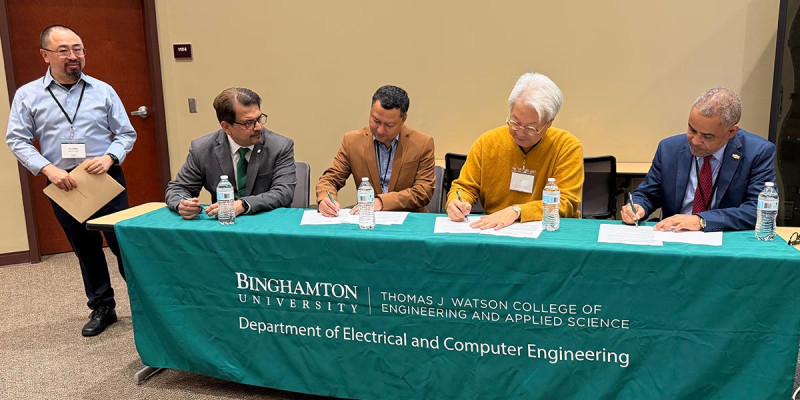
To amplify its reach and impact, CAITI has partnered with Virginia State University (VSU), solidifying a research alliance aimed at fostering collaboration between faculty and enhancing opportunities for doctoral students. This partnership reflects a broader commitment by Binghamton University to cultivate ties with historically Black colleges and universities (HBCUs).
Dean Atul Kelkar of Watson College emphasized the value of these partnerships in addressing pressing societal challenges. “Bringing together our resources and expertise allows us to tackle these challenges more effectively,” he said.
Launch Event Highlights
The CAITI launch featured notable speakers including Professor Kevin Fu from Northeastern University, who delivered the first Distinguished Lecture on sensor security, as well as discussions centered on digital forensics and sensor fingerprinting. The event also presented numerous networking opportunities, bolstered by collaborations with organizations like the IEEE Binghamton Section and the Griffiss Institute.
“Inaugurating CAITI alongside our Distinguished Lecture and partnership with VSU allows us to lay the groundwork for innovative research, partnerships, and discoveries,” Bhattacharya commented.
This initiative represents a pivotal step towards ensuring the integrity and trustworthiness of digital content in an age increasingly manipulated by artificial intelligence.


