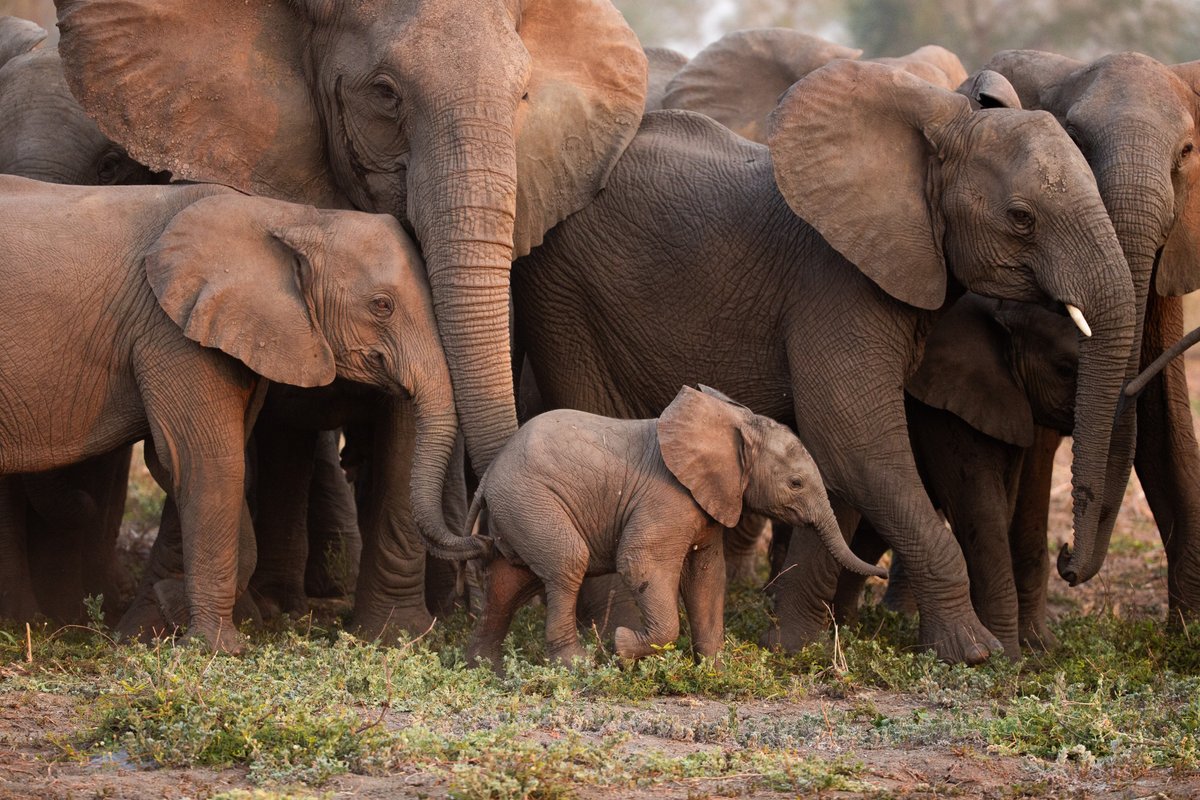
In February 2020, behavioral ecologist Mickey Pardo observed a remarkable event in Kenya’s Samburu National Reserve: a female African elephant named Matisse giving birth. Following the birth, Matisse called to her newborn using deep vocalizations known as “rumbles,” which Pardo likened to the sound of an idling truck engine. Another adult elephant, likely Matisse’s sister, responded from a distance, and the family reunited through a series of these rumbling calls.
What these calls signify has long been a mystery, but a new study led by Pardo and his team, published in Scientific Reports, provides insights. They analyzed hundreds of rumble recordings from a separate population of African elephants in Amboseli National Park, Kenya. The research identified various types of rumbles: calls to calves, long-distance contact rumbles, rumbles indicating group movements, and several types of greeting calls.
The researchers noted that they often recorded overlapping calls, which they termed “choruses.” Unlike the iconic trumpets of elephants, these rumbles are low-pitched, resembling growls or thunder. Using machine learning algorithms, they could predict elephant behavior based on these sounds better than chance, hinting at similar acoustic properties during certain behaviors.
Sara Keen, a co-author of the study, expressed excitement about using these models to interpret elephant communication. They noted instances of “vocal convergence,” where rumbles became progressively similar, a phenomenon previously observed in other communicative animals like parrots and dolphins. This convergence occurred particularly during instances of coordinated group behavior, suggesting potential agreement, but this remains a hypothesis needing further exploration.
The study emphasizes the importance of combining computational analyses with real-world behavioral observations, as highlighted by zoologist Arik Kershenbaum. Keen envisions applying similar research methods to analyze calls from other species known for chorusing, like orcas and crows.
In conclusion, understanding animal communication goes beyond analyzing sounds in isolation; it requires integrating rich behavioral data with advanced algorithms to unravel the complexities of what animals are conveying.


