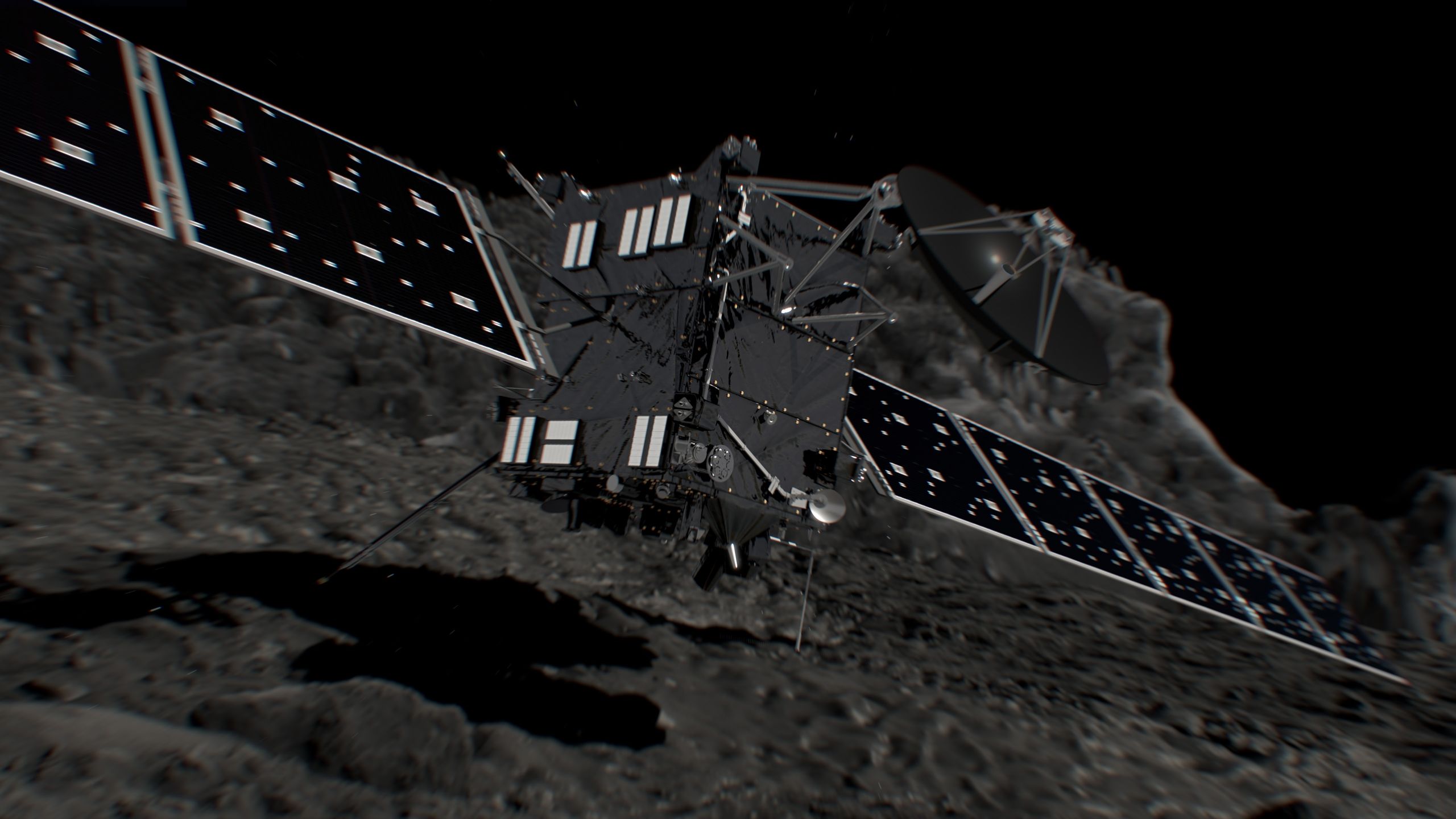
On September 30, 2016, the European Space Agency’s Rosetta spacecraft concluded its historic mission by crashing into the comet it had been studying for two years, comet 67P/Churyumov-Gerasimenko. Launched in 2004, Rosetta spent over a decade journeying through space, marking the first time a spacecraft had orbited a comet.
During its mission, Rosetta not only captured stunning images of 67P but also monitored its changes as it approached the sun, providing invaluable data about the composition and behavior of comets. One of the mission’s highlights was the landing of the Philae lander, which despite its unconventional landing, achieved key scientific goals.
As the comet moved away from the sun and Rosetta faced power limitations, mission scientists chose to crash-land the spacecraft gently to ensure the continued collection of data. Over 14 hours, Rosetta descended at a slow pace, monitored closely by the ESA control center in Germany. The impact, at about 2 mph, marked the end of a successful mission that greatly advanced our understanding of the solar system’s origins.
Patrick Martin, the mission manager, declared the mission complete, emphasizing its significance: “That was pure science at its best.” Rosetta’s journey has had a lasting impact on comet science, solidifying its place in space exploration history.


