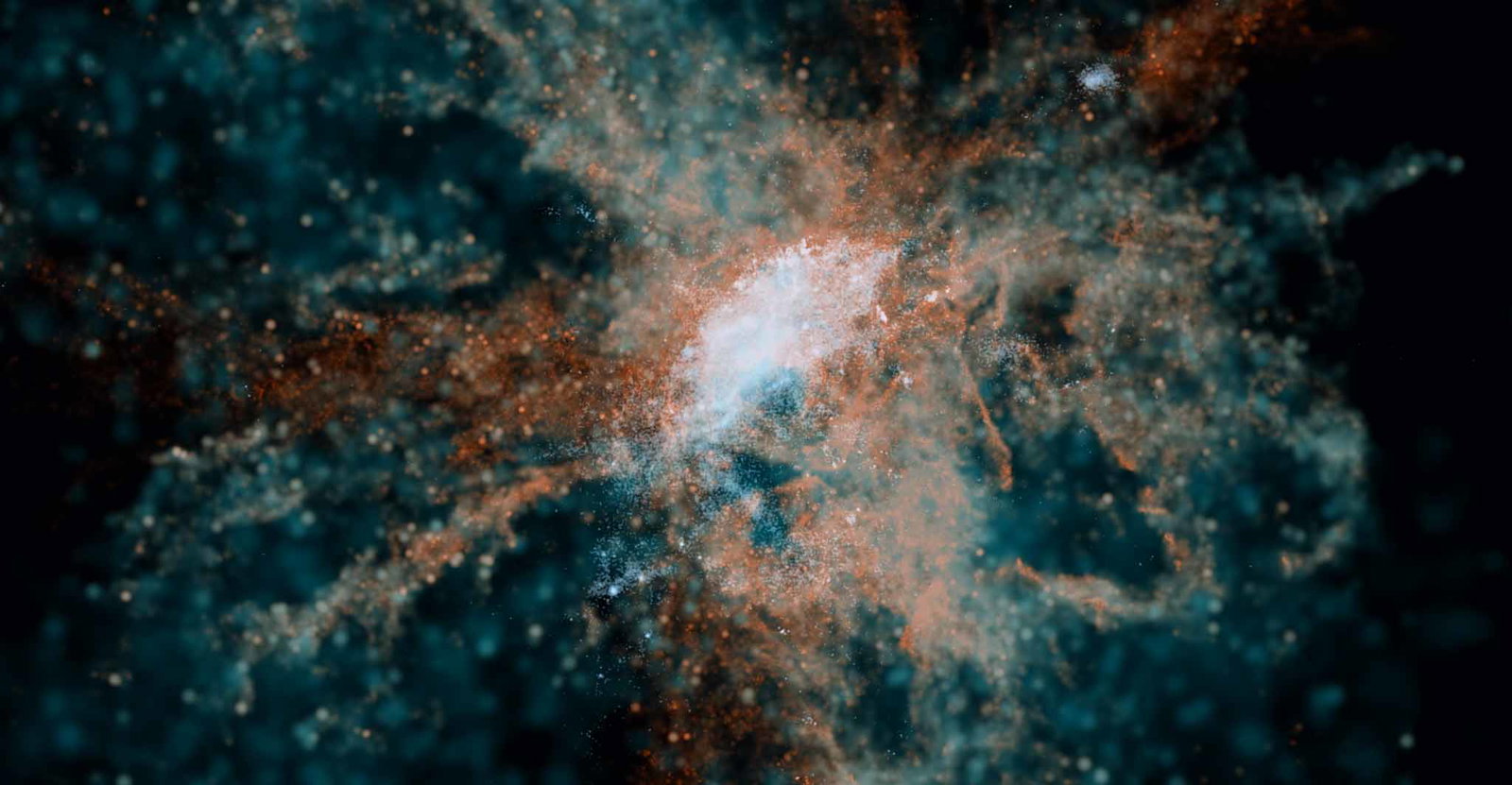
The James Webb Space Telescope (JWST) has made significant discoveries about the early universe, challenging previous assumptions about the presence of heavy elements shortly after the Big Bang. Researchers from the University of Arizona reported in Nature Astronomy that unexpected amounts of oxygen and carbon were found to exist just 500 million years post-Big Bang, indicating that galaxies were producing and dispersing these heavy elements far earlier than anticipated.
Key Findings:
- Early Universe Composition: JWST observations revealed heavy elements in greater quantities than expected, suggesting that the universe was more complex than just hydrogen and helium.
- Baryon Cycling: The study introduces the concept of baryon cycling, where matter flows in and out of galaxies, leading to the dispersion of heavy elements into surrounding space.
Implications:
This rapid enrichment of the universe may explain the challenges astronomers face in locating pristine gas that contains the first generations of stars. The research highlights that heavy elements were not only produced but also spread throughout the cosmos, influencing the formation of new stars and galaxies.
The full study can be accessed in Nature Astronomy here. If you have any further questions or wish to discuss this exciting development in astronomy, feel free to reach out!


