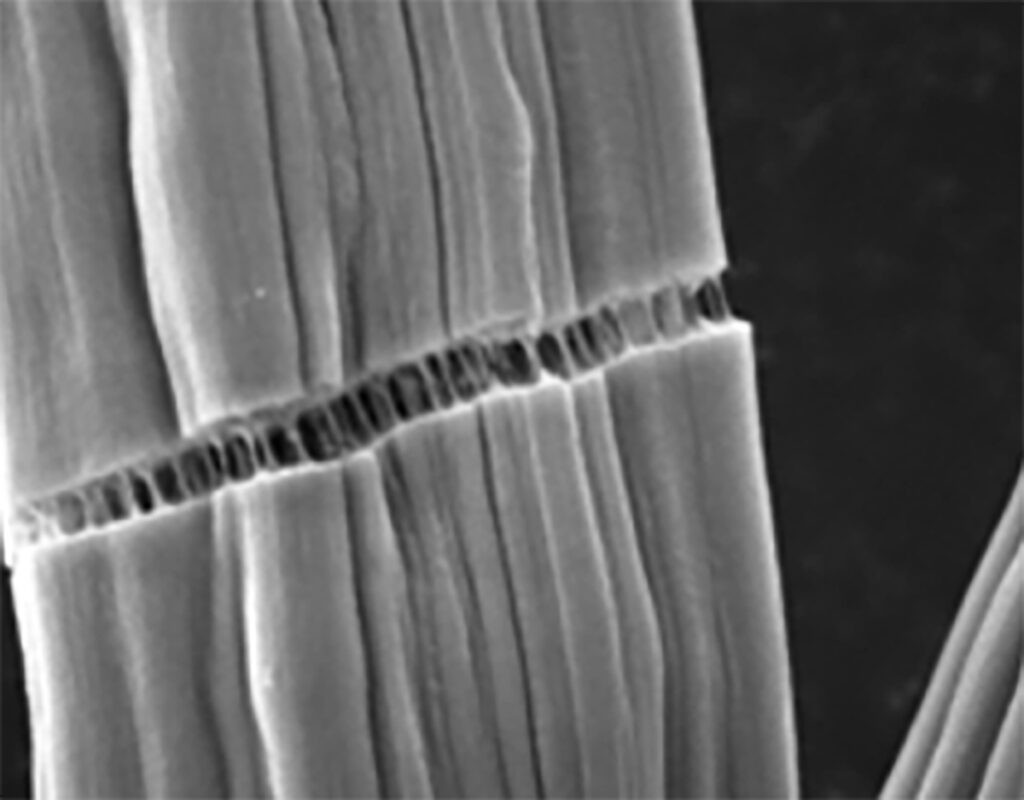
Researchers at Washington University in St. Louis have developed a lignin-based renewable carbon fiber that meets automotive standards for strength and elasticity. This innovation uses significantly less petroleum-derived precursor material, reducing production costs and carbon emissions compared to conventional carbon fiber.
Key Highlights:
-
Lignin Utilization: The team used lignin, a biopolymer waste product from the paper and biorefining industries, to enhance carbon fiber production methods rather than relying solely on synthetic polyacrylonitrile (PAN), which is costly and environmentally taxing.
-
Cost Efficiency: By integrating lignin, they cut PAN usage by 50% and reduced production costs by 25%, while also minimizing carbon emissions.
-
Performance Enhancement: The researchers introduced single-walled carbon nanotubes to improve the material’s crystallization alignment, thereby enhancing mechanical properties akin to reinforcing rebar in concrete.
-
Three-Step Process: This includes creating a nanotube template, running the precursor solution through wet spinning and heat treatment, and optimizing carbonization to maximize crystallite content and orientation.
This novel carbon fiber could have applications beyond automotive, potentially benefiting sectors like sports equipment and wind turbines.
For further details, the research was published in the journal Matter and can be accessed here.

