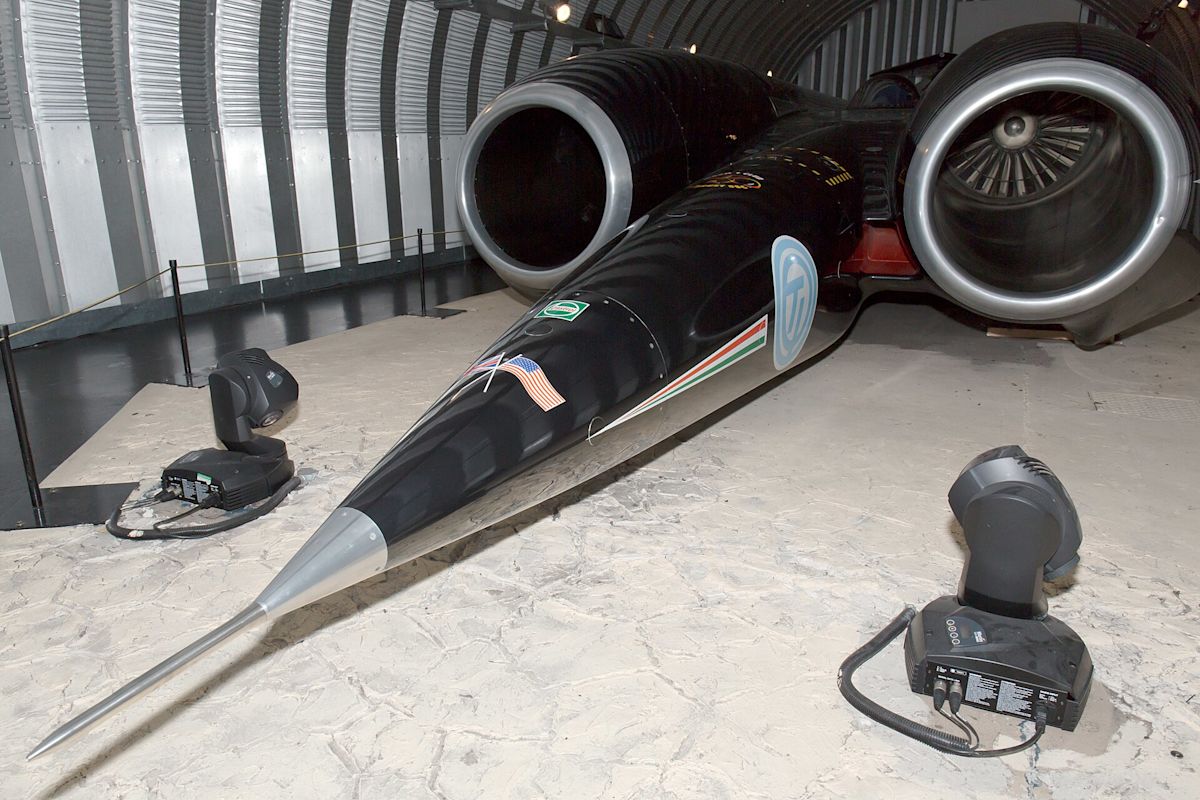
On September 25, 1997, Squadron Leader Andy Green made history by driving the ThrustSSC at a record-breaking speed of 714.144 mph, officially becoming the fastest car on Earth. This achievement not only eclipsed the previous land speed record held by the Thrust2 but also demonstrated the feasibility of a wheeled vehicle reaching such extraordinary speeds, setting the stage for the first supersonic land speed record just weeks later.
### Context of the Record
The land speed record ThrustSSC targeted was previously held by Thrust2, which averaged 633.468 mph in 1983. However, the ambition of the ThrustSSC was far greater, aimed at surpassing the sound barrier, leading to the design and construction of a larger, more powerful vehicle.
### Understanding ThrustSSC
Designed by Richard Noble and a team of engineers, ThrustSSC measured 54 feet in length and weighed about 10.5 tons. It was powered by twin Rolls-Royce Spey turbofans, capable of producing around 50,000 pounds of thrust. The strategic placement of the engines ensured stability at high speeds, addressing the challenges posed by aerodynamic shifts.
### The Driver’s Unique Background
Andy Green was not a conventional racing driver but a skilled RAF fighter pilot with a strong academic background in mathematics. He joined the team through a newspaper advertisement seeking someone capable of handling the extreme demands of high-speed driving.
### The Historic Run
The land speed record required two timed runs in opposite directions, with Green achieving an impressive average of 714.144 mph, marking the first official record above 700 mph. This rapid accomplishment demanded precise coordination and swift vehicle preparation within a limited timeframe.
### The Supersonic Achievement
On October 15, 1997, Green returned to Black Rock Desert and reached a two-way average of 763.035 mph, officially breaking the sound barrier. The sonic boom created by this feat was so powerful it caused disturbances in nearby towns.
### A Legacy of Speed
ThrustSSC remains a prominent symbol in automotive history, reflecting the extraordinary engineering challenges of achieving high-speed records, and it continues to inspire future endeavors in motorsport and engineering. Both ThrustSSC and Thrust2 can be seen at the Coventry Transport Museum, providing insight into their impressive designs and the remarkable human stories behind them.

