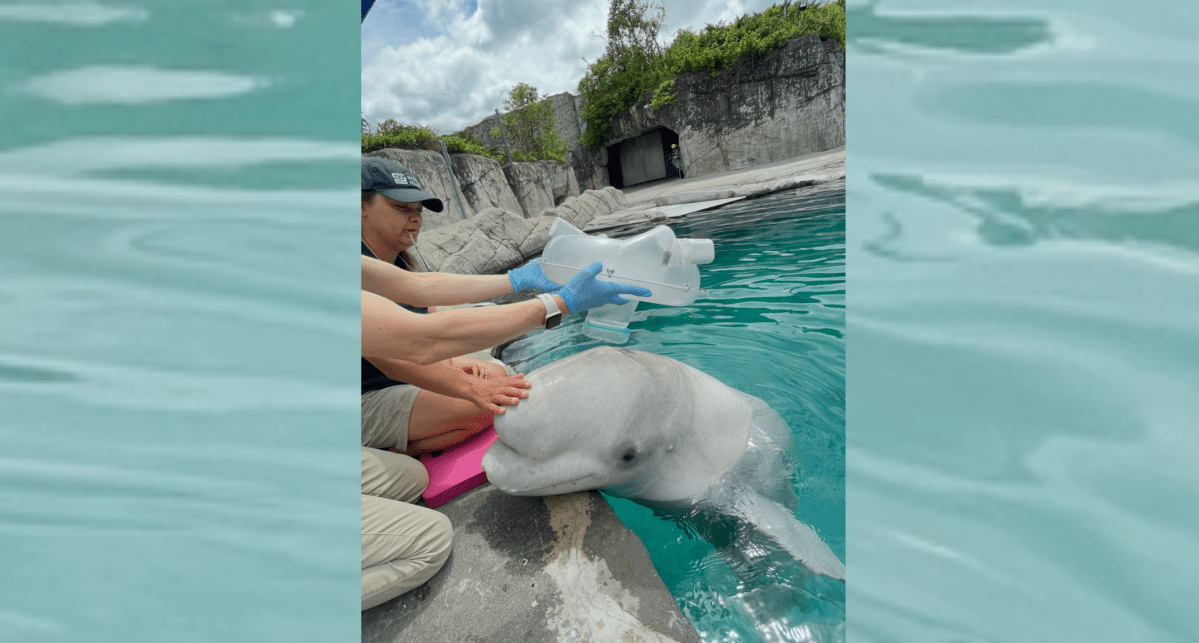
Pneumonia is a significant issue for whales and dolphins, and in an unprecedented case, veterinarians successfully treated a beluga whale named Jetta with bacteriophages—viruses that combat bacteria—after conventional antibiotics failed. Jetta developed chronic pneumonia due to a drug-resistant E. coli infection, prompting a team from Mystic Aquarium and the University of Florida to devise a tailored phage therapy.
Molly Martony, a senior veterinarian, explained that marine mammals like Jetta are particularly vulnerable to gram-negative bacterial infections, which are often resistant to antibiotics. The treatment involved a nebulizer specifically designed for Jetta’s blowhole, allowing her to inhale the bacteriophages directly. Remarkably, this method proved not only effective but also stress-free for Jetta, with no signs of infection recurrence or side effects observed since her treatment began over a year ago.
Martony plans to discuss the treatment’s success at an upcoming symposium and contribute to its research publication. This pioneering approach may provide insights into alternative treatments for multidrug-resistant infections in both marine mammals and humans.


