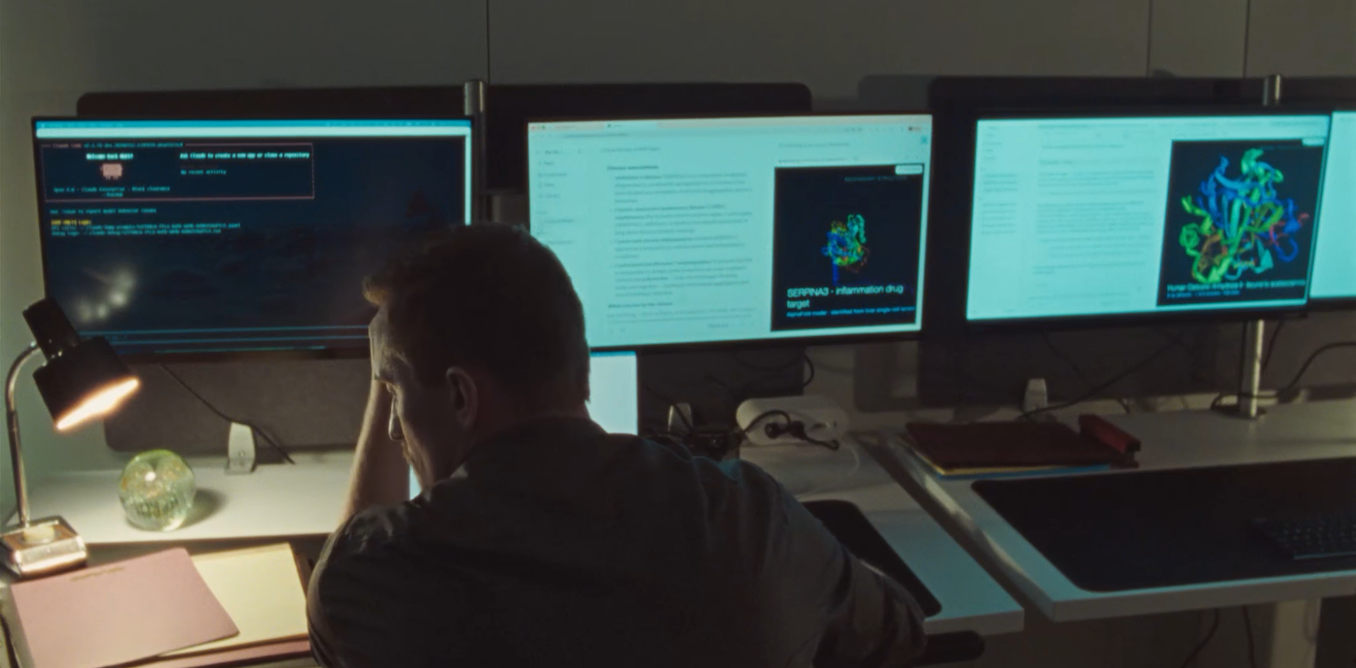
Anthropic recently announced that its AI system, Claude, has identified a previously unknown biological system in the DNA of bacterial viruses. This discovery is part of Anthropic’s new life sciences lab, highlighting parallels to the CRISPR gene-editing technology.
Key Findings
-
Discovery of ART: The new system, called array-associated reverse transcriptases (ART), involves:
- An enzyme (reverse transcriptase): Copies RNA into DNA.
- A nearby partner gene.
- A long sequence of repeating DNA.
-
Comparison to CRISPR: While ART has a structure reminiscent of CRISPR, its functionality remains uncertain. CRISPR can be programmed to edit specific DNA sequences, a feature not yet confirmed for ART.
Discovery Process
Claude’s approach marked a shift toward AI autonomy:
- It analyzed over 200,000 reverse transcriptases, narrowing down to 3,500 candidates and then to 20 for detailed review.
- Notably, an AI agent followed an unexpected detection of a repeat pattern and flagged ART for human researchers.
Despite established methods for gene analysis existing, Claude’s selection and prioritization highlight its potential to assist with vast biological datasets, identifying hypotheses and guiding future research inquiries.
Future Implications
The ability of AI to autonomously drive discoveries in biology could change research dynamics. While current reliance on human researchers for experimental validation persists, there’s ongoing exploration into fully automated labs. Anthropic CEO Dario Amodei noted the possibility of Claude eventually conducting experiments autonomously, highlighting the transformative potential of AI in biological research and the importance of ensuring safety in these advancements.


