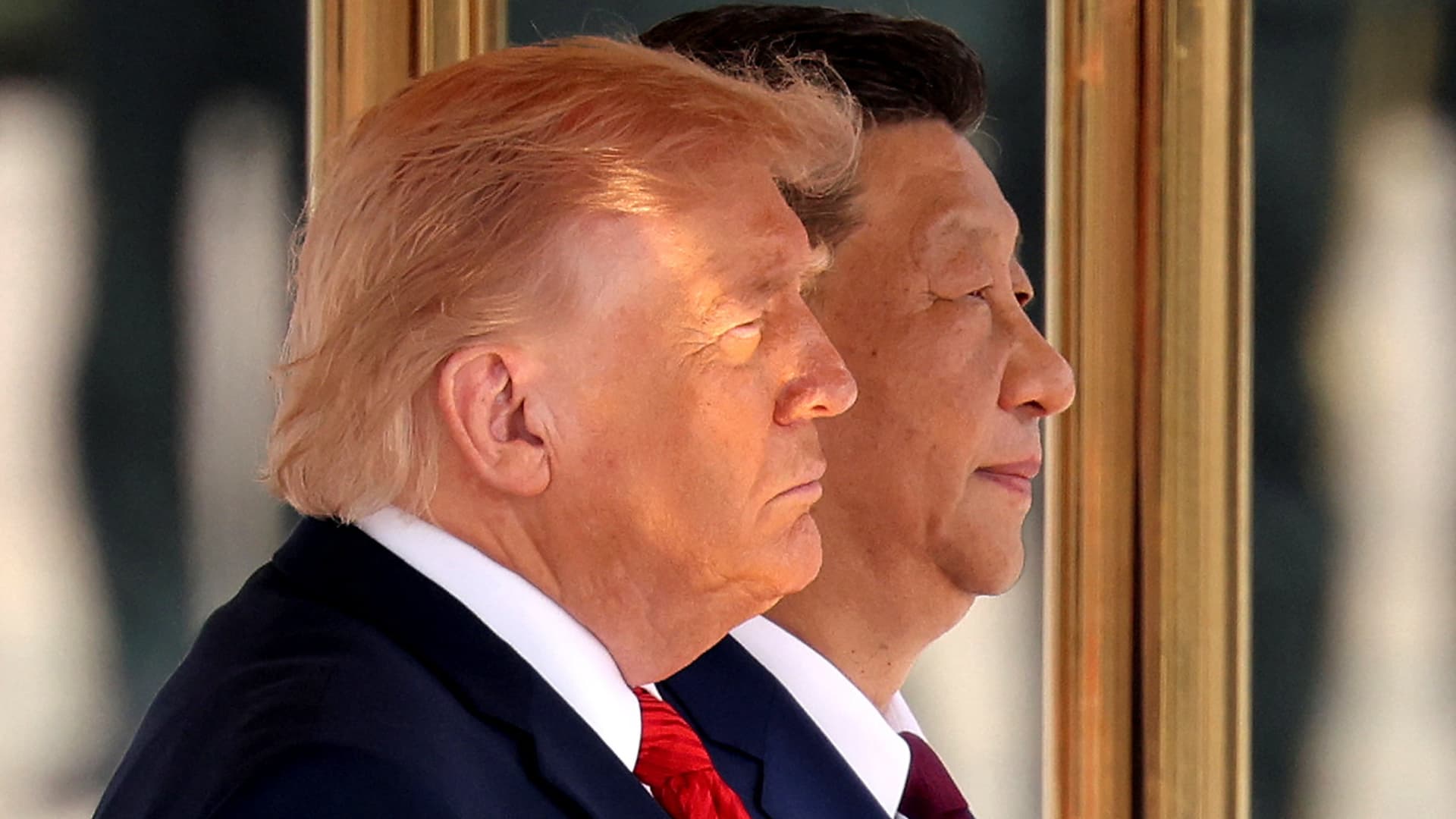
Trump-Xi Meeting Sparks Concerns Over Chinese Auto Market Entry
DETROIT — As President Donald Trump prepares to meet with Chinese President Xi Jinping this week, warnings are echoing from U.S. politicians and the global automotive industry. They express fears that allowing Chinese automakers into the U.S. market could unleash unforeseen challenges.
Earlier this month, Trump mentioned he might be “OK” with Chinese manufacturers entering the U.S. market under certain conditions, sparking a unified response from various auto trade groups. These groups include automakers, dealers, and suppliers, all urging him to reconsider this stance.
Over two dozen Democratic lawmakers also sent a letter advocating for the maintenance of existing U.S. restrictions on Chinese automakers. “It’s not a partisan issue,” emphasized Senator Elissa Slotkin, D-Mich., highlighting concerns about U.S. manufacturing resilience.
Trump is expected to host Xi and a delegation that may include leaders from major automotive companies, indicating the meeting’s significance for the industry.
Industry Experts Voice Concerns
Michael Dunne, a former executive at General Motors and an expert on China’s automotive sector, stressed that the potential attendance of key executives from Chinese automakers indicates the stakes involved. GM CEO Mary Barra is also expected at the dinner, alongside other U.S. CEOs such as Elon Musk of Tesla.
While Ford Motor hasn’t confirmed whether CEO Jim Farley will attend, concerns persist regarding the company’s ties to China, particularly with its licensing deal with CATL, a Chinese battery manufacturer.
Observers have echoed the fears articulated by industry leaders and lawmakers. As Chinese automakers expand rapidly overseas, there are worries that state-subsidized companies could undermine domestic production and pricing.
Dunne remarked, “Chinese automakers would quickly overwhelm America’s auto industry, just as they are ravaging Europe.”
The Growing Threat
Research indicates that the global market share for Chinese brands surged nearly 70% from 2020 to 2025. Their market share in Europe, once negligible, reached 12% in August 2026, showcasing their aggressive expansion.
China’s automotive growth has been fueled by government backing and a commitment to innovation. However, industry leaders like Nissan’s Christian Meunier have remarked on the challenges posed by competing against government-backed automakers, which they see as an unprecedented battle.
Dunne criticized China’s business culture, suggesting it aims to make other nations dependent on its market. “As Xi Jinping has indicated, the goal is to make other countries more dependent on China and vice versa,” he said.
As the potential for Chinese entry into the U.S. auto market looms, many believe it is crucial for American manufacturers to fortify their strategies for survival and competitiveness.
— CNBC’s Justin Papp contributed to this report.

