 As we reflect on the economic landscape of recent years, our goal is to gain insight into the current state of affairs. This leads us to several pressing questions…
Why has the recovery been sluggish? Nearly seven years following the official conclusion of the Great Recession, why does the economy remain stuck in a quagmire? Among numerous events, one week stands out in particular.
On Saturday, September 20, 2008, Treasury Secretary Hank Paulson presented a draft of the Troubled Asset Relief Program (TARP) to Congress. The preceding week had been tumultuous, marked by significant upheaval. On September 15, Lehman Brothers, a fixture in banking for 158 years, abruptly declared bankruptcy, leaving a significant void in the financial sector.
Throughout that week, financial markets faced relentless turmoil. Even money market funds experienced a state of panic, with a shocking $169.03 billion exiting these funds by September 17.
On the same day, the Wall Street Journal’s headline read, “U.S. to Take Over AIG in $85 Billion Bailout.” Additionally, the Primary Fund’s net asset value dropped to $0.97 per share. The Securities and Exchange Commission (SEC) even instituted a temporary 10-day ban on short selling for 799 financial stocks.
The Free Market is Dead
This chaotic week of bank rescues, collapsing money markets, and aggressive SEC interventions continues to evoke unease. Yet, upon reflection, a single quote encapsulates the essence of the turmoil—both then and today.
On September 19, Kentucky Senator Jim Bunning declared, “The free market for all intents and purposes is dead in America.” He further asserted, “The action proposed today by the Treasury Department will take away the free market and institute socialism in America. The American taxpayer has been misled throughout this economic crisis. The government on all fronts has failed the American people miserably.”
Bunning’s statement proved to be uncannily insightful. He voiced these sentiments before the advent of quantitative easing, and if the free market was already on life support with TARP’s introduction, it has since been reduced to a mere shell.
The credit markets, central to free enterprise, have been decimated. The incentive to accumulate capital through saving has vanished, leaving individuals with merely a cup of coffee’s worth of returns from a lifetime of savings.
Meanwhile, asset valuations have become so distorted that distinguishing between genuine investments and mere speculation has become exceedingly difficult. For instance, ExxonMobil recently lost its Triple A credit rating, a status it had upheld since 1930, as broken credit markets seduced it into risky financial maneuvers.
The Cure is Worse than the Disease
The Federal Reserve’s monetary policies have encouraged companies to fund share buybacks and dividend payments through borrowed funds, presenting a façade of healthy business operations amid stagnant growth. Yet, this is simply a transfer of wealth from bond holders to shareholders rather than a creation of new value.
Naturally, executives favor borrowing to repurchase shares, especially when incentivized by lucrative stock options. This enriches them and temporarily inflates earnings per share, but it fails to contribute to genuine growth.
In ExxonMobil’s case, lacking proper market signals, the company compromised its future by depleting cash reserves just when they were most needed to navigate falling oil prices—a stark departure from decades of prudent business strategies.
This narrative is echoed across numerous companies listed on the DOW. In 1980, over 60 U.S. firms boasted a Triple A credit rating; today, only two remain—Johnson & Johnson and Microsoft.
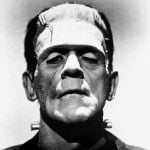
This represents the outcome of a controlled economy with fixed credit markets and a flexible currency. The result? Stagnation and potentially no growth, punctuated by escalating corporate debt and declining operating cash flow—a Frankenstein economy bequeathed to us by Ben Bernanke and Hank Paulson. Ultimately, the remedy has proven to be far worse than the ailment.
Sincerely,
MN Gordon
for Economic Prism
Return from The Cure is Worse than the Disease to Economic Prism

