Easton LaChappelle: A Journey from Boredom to Innovation
Growing up in the small town of Mancos, Colorado, with a population of approximately 1,200, Easton LaChappelle found himself bored as a teenager. Seeking a challenging project, he set out to build a robotic hand, having no prior knowledge of electronics or programming. Utilizing YouTube videos and reaching out to experts, he creatively crafted a functional hand from everyday materials.
A Hand Made of Toys
His initial prototype was a quirky arrangement using surgical tubing for fingers, fishing line for tendons, and LEGO bricks for the frame. With components like hobby servos, a microcontroller, and a glove to control the movements, the hand could grip objects, shake hands, and even toss balls. LaChappelle showcased his invention at the Colorado State Science and Engineering Fair, securing third place in the senior engineering division.
The Girl with the $80,000 Arm
At the fair, he met a seven-year-old girl born without a right arm, who wore an expensive prosthetic that cost $80,000. Discovering that she would outgrow it, needing continuous costly replacements, prompted a pivotal realization for LaChappelle. He understood that a standard robotic hand could be just a clever toy, but a high-cost prosthetic with limited functionality was a serious issue that needed solving.
From $80,000 to a Few Hundred
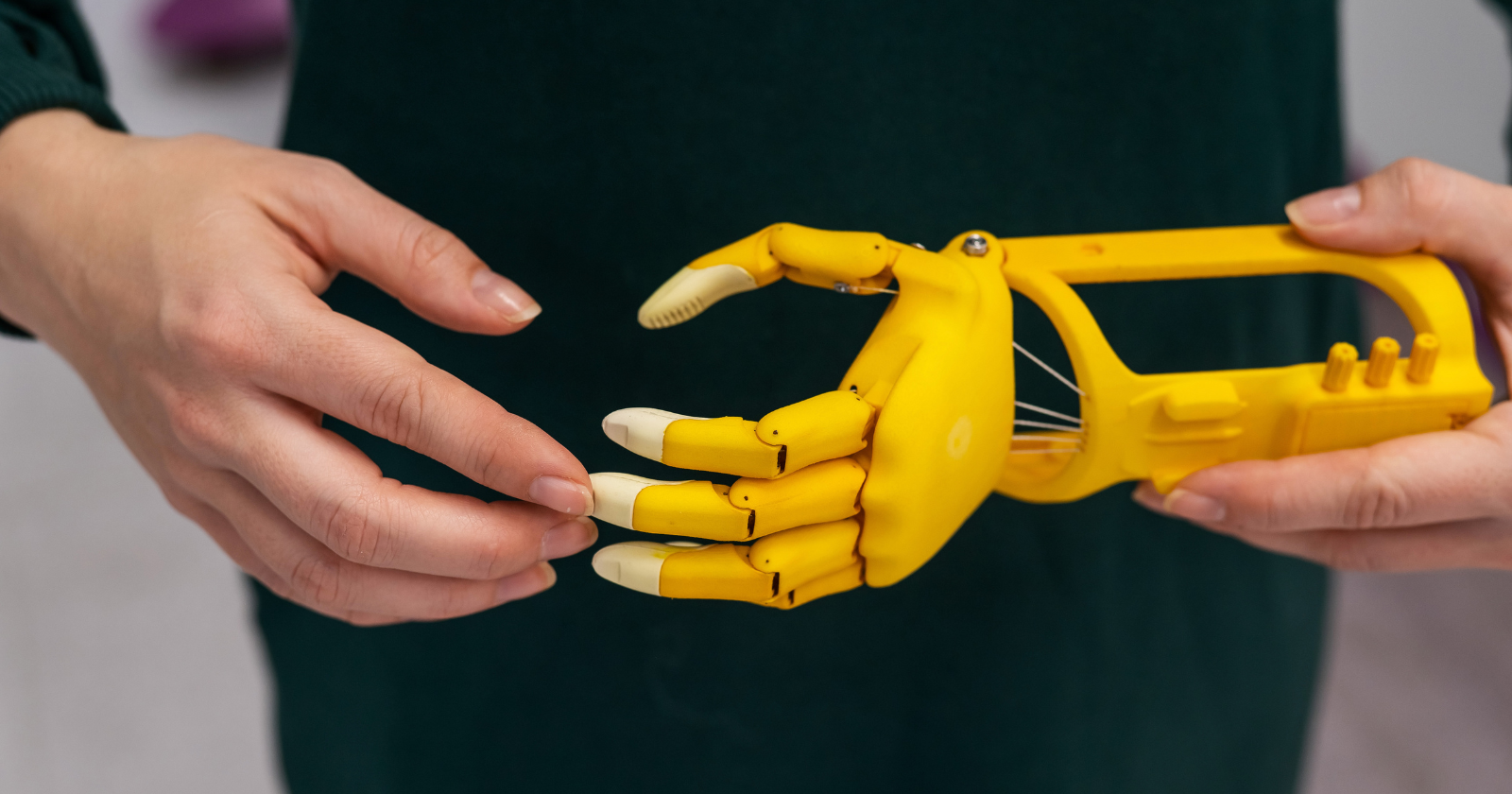
Motivated by this revelation, LaChappelle pursued the development of a more affordable and functional prosthetic. He taught himself 3D printing and created his own printer to better understand design. Unlike the expensive, rigid arm, his prototypes were printed from downloadable open-source files. His designs evolved into more sophisticated arms, even incorporating a wireless headset that allowed users to control movement via brainwaves. The cost of his prototypes plummeted to around $250 to $400, a dramatic decrease compared to the original prosthetic price.
The Handshake and the Internship
His innovative work gained recognition, leading him to significant opportunities. He presented a version of his prosthetic at the White House Science Fair, where he shook hands with President Obama, who encouraged him to connect with DARPA. LaChappelle also took second place at the Intel International Science and Engineering Fair and secured an internship at NASA’s Johnson Space Center, where he contributed to the Robonaut 2 project.
Founding Unlimited Tomorrow
Driven by his vision, Easton founded Unlimited Tomorrow, aiming to revolutionize prosthetic accessibility. His company focuses on custom, low-cost prosthetics that can be 3D-scanned and printed, ensuring that even children in remote areas can obtain a fitted advanced arm without exorbitant costs or long trips to specialists.
In summary, LaChappelle’s journey illustrates a profound insight: the disparity between the cost of traditional prosthetics and the potential of modern technology. His story emphasizes innovation borne from curiosity, highlighting how a young teenager’s determination led to a transformative approach in the prosthetics industry.


