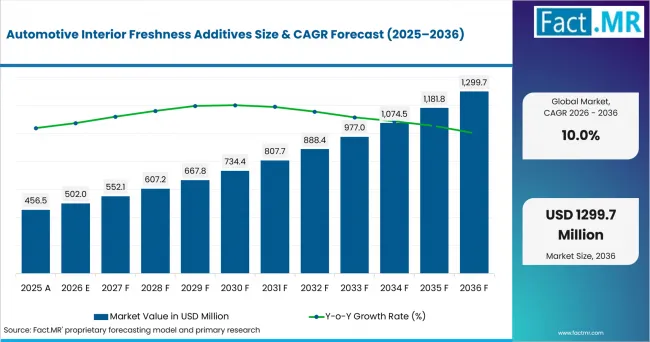
Summary of Automotive Interior Freshness Additives
1. Leading Cabin Parts Use
- Share: 42.0% in 2026
- Reason: Cabin parts are critical as they are directly exposed to occupants, who experience odors in an enclosed space. The use of odor absorbers in packaging and consumer goods further supports this segment.
2. Odor-Control Chemistry Leadership
- Dominant Chemistry: Mineral adsorbent
- Projected Share: 30.0% in 2026
- Mechanism: They effectively trap odors and can be utilized in compounds or masterbatches. Cyclodextrin systems target specific organic compounds, and porous additives help reduce mineral loading.
3. Target Odor Segment
- Leading Component: VOC / aldehyde
- Projected Share: 28.0% in 2026
- Why: VOCs and aldehydes are significant in cabin odors, necessitating targeted chemical approaches, especially for amines and sulfur compounds, which require distinct control systems.
4. Impact of Interior Polymer / Substrate
- Leading Polymer: Polypropylene (PP)
- Projected Share: 38.0% in 2026
- Importance: PP is commonly used in molded interior trims. It’s particularly effective when combined with masterbatches, while other plastics serve specific applications.
5. Support for Cabin Parts Use
- Cabin parts remain a critical focus due to their proximity to occupants, requiring comprehensive testing for odor issues that might not be identified by testing individual materials.
Conclusion
The automotive sector is prioritizing advanced odor control strategies and effective material choices to enhance cabin air quality and overall user experience.

