Key Points
-
Debate on Pottery Origins: Archaeologists have puzzled over how Mississippian-style pottery appeared in Tampa Bay, a region previously excluded from maps of the Mississippian culture.
-
Research by Trevor Duke: A doctoral student from the Florida Museum of Natural History conducted compositional and chemical analyses on the pottery, expanding the investigation with evidence from the region.
-
Study Findings: The research suggests that migrants from the Florida Panhandle, the core of Mississippian culture, likely utilized their resources and knowledge to create the pottery in Tampa Bay, potentially integrating into local societies.
Background Information
About a century ago, archaeological excavations in Tampa Bay uncovered pottery fragments that closely resembled designs from hundreds of miles away in the heart of Mississippian culture. This sparked an ongoing debate among archaeologists regarding the pottery’s origins.
Neill Wallis, curator of Florida archaeology at the Florida Museum of Natural History, noted that while Tampa Bay had some Mississippian traits, it lacked others common in true Mississippian culture, such as maize agriculture. The discovery of Mississippian pottery raised questions about trade, imitation, or migration.
Research Methodology
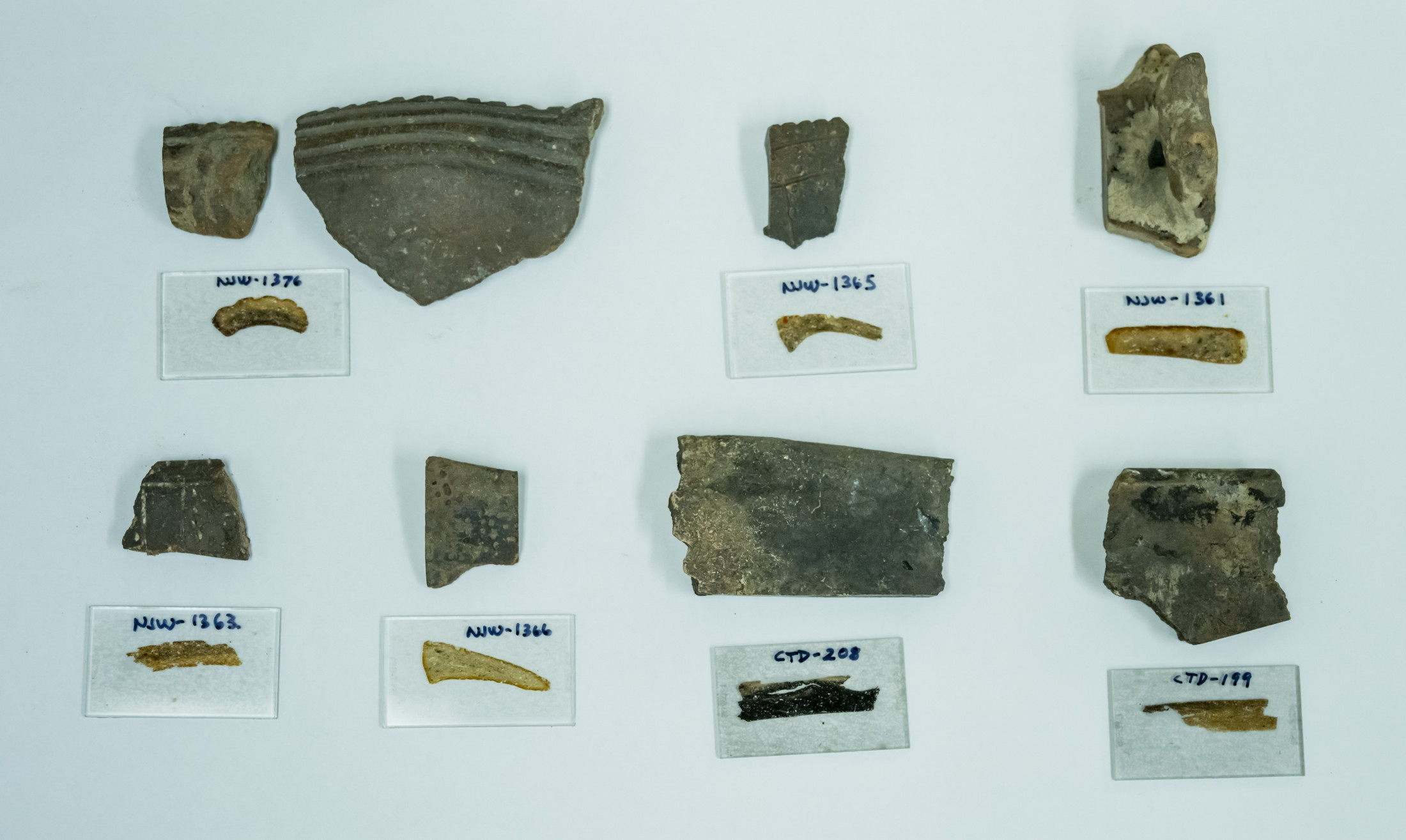
The team led by Trevor Duke analyzed 58 pottery sherds, both plain and decorated, to unravel their origins. They investigated:
- Chemical Composition: Utilizing neutron activation analysis to compare pottery with local clay sources, confirming the pottery was made on-site.
- Petrographic Analysis: Examining the pottery under a microscope to identify materials mixed into the clay.
Key Differentiations Found
-
Migrant Influence: Several decorated fragments contained grog, a tempering characteristic of Mississippian pottery. Notably, this grog included mica, present in the Panhandle but absent from local materials.
-
Production Techniques: Decorated pottery is associated with advanced techniques such as coiling and consistent paste recipes that differed from simpler, molded plain pottery. The decorated pieces showed quality and complexity that plain wares did not.
Cultural Context
Around 1000 A.D., Mississippian culture spread across the Mississippi River Valley, establishing chiefdoms and extensive maize agriculture. However, the Safety Harbor culture in Tampa Bay developed separately, primarily relying on fishing rather than agriculture and featuring less centralized political structures.
Migrants likely used their specialized pottery skills to establish their identities in this new environment. Their ability to create high-quality decorated pottery could have provided them with a valuable niche within the local economy.
Conclusion
The study indicates that a group of skilled potters from the Mississippian heartland migrated to Tampa Bay, bringing their advanced pottery knowledge and resources. This not only shaped their identity and status in the new region but also contributed to the cultural landscape of Tampa Bay. The findings highlight the intermingling of knowledge and practices, demonstrating a layered history of migration and cultural integration.
For further reading, find the study published in American Antiquity here.


