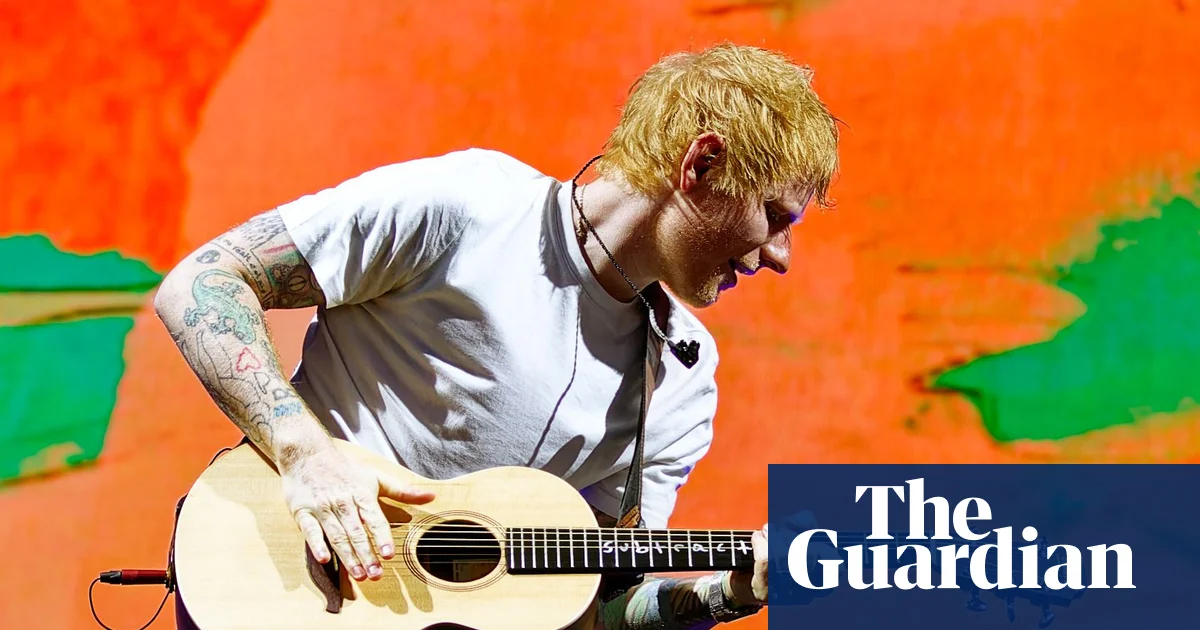
Ed Sheeran, often dubbed the “Mr Nice Guy” of music, has navigated a significant controversy recently due to the actions of his tour’s supporting artist, Macklemore. During a concert at MetLife Stadium, Macklemore called for a “free Palestine” and performed a protest song amid visuals of destruction in Gaza. This sparked immediate backlash, with groups like StopAntisemitism condemning it as “anti-Israel propaganda.” Following this, Sheeran faced accusations of being pressured by billionaire Robert Kraft, who supports Israel and threatened to cancel tour venues if Macklemore remained.
Macklemore’s remarks placed Sheeran in a difficult position. While expressing disappointment over Macklemore’s removal, Sheeran stated he wouldn’t take a public stance on the Israel-Palestine conflict, emphasizing a desire for his concerts to be apolitical safe spaces. However, this led to criticism of his neutrality, with accusations of complicity in the ongoing suffering in Gaza.
As the fallout continued, numerous support acts pulled out, and Sheeran’s social media following took a hit while Macklemore gained followers. Critics noted that Sheeran’s attempt to avoid political entanglements may have backfired, labeling him inadvertently as tacitly supportive of anti-Palestinian sentiments.
This incident sheds light on the evolving expectations of celebrities regarding political stances. The line between personal views and public identity has blurred significantly, especially amidst the heightened emotions surrounding global conflicts. While artists have historically faced backlash for their political comments, Sheeran’s case is unique: he did not instigate the controversy himself but found his reputation at stake due to the actions and words of another artist on his stage.
In an attempt to respond to the situation without taking a stance, both Sheeran and Kraft pledged significant donations to aid organizations in Gaza, illustrating a preference for monetary contribution over vocal activism. Nonetheless, the controversy may have lasting implications for Sheeran’s public perception, reinforcing the idea that avoiding political discourse may not insulate celebrities from backlash in today’s socially charged climate.


