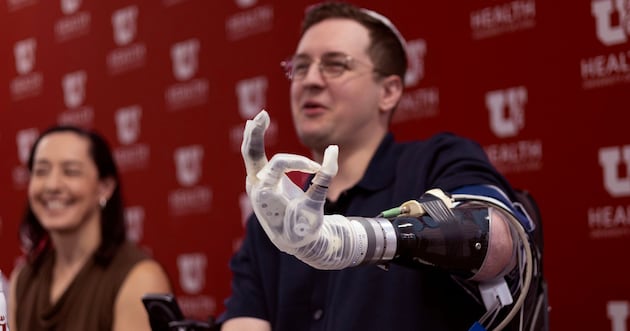
Avi Davidson, using the advanced “LUKE Arm,” has transformed his interaction with everyday tasks after losing the lower half of his arm years ago. Thanks to groundbreaking technology from the University of Utah’s NeuroRobotics Lab, he can control this bionic arm with his thoughts, feeling sensations again. This innovation not only enables precise movements but also restores tactile feedback, significantly enhancing the quality of life for amputees and those with physical disabilities.
Key Highlights:
-
Thought Control: The LUKE Arm translates neurological signals from Davidson’s brain into precise movements using cutting-edge AI and a brain-computer interface.
-
Restored Sensation: For the first time in nearly two decades, Davidson can experience touch through his robotic arm—an emotional and significant leap in prosthetic technology.
-
Gradual Learning: Davidson has practiced simple tasks like cooking, demonstrating increased independence and capability, with the arm allowing movements that traditional prosthetics couldn’t achieve.
-
Future Potential: Researchers envision this technology evolving to assist with more than just prosthetics, including applications in wheelchairs and exoskeletons, potentially benefiting a wide range of patients, including those with spinal injuries and ALS.
-
Accessibility Goals: Davidson advocates for the widespread availability of this technology, expressing that its impact could reach limitless potentials, making it essential for enhancing lives.
This revolutionary device exemplifies the intersection of neuroscience, robotics, and human experience, promising to change the landscape of assistive technologies.


