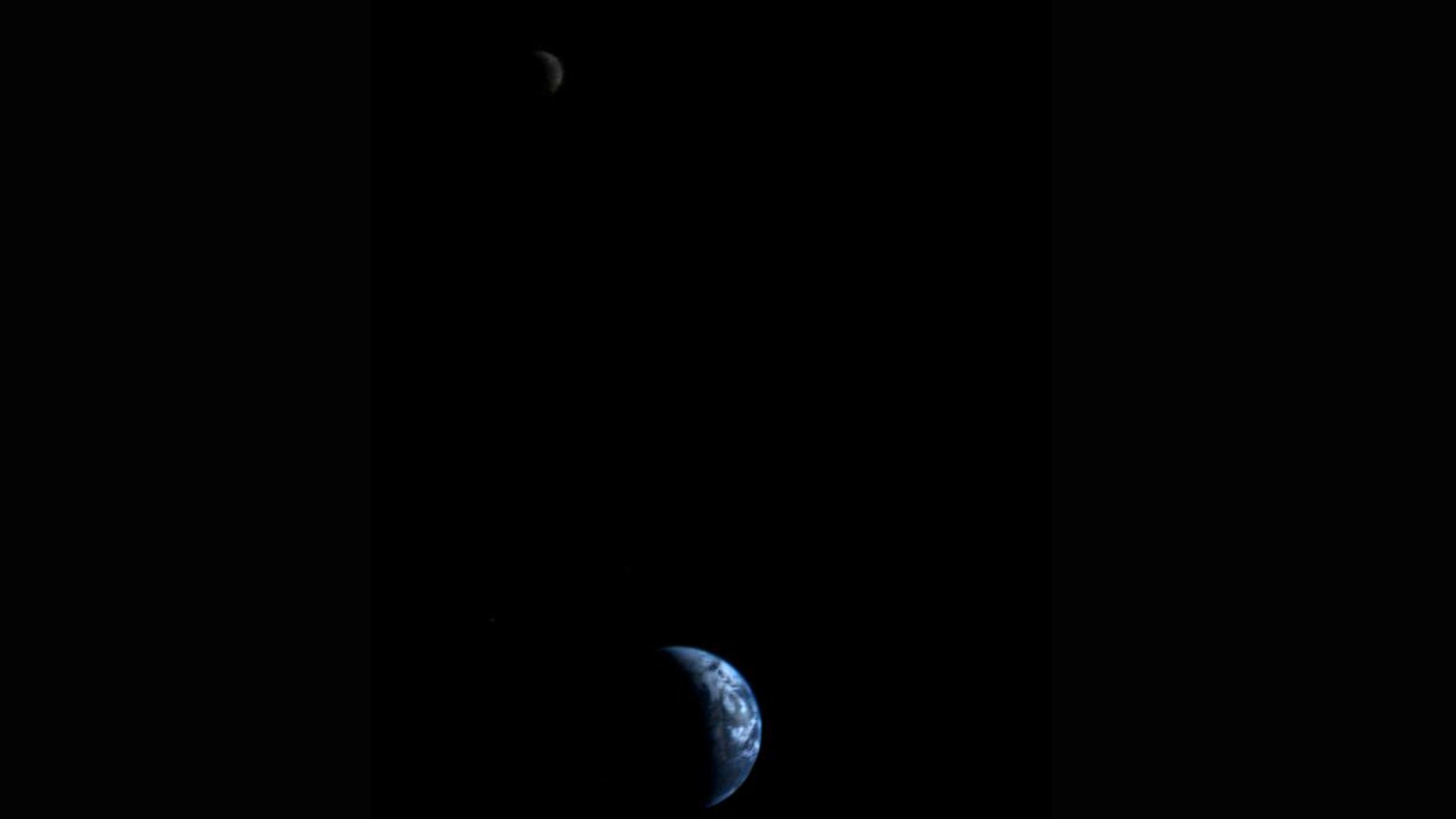
On September 18, 1977, NASA’s Voyager 1 spacecraft captured its first image of Earth and the moon in a single frame from a distance of 7.25 million miles (11.7 million kilometers). Launched just weeks earlier on September 5, 1977, its mission focused on exploring the outer planets.
After passing through the asteroid belt and visiting Jupiter and Saturn, Voyager 1 was directed to take a final photo of our solar system, which resulted in the iconic “Pale Blue Dot” image. This photo, captured after Carl Sagan’s insistence, depicts Earth as a tiny speck against the vastness of space.
While the initial photo of Earth and the Moon may appear grainy, it represented a significant moment in humankind’s understanding of its place in the universe, especially since the Apollo moon missions had concluded by that time. The image was artificially enhanced to brighten the moon so both celestial bodies could be clearly seen together.
As of now, Voyager 1 resides in interstellar space and is the farthest human-made object from Earth. By September 18, 2026, it is expected to be about 15.98 billion miles (25.72 billion kilometers) away, marking a historic milestone as it will become the first probe to reach a distance of one light-day from Earth.


