Jello Molds on Mars: A New Way to Build Habitats
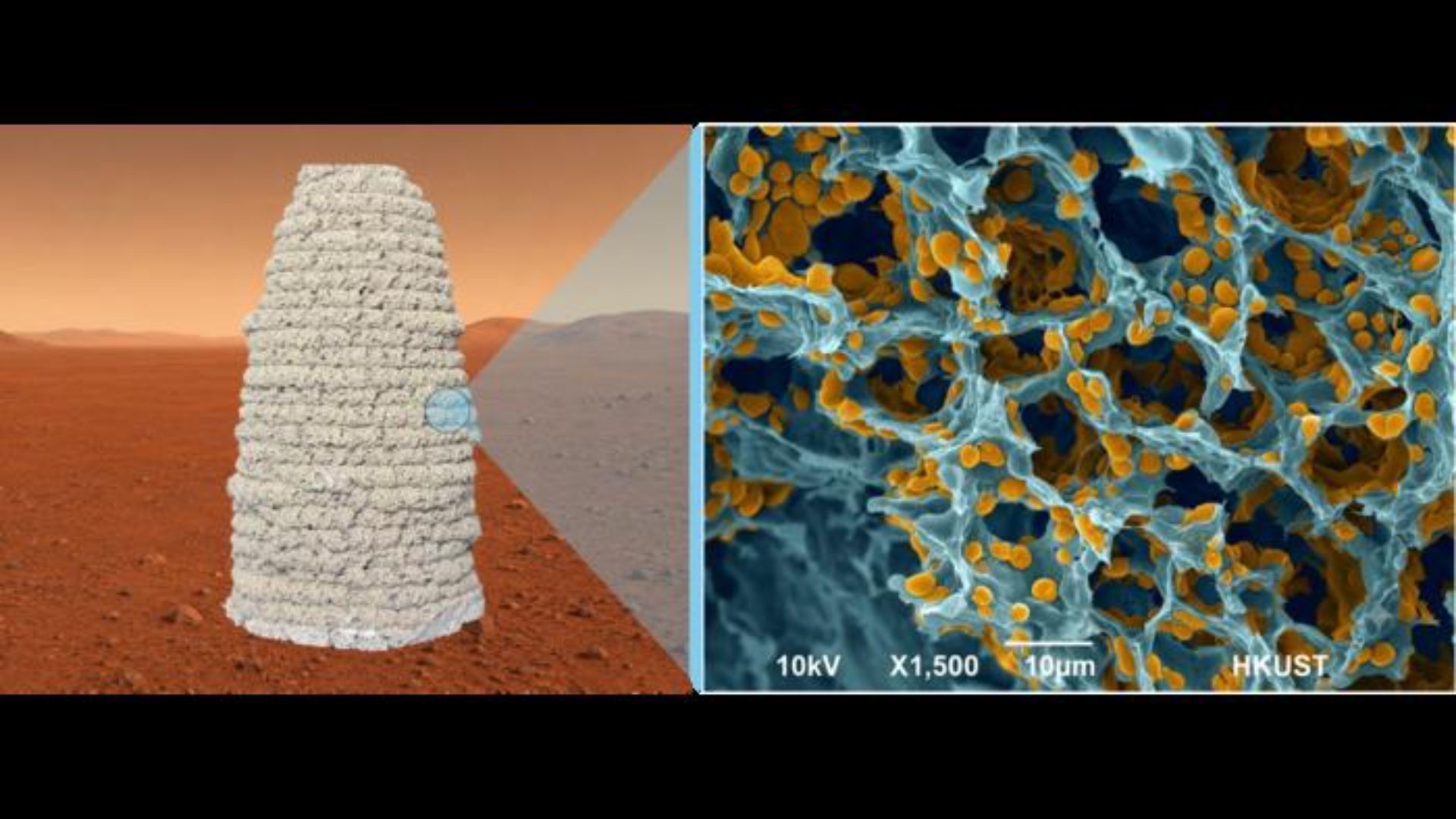
Jello molds might just play a critical role in the future of Martian habitation. Researchers at the Hong Kong University of Science and Technology have created a unique concrete alternative utilizing gelatin and genetically engineered yeast to bind sand, producing a lightweight and porous material potentially suitable for construction on Mars.
The Science Behind the Concrete
Instead of traditional Portland cement, which is typically used in concrete, this innovative approach employs a combination of pork gelatin and a specially modified strain of yeast known as Saccharomyces cerevisiae. The yeast has had specific genes altered to enhance its binding capabilities and produce proteins similar to those that enable mussels to adhere firmly to surfaces.
3D Printing and Strength
The researchers simulated Martian conditions in their lab, 3D-printing the new material in environments that mimic Mars’ low temperatures and atmospheric pressure. Over 48 hours, the mixture solidifies as water freezes and sublimates, leaving behind a sturdy lattice of yeast proteins, gelatin, and crushed regolith (Martian soil).
The resulting structures exhibited a compressive strength comparable to low-grade concrete and are robust enough for potential construction on Mars. Senior author Jishen Qiu noted that this material could support multistory buildings, given that the gravity on Mars is only one-third of that on Earth.
Limitations and Future Research
Despite its promise, the concrete cannot function as a standalone habitat. Additional layers for radiation protection, airtight seals, and pressure maintenance will be essential. The yeast-based concrete would best serve as a component of a larger composite habitat structure.
Furthermore, ongoing research is necessary to determine whether yeast can survive the harsh conditions on Mars. Future work aims to enhance the yeast’s resistance to cold, vacuum, and radiation, while also highlighting the importance of planetary protection to avoid contaminating Mars with Earth microorganisms.
A Renewable Resource
One of the advantages of this yeast and gelatin concrete is its potential for recycling. Once a structure is no longer needed, the material can be repurposed, and the yeast can be cultivated anew, minimizing the need for extensive material shipments from Earth.
As humanity embarks on building a permanent presence on Mars, materials derived from biological processes like this could play a significant role, echoing the diverse methods employed in engineering on Earth. The findings were published in the journal Chem Circularity.


