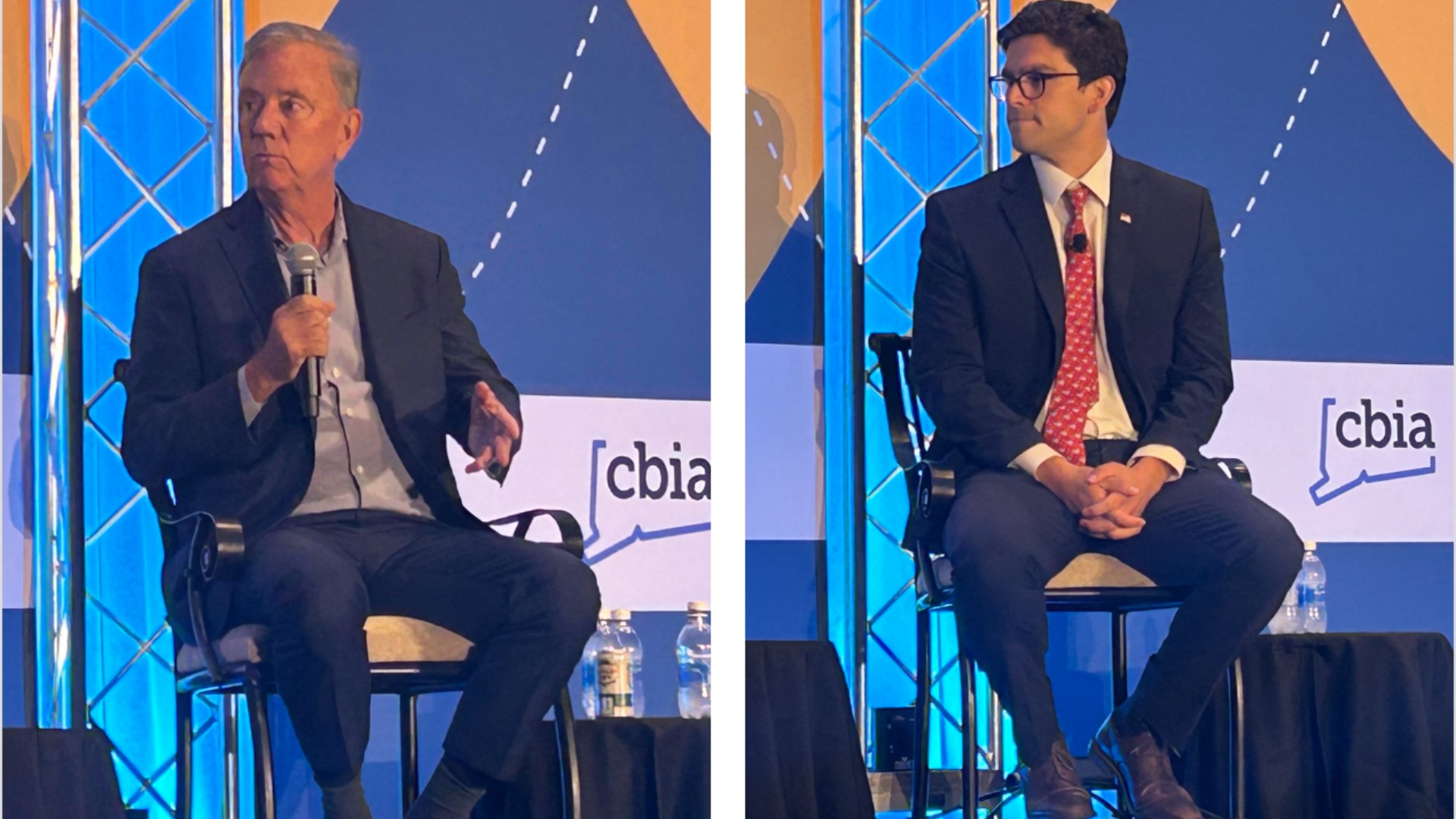
Connecticut’s gubernatorial candidates, Sen. Ryan Fazio (R-Greenwich) and incumbent Gov. Ned Lamont (D), presented their economic strategies to business leaders at the Connecticut Business & Industry Association event.
Fazio’s Proposals:
Fazio emphasized the burden of Connecticut’s high living costs, proposing an affordability agenda marked by:
- Tax Cuts: Aiming for the largest middle-class tax cut, benefiting families earning around $100,000 with potential savings of $2,000 annually.
- Lower Electric Bills: Promising a 20% reduction by eliminating certain costs tied to renewable energy initiatives.
- Property Tax Cap: Seeking to review about 1,400 state mandates to lower municipal costs and introduce a property tax cap similar to Massachusetts.
- Healthcare Reform: Advocating for association health plans and reforms to the Certificate of Need process to spur competition.
- Regulatory Cuts: Committing to eliminate two regulations for each new one enacted, alongside reducing occupational licensing barriers.
- Workforce Development: Pushing for expanded vocational education aligned with employer needs and removing restrictions on apprenticeships.
- Fiscal Responsibility: Promoting continued fiscal guardrails to manage state spending effectively.
Lamont’s Focus:
Gov. Lamont highlighted Connecticut’s improved fiscal position since he took office, addressing affordability primarily through:
- Healthcare Initiative: Supporting association health plans and introducing the “Connecticut Option” for a larger healthcare purchasing pool for small businesses and state employees.
- Affordability in Healthcare: Recognizing it as a top concern with commitment towards significant improvements.
- Housing Development: Advocating for increased workforce housing by allowing municipalities to repurpose commercial properties.
- Childcare Access: Investing in initiatives for affordable childcare, aiming for universal pre-K for families earning up to $100,000.
- Education Alignment: Enhancing education-to-workforce pathways by expanding internships and better aligning community colleges with job market demands.
- Service Sharing Among Municipalities: Promoting cost reductions through shared services among towns.
- Sustainable Energy Policy: Emphasizing the importance of maintaining nuclear energy and energy efficiency programs while minimizing taxpayer-borne costs.
Both candidates acknowledged the state’s economic challenges, outlining distinct pathways to foster growth and enhance affordability in Connecticut.


