NASA’s Nancy Grace Roman Space Telescope: A New Era of Cosmic Exploration
NASA’s Nancy Grace Roman Space Telescope, launched on August 30, 2026, is poised to transform our understanding of the universe with its 300-megapixel infrared camera. This state-of-the-art instrument, located at the second Lagrange point (L2), has recently captured its first test images, marking a significant milestone in its mission.
First Light: Initial Imaging
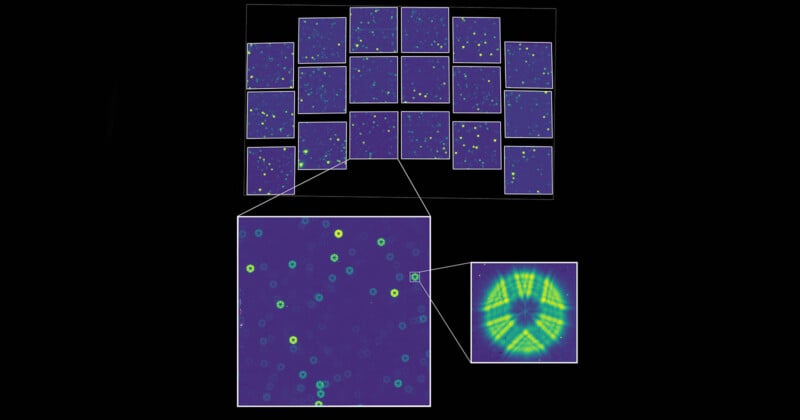
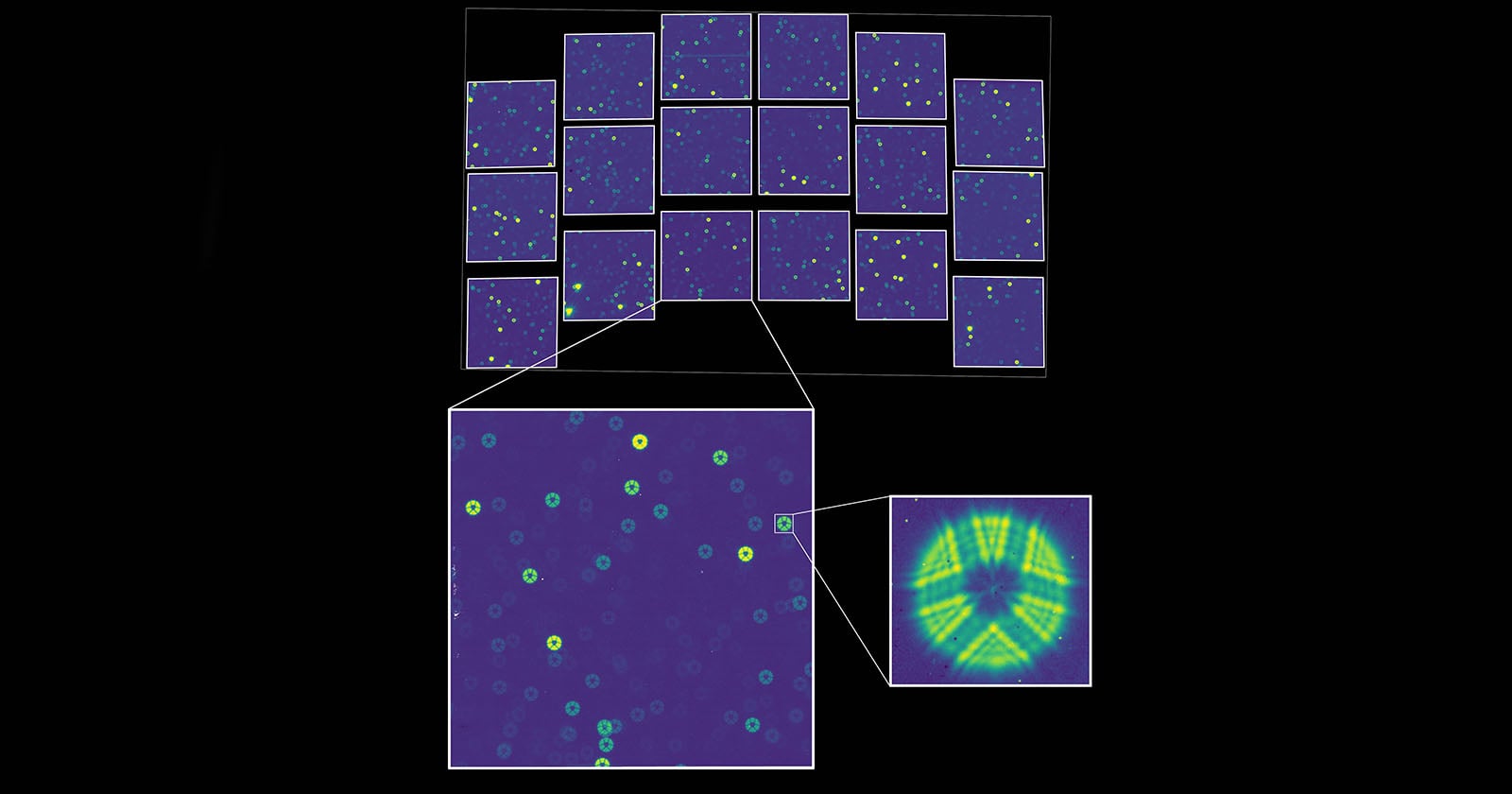
This composite image displays initial test results from Roman’s Wide Field Instrument, revealing a grid of multiple microscopy panels and out-of-focus stars. The telescope’s capabilities will be refined to provide sharper, crisper images in the future. | NASA’s Goddard Space Flight Center, Tyler Desjardins (STScI)
This initial image showcases the very first photons collected by Roman’s Wide Field Instrument, taken while the detector array was in a stowed position, well before reaching optimal focus. The data collected will help scientists align and focus the telescope’s optics in preparation for its scientific operations.
Testing and Calibration
In the months following its launch, Roman’s systems, including the Wide Field Instrument and the Coronagraph, underwent rigorous testing and calibration at L2. Engineers at NASA’s Goddard Space Flight Center excitedly activated the telescope’s cameras and began collecting test data, which was crucial in assessing the instrument’s performance.
Anticipated Discoveries
When fully operational, Roman is expected to conduct sweeping surveys of the cosmos, allowing scientists to explore the structure of matter in the universe, including insights into dark energy and dark matter. The telescope will enable groundbreaking scientific discoveries with its ability to capture detailed images of celestial phenomena.
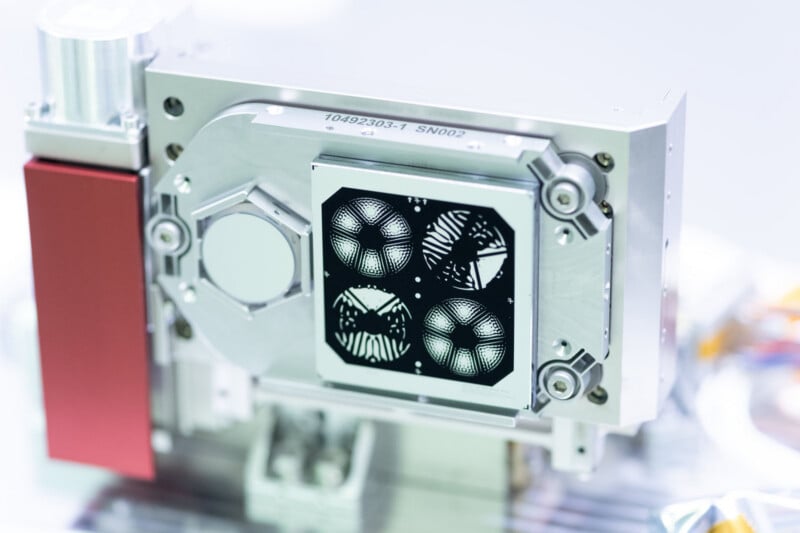
The shaped pupil masks used in Roman’s Coronagraph Instrument will enhance its ability to image faint regions around stars by blocking out starlight. | NASA/Chris Gunn
Looking Ahead
Preliminary high-resolution images from the Roman Space Telescope could be released as soon as December, with NASA aiming for early 2027 for more extensive scientific data. The mission is expected to provide unparalleled insights into the mysteries of the universe, paving the way for future explorations.
As NASA continues to monitor the performance of the Roman Space Telescope, the scientific community is eagerly awaiting the groundbreaking discoveries that are sure to come from this innovative instrument.


