VCU Brandcenter Students Present to NASA Professionals
By Sarah Moore, VCU Brandcenter
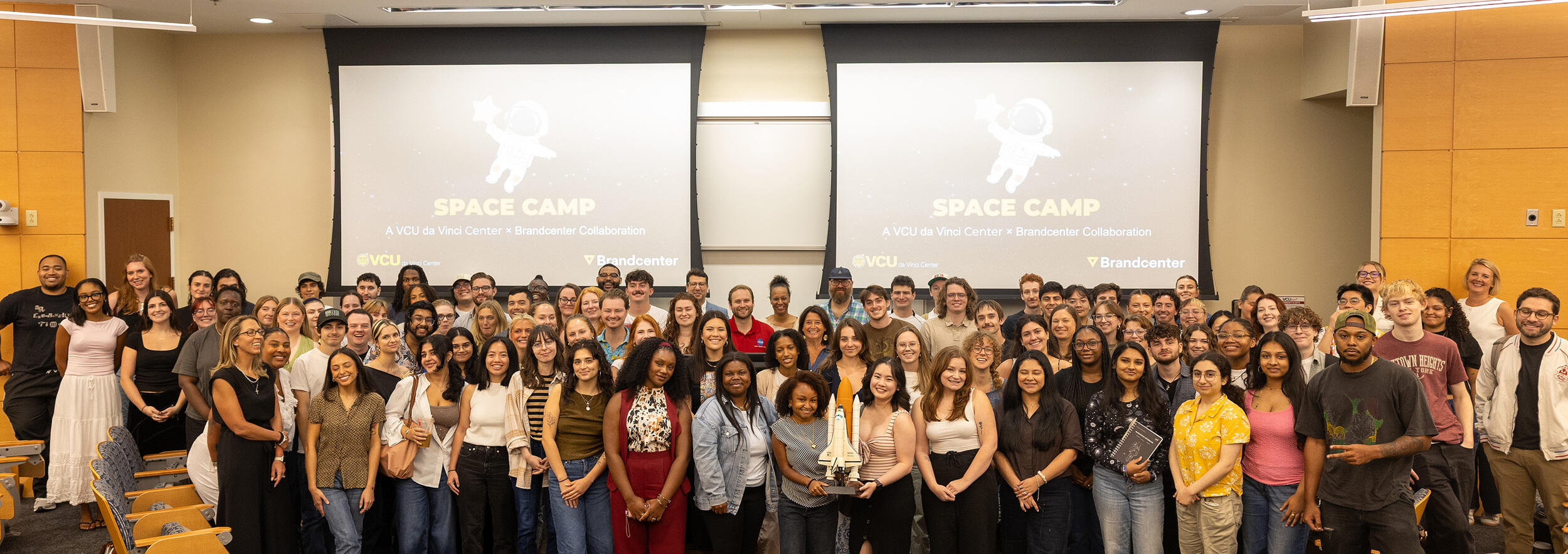
Imagine the anxiety of starting a new graduate program, only to find yourself presenting innovative ideas to NASA professionals within your first week. This was the reality for the Virginia Commonwealth University Brandcenter’s newest students, who recently participated in the NASA Space Camp Design Jam.
A Collaborative Challenge
The event, a one-day collaboration, united students from the VCU Brandcenter, the VCU da Vinci Center for Innovation, and NASA Langley Research Center. Teams, including first-year Brandcenter strategy students and VCU College of Engineering alumni, were tasked with exploring how NASA technologies could tackle unexpected problems here on Earth.
An Exciting Experience
First-year student Anika Gorham described the experience as surreal, saying, “I kept looking over at them sitting in the audience, thinking they were professors. Then my brain would recalibrate and say, ‘Oh wait, no, that’s NASA.’”
Understanding NASA’s Technology
Students began the day learning from NASA professionals. Research aerospace engineer Derrick Seubert shared insights about lunar exploration, while technology transfer specialist Katrina Young discussed how NASA technology can be adapted for commercial use. This meant exploring ways to repurpose existing NASA patents.
The Design Jam: A Hands-On Approach
Teams were assigned one of three NASA technologies—flexible radiation shielding, optical concentration sensors, and composite joint connectors. Their mission included identifying human-centered opportunities, developing market narratives, prototyping concepts, and outlining commercialization pathways.
Embracing Design Thinking
Program manager Ashley Wenger introduced students to design thinking, emphasizing empathy, creativity, and user needs. Using an everyday object, a paper clip, students were challenged to brainstorm 100 alternative uses, underscoring the idea that creativity can unveil multiple possibilities.
Advancing Prototypes
Throughout the sprint, teams shifted from brainstorming to defining problems and developing tangible solutions. The focus was on translating technical capabilities into human-centered opportunities and building compelling narratives.
Key Takeaways from NASA
Ramy A. Rahimi, senior advisor for research and innovation at NASA, offered two key insights:
- A well-defined problem is half of your solution. Understanding the importance and urgency of a problem is crucial for developing viable solutions.
- NASA technology should only be a part of your solution. The challenge is to enhance NASA’s technology with new ideas.
At the end of the day, teams presented their concepts, with judges from NASA, the Brandcenter, and the da Vinci Center selecting award winners in various categories.
Stay Updated
Subscribe to VCU News for a selection of stories, videos, and event listings at newsletter.vcu.edu.


