This article discusses an exciting development in the LZ Project at the Sanford Underground Research Facility, where researchers may have observed a potential interaction with dark matter. Here’s a summary:
Key Points:
-
Observation of a Particle: Scientists at the LZ Project detected a particle collision that knocked electrons free from a xenon atom, potentially indicating dark matter interaction.
-
Significance: This finding could represent the first recorded observation of dark matter, a substance theorized to make up about 85% of the universe’s mass but which has remained elusive.
-
Skepticism Remains: Researchers must thoroughly rule out alternative explanations before confirming the dark matter hypothesis.
-
Historical Context: The concept of dark matter dates back to the 1930s, when astronomer Fritz Zwicky identified a discrepancy in the mass of galaxy clusters, later expanded by Vera Rubin and W. Kent Ford’s work in galaxy rotation.
-
Standard Model Limitations: Dark matter challenges the standard model of particle physics, which has accurately predicted known particles but does not account for dark matter.
-
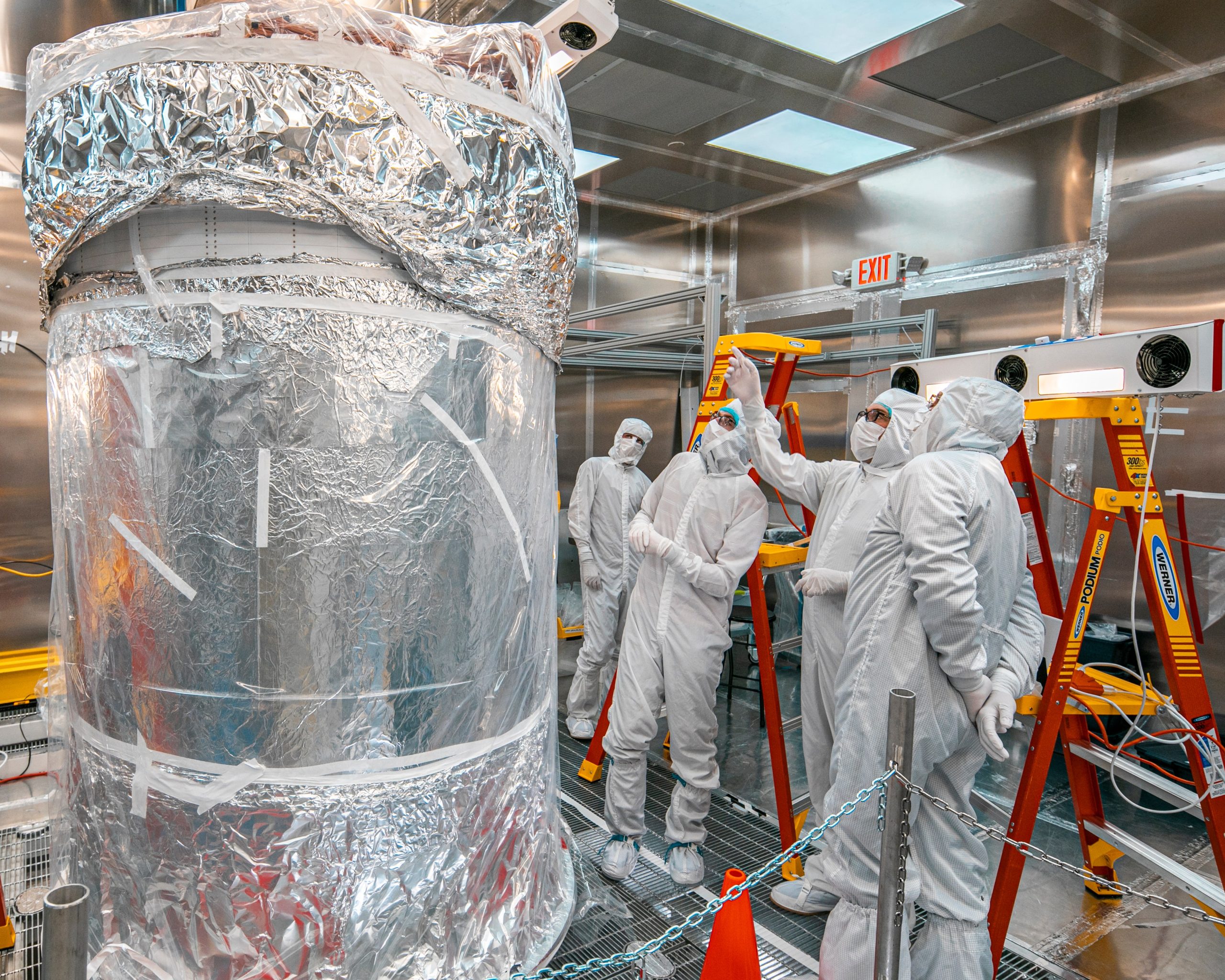
Experimental Setup: The LZ Experiment involves a massive vat of xenon positioned a mile underground to minimize cosmic radiation interference, aiming to detect dark matter particles that could produce detectable signals.
-
Data Analysis: After reviewing 220 days of results, scientists identified an anomaly indicating a possible interaction with an unknown particle.
-
Discovery Implications: If verified, discovering dark matter could transform our understanding of physics and the universe, comparable to the significance of Einstein’s theories.
-
Ongoing Research: Other international laboratories, like PandaX and XENONnT, are attempting to replicate these findings, which could take months to years.
Conclusion:
The LZ Project’s findings offer a tantalizing glimpse into the potential existence of dark matter, but further validation is required. The implications of such a discovery could reshape our understanding of the universe and fundamental physics.


