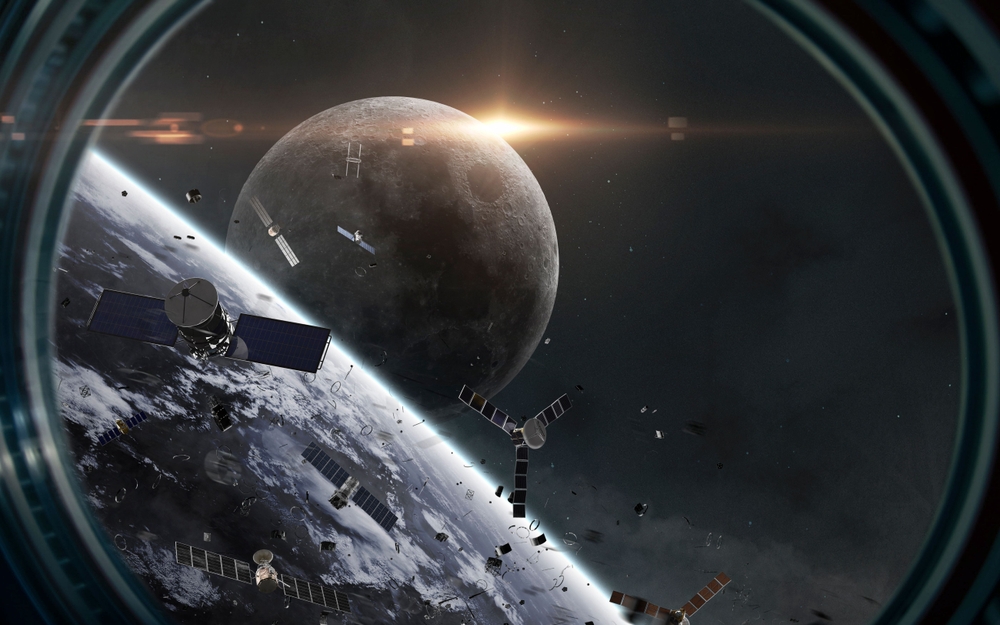
The European Space Agency (ESA) has issued a warning about the increasing congestion in Earth’s orbital environment due to a surge in the number of satellites, rocket bodies, and debris. Their latest Space Environment Report indicates that the rapid growth in space activity has outstripped sustainability efforts, with over 300 launches in 2025 alone, putting more than 4,000 new payloads into orbit.
Key Findings:
-
Growth of Spacecraft:
- The rise of large satellite constellations and rideshare missions has dramatically increased the number of deployed spacecraft.
- Satellites are now distributed across a wider range of orbital altitudes, complicating tracking and coordination for operators.
-
Accumulation of Debris:
- Existing orbital objects can fragment, generating additional debris, which poses risks to operational spacecraft.
- Projections for larger debris have worsened, indicating that simply mitigating new debris may not suffice.
-
Kessler Syndrome Threat:
- The report emphasizes the growing concern about Kessler syndrome, a scenario where collisions create debris that leads to further collisions, potentially spiraling out of control.
-
Responsible Disposal:
- Better compliance with debris mitigation practices has led to more responsible disposal of spacecraft, with an increase in controlled reentries.
- The shift toward shorter orbital lifetimes has moved from a 25-year target to a more aggressive five-year target.
-
Ground Risks:
- ESA has identified an increasing probability of casualties from fragments that survive reentry, although the individual risk remains low.
-
Need for Debris Removal:
- ESA stresses that both preventing new debris and removing existing debris are crucial. Their Zero Debris Approach aims to minimize debris generation by 2030, emphasizing international cooperation and innovative design.
-
Towards Sustainability:
- ESA envisions a more sustainable space economy, focusing on technologies that allow for satellite refurbishment and reuse to reduce the need for continuous replacements.
In summation, while ESA acknowledges progress in responsible disposal practices, the agency underscores the urgent need for stricter mitigation measures, improved space traffic management, and active debris removal technologies to ensure a sustainable future for orbital activities.


