Quantum teleportation is a groundbreaking concept that allows the quantum state of one system to be transmitted to another at significant distances, nearly at the speed of light. While initially thought to be a concept of science fiction, recent advancements have confirmed its viability, albeit on a smaller scale.
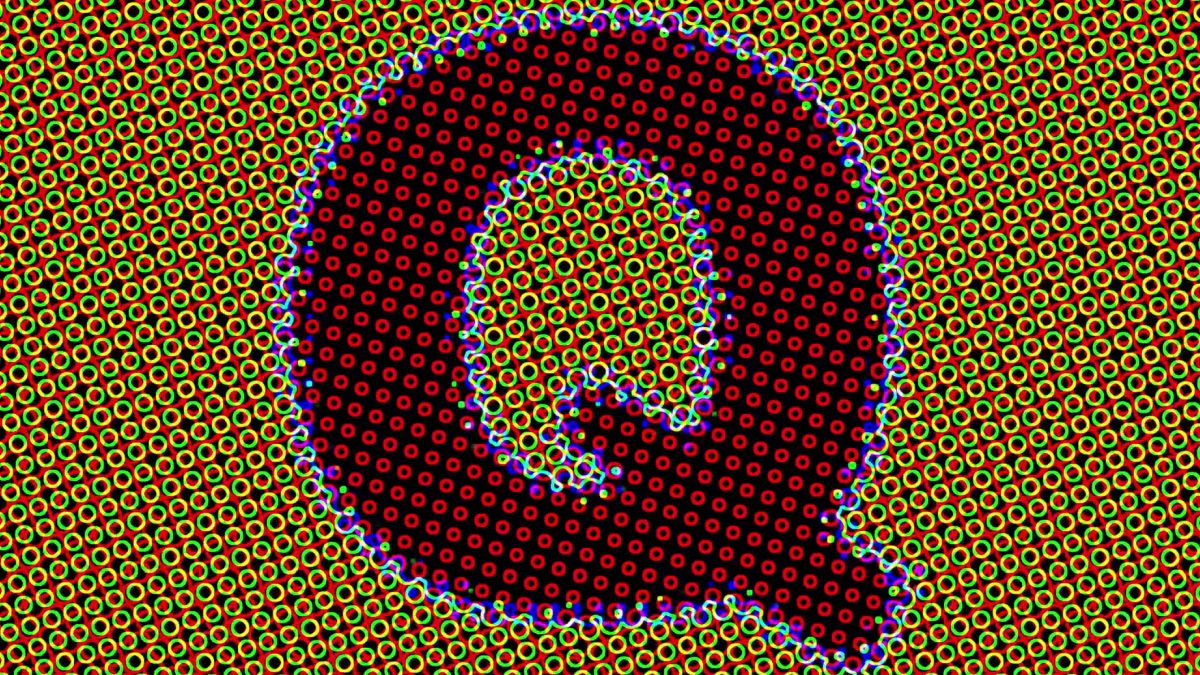
A pivotal breakthrough in this field was achieved by a team of physicists led by Jietai Jing from East China Normal University, who successfully demonstrated quantum teleportation across 100 simultaneous channels. This feat involved teleporting the quantum information of a 100-pixel image, marking the largest number of independently addressable quantum teleportation channels demonstrated to date.
Quantum teleportation, first proposed in 1993, transfers a quantum state from one location to another using shared entanglement and classical communication, rather than moving matter itself. Scientists have managed to teleport states using various mediums, including photons and atoms, over distances exceeding 100 kilometers.
Most experiments in this area have operated on a limited number of channels. For larger-scale quantum networks, the need to manage multiple states simultaneously presents significant challenges. Conventional methods often require separate detection and processing for each channel, complicating the setup.
Jing’s team tackled this challenge by organizing 100 spatially separated light modes into a 10-by-10 grid, with a matching grid of entangled light. This enabled parallel operation across all channels rather than individually managing each one. The outcome was a demonstration where the researchers achieved an average fidelity of 0.60 for the transmitted image, surpassing the classical limit of 0.52.
This breakthrough indicates that scaling up quantum teleportation in both distance and capacity is achievable without overcomplicating the apparatus. The methodology established may become crucial as quantum networks evolve, offering greater bandwidth and allowing for the simultaneous transport of diverse quantum information.
In conclusion, this research signals a significant advancement in quantum communications, with implications for future high-capacity systems. As noted by the researchers, there is potential for expansion beyond the initial 10-by-10 array, particularly with access to more powerful lasers. The findings have been published in Physical Review Letters.


