In this exploration of popular revolts during the Middle Ages, we uncover how timeless questions about political authority persist and emphasize the importance of collective action among marginalized classes.
By Joëlle Rollo-Koster, Professor Emerita of Medieval History, University of Rhode Island. Originally published at The Conversation.
For many years, I have shared with my medieval history students a memorable scene from the 1975 film “Monty Python and the Holy Grail.”
This humorous clip features two medieval peasants confronting King Arthur, employing modern Marxist rhetoric to challenge his authority. When Arthur claims his kingship comes from the Lady of the Lake and Excalibur, one peasant retorts, “Supreme executive power derives from a mandate from the masses, not some farcical aquatic ceremony!”
Beyond its comedic value, the scene dismantles the stereotype that people of the Middle Ages were politically passive and lacked resistance to authority before the Renaissance and the Protestant Reformation.
In reality, the Middle Ages—spanning from roughly 500 to 1500—were marked by a surprising number of uprisings and collective political actions among the populace.
While they may not have articulated their views using Karl Marx’s language, ordinary individuals in this era harbored strong opinions regarding political authority. When these individuals felt that their rulers had failed in their duties or lost their legitimacy, they frequently challenged kings, bishops, tax collectors, and city elites.
Enough is Enough
In the 11th and 12th centuries, northern French peasants notably resisted their obligations to labor or pay dues to the landowners. However, the most famous uprising is undoubtedly the English Peasants’ Revolt of 1381, which has recently been depicted in the film “The Uprising,” featuring Andrew Garfield.
After the first wave of the Black Death in 1348 caused a severe labor shortage in Europe, workers found themselves in a stronger position to negotiate for better wages and conditions. Serfs, who were bound to the land and subject to their lord’s whims, increasingly resisted oppressive feudal duties.
Despite this, kings and lords attempted to maintain their control. In 1351, King Edward III of England enacted the Statute of Laborers, which froze wages and thwarted any hopes for social mobility among the peasant class. As the plague recurred, resentment continued to simmer.
Then, in 1381, Edward’s grandson, 12-year-old King Richard II, instituted a one-time tax of 12 pence to fund England’s ongoing war with France. This tax, levied per individual rather than based on wealth, disproportionately harmed poorer families.
Frustrated, the populace revolted: they harassed tax collectors, formed larger groups, and began burning houses, castles, and records that documented their obligations to their lords. They ultimately confronted the king in London.
In response to the rebels, the king promised to abolish the poll tax and serfdom while reducing agricultural rents.
However, he later recanted and sought to crush the uprising, hunting down its leaders.
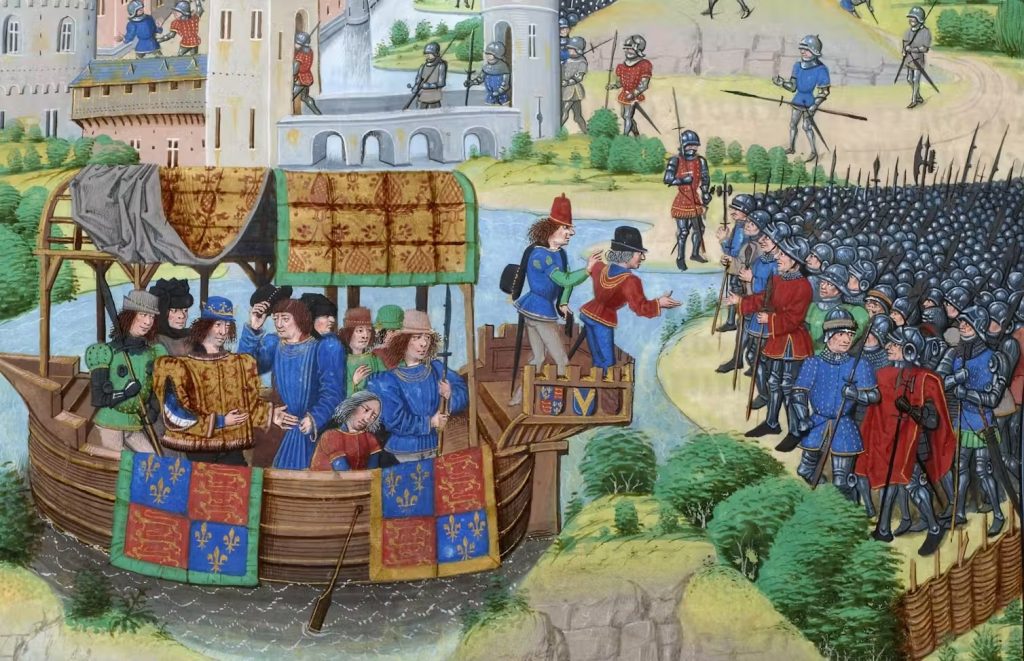
A 15th-century illustration of Richard II – wearing a red, gold-trimmed tunic on the boat – meeting with the rebels of the Peasants’ Revolt of 1381. Bibliothèque nationale de France via Wikimedia Commons
A Tradition of Collective Action
Insurrections, including the English Peasants’ Revolt, emerged partly because cities across Europe had nurtured a robust culture of collective action. Guilds, which were voluntary organizations of merchants and craftsmen, flourished. Additionally, neighborhood religious confraternities acted like mutual aid societies, allowing townspeople to unite around shared interests and grievances.
In France, the Hundred Years’ War disrupted social order. Citizens faced ever-increasing taxes they could ill afford. Unpaid troops often pillaged rural areas, and the French military suffered significant defeats.
In 1358, members of the Jacquerie, a term used derogatorily for lower-class peasants, rebelled against the nobility, burning estates and killing aristocrats. They allied with the Parisian bourgeoisie under the leadership of Étienne Marcel, striving for a more significant voice in French governance.
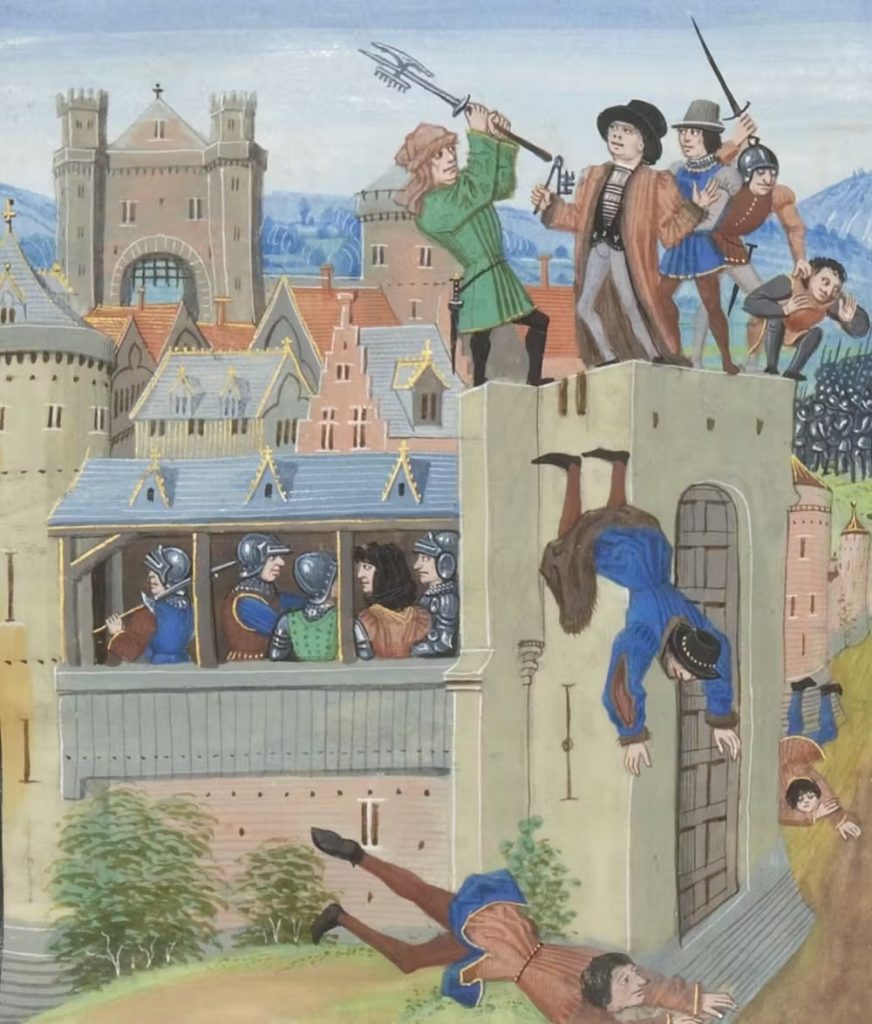
A 15th-century illustration depicting the assassination of Étienne Marcel during the Parisian revolt of 1358 amidst wider unrest in France like the Jacquerie. Bibliothèque nationale de France via Wikimedia Commons
The fury behind the Jacquerie stemmed from the realization that the same aristocrats demanding so much from them were incapable of fulfilling their duty to provide protection.
A decade later, violence erupted in Florence, Italy. This city-state was an industrial powerhouse managed by guilds, yet their leaders represented only the urban elite. The disenfranchised lower classes in the textile industry, unrepresented in guilds, felt marginalized. As a result, the Ciompi, or low-level woolworkers, sought inclusion in the guild system, but their demands went ignored.
In June 1378, the Ciompi revolted and assaulted government buildings. Their efforts temporarily secured them a place in the guild system for four years until the city’s powerful merchant elite disbanded their lower guilds.
Contesting the Church
The church, another primary source of authority, was not immune to dissent.
In the aftermath of an abbot, bishop, or pope’s death, power vacuums often led to ransacking of properties, with locals seizing valuable items from the deceased’s estate.
As Cardinal Peter Damian wrote in 1050:
“From various reports we are aware of the perverse and wholly detestable practice of certain people, who at the death of the bishop break in like enemies and rob his house, like thieves make off with his belongings, set fire to the homes on his estate, and with fierce and savage barbarity cut down his grape vines and orchards.”
Early Christian elections allowed entire congregations to participate, even if the wealthy often had more influence. The principle of “vox populi, vox Dei”—“the voice of the people is the voice of God”—held sway.
However, by the late 13th century, the papacy had consolidated power, diminishing public involvement in religious decisions. Following 1274, a conclave of cardinals would elect the pope, who would then appoint bishops and abbots, often under pressure from surrounding nobility.
The people’s voice had largely diminished, yet they still found ways to assert their perspectives.
An April 1314 papal election in Carpentras, a small town in southeastern France, turned chaotic, delaying the election of a new pope by nearly two years.
As the cardinals struggled to reach a decision, locals, frustrated by the delay, stormed the episcopal palace. The cardinals fled, postponing the election until August 1316 when, under the French king’s protection, Pope John XXII was named.
More than 60 years later, in March 1378, the death of Pope Gregory XI catalyzed another uproar. Amid threats from a public clamoring for an Italian pope, the cardinals elected Urban VI. But subsequently, they deemed their choice invalid, leading to the Great Western Schism, featuring two competing papal courts from 1378 to 1417.
Violence could also erupt over seemingly trivial offenses.
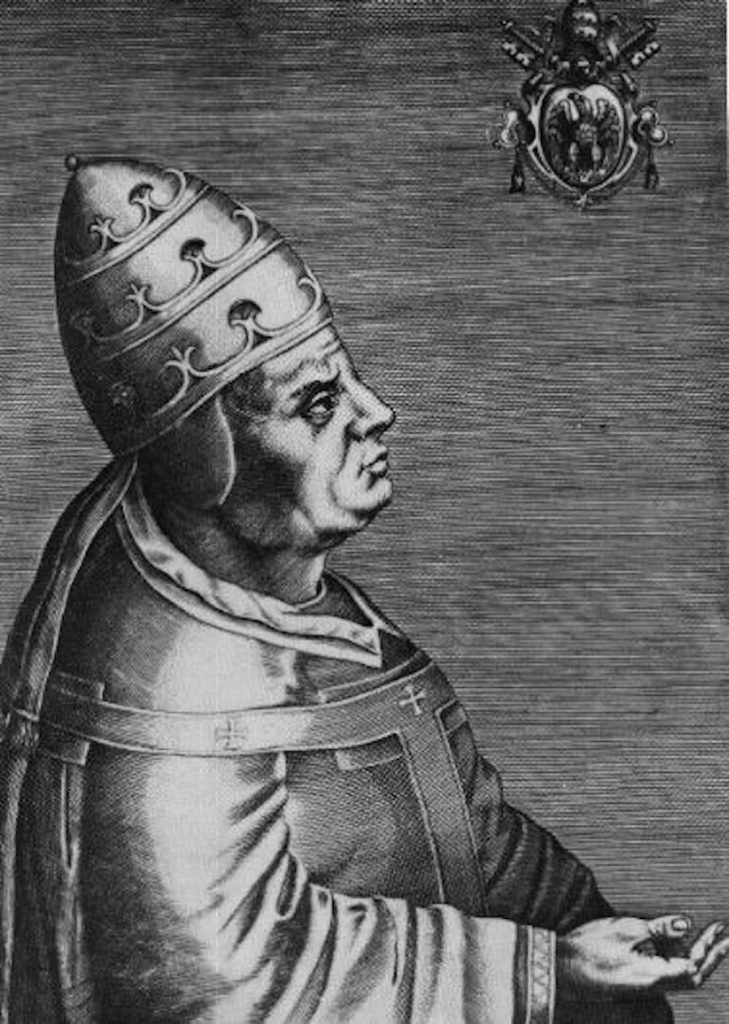
A 16th-century engraving of Pope Urban VI by Onofrio Panvinio. Wikimedia Commons
In October 1367, while in Viterbo, Italy, Pope Urban V faced backlash from locals when his court officials washed a small dog in their drinking fountain. A confrontation ensued, escalating into a two-day uprising. The fountain was destroyed, forcing the pope and his cardinals to retreat to the Rocca Albornoz, the papal fortress.
Authority Is a Two-Way Street
While ideologies have evolved and technologies advanced, the core struggle regarding who holds power, how authority gains legitimacy, and how compliance is enforced remains strikingly consistent.
The tools of governance—taxation, social welfare, infrastructure projects, propaganda, and law enforcement—have remained largely comparable throughout history.
Medieval individuals recognized that authority is reciprocal: when those in power failed to meet their obligations, the populace readily resisted, demanding accountability and questioning their leaders.
In this ongoing contest over authority and consent, we can discern, as voiced by one of Monty Python’s peasants, “the violence inherent in the system.”