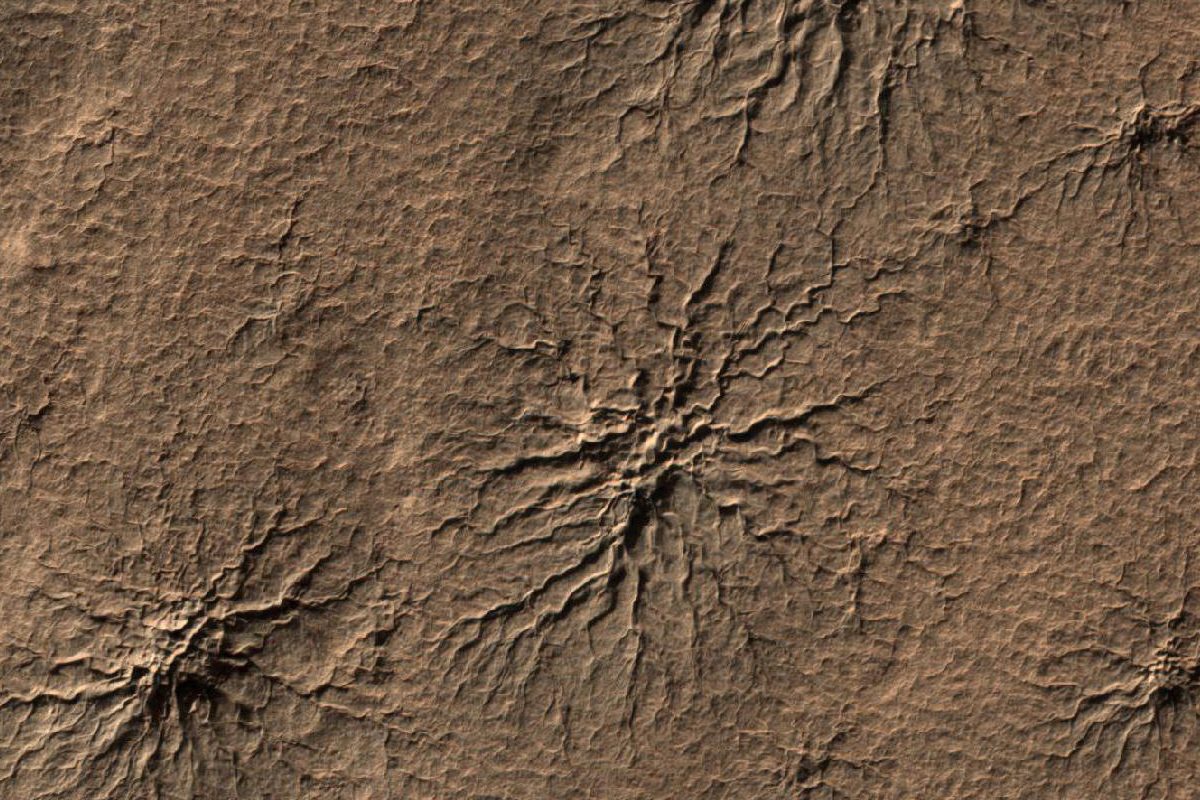
NASA’s Curiosity rover has made significant discoveries on Mars, providing clear evidence of groundwater’s impact on the planet’s surface through intricate spiderweb-like formations. These formations, called boxwork, are visible from orbit as vast patterns but appear as low ridges and hollows when examined closer. Scientists believe they were formed by water flowing through bedrock fractures, depositing minerals that solidified into ridges while surrounding materials eroded away.
The Martian terrain, observed during Curiosity’s ascent of Mount Sharp in Gale Crater, features ridges about 1-2 meters high and extending for miles, creating a distinct pattern reminiscent of spiderwebs. This discovery indicates that liquid water may have been present on Mars much longer than previously thought, suggesting that conditions could have been suitable for life.
Research continues, with scientists hoping to gain further insights into Mars’ hydrological history. The more detailed understanding of the formations and their origins could provide clues about the planet’s past environments and the potential for life.
Images of Interest:
- Spider-shaped features in Mars’ south polar region (NASA’s Mars Reconnaissance Orbiter)
- Detailed images of boxwork formations (Curiosity Rover)
- Unique geological formations including bumpy nodules and other structures observed by Curiosity
As exploration progresses, Curiosity’s findings are likely to yield more information about the history and evolution of the Martian landscape.


