Exploring Cosmic Dust: The Universe’s Tiny Particles
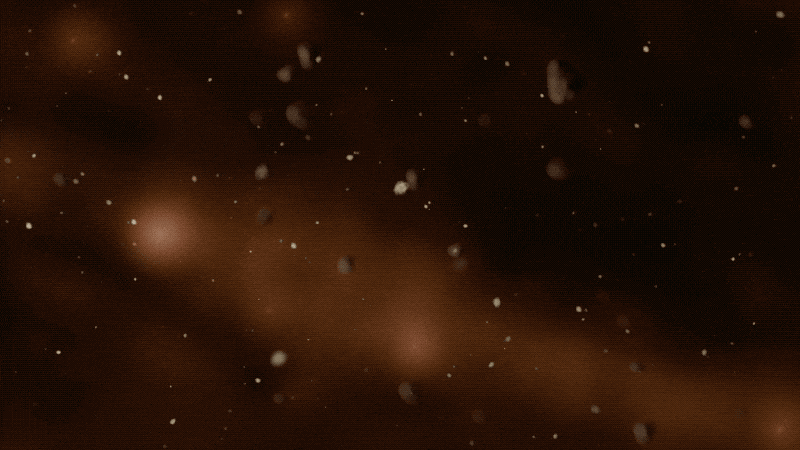
As spring signals cleaning time at home, it reminds us that there’s a lot of “dust” in space too—about 100 tons fall to Earth daily! This cosmic dust reveals insights about the universe’s composition and recycling processes.
Understanding Space Dust
Cosmic dust, often smaller than a grain of sand, comprises rock, ice, minerals, and organic materials. Just as scientists analyze household dust (skin cells, pet fur, pollen), studying cosmic dust helps us understand its origins and the universe’s evolution.
The Cycle of Star Stuff
As the renowned astronomer Carl Sagan noted, “We are made of star-stuff.” When stars die, they expel gas and dust, eventually forming new stars and planets. These materials have cycled through the universe for billions of years, highlighting a continuous cosmic lifecycle.
The Importance of Dust in Astronomy
Initially seen as a hindrance to observing celestial objects, dust is now recognized for its beauty and importance. Infrared telescopes, like the Spitzer Space Telescope, have revealed stunning details of galaxies obscured in visible light, showcasing the intricate structures of dust.
Dust in Our Solar System
In our own solar system, dust can be found in various forms:
- Saturn’s Rings: Mostly composed of ice, they gather dust from meteorite impacts.
- Jupiter’s Rings: Discovered by Voyager 1, they are formed from dust released by impacts on its moons.
The Juno spacecraft captured breathtaking images of these rings.
Observing Dust from Earth
You can even see cosmic dust phenomena like zodiacal light from Earth! This hazy cone of light appears at sunrise or sunset, created by sunlight scattering off dust from comets—substances from the same primordial dust disk that formed our planet and life itself.
Keep Exploring
Dive deeper into NASA’s fascinating topics to uncover more about space and its wonders!


