Infineon RISC-V for Automotive at Hot Chips 2026
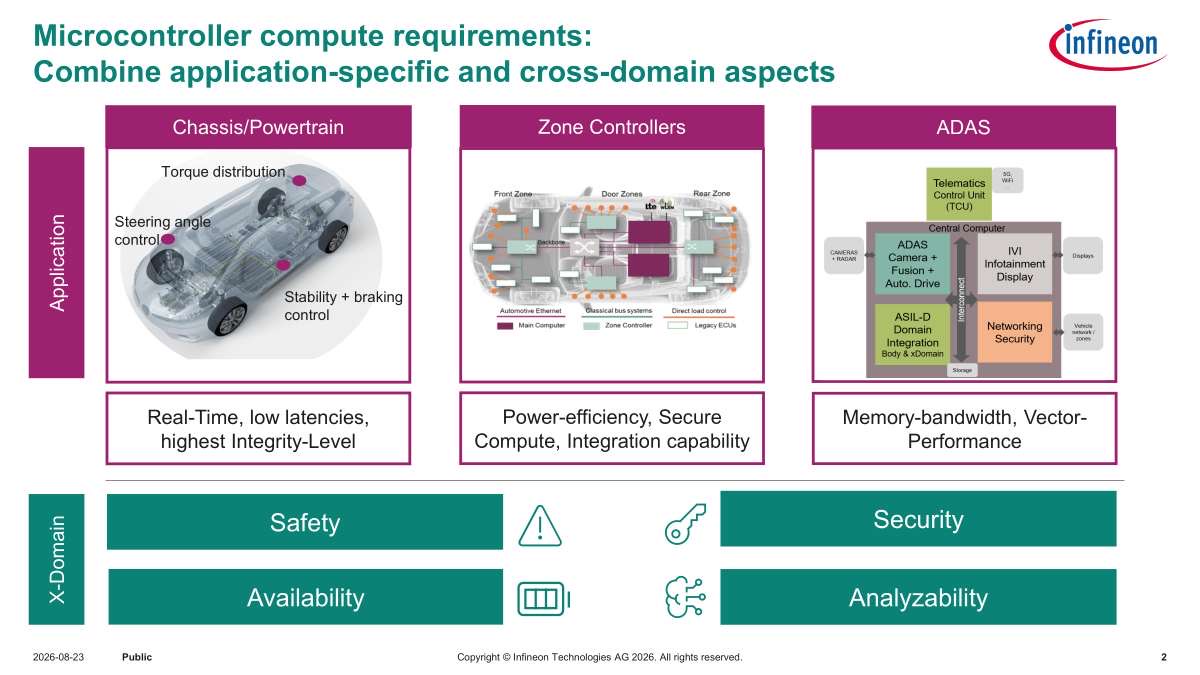
Infineon presented a comprehensive overview of the evolving compute demands of automotive microcontrollers at the Hot Chips 2026 conference. Their focus was on addressing the varied challenges in areas like chassis, powertrain, and Advanced Driver Assistance Systems (ADAS), emphasizing the necessity for real-time processing, low latency, high power efficiency, and stringent security standards.
Key Takeaways
-
Transition to Zone Control Units:
- Infineon described an architectural shift from traditional domain control to zonal and central vehicle computing, aiming to optimize wiring systems and reduce costs.
-
Real-Time Processing Needs:
- The automotive sector demands that various components operate under strict timing constraints, ranging from milliseconds for immediate control tasks to more lenient requirements for strategic functions.
-
Zone Architecture Intelligence:
- Infineon explored two paths for zone controllers: one that integrates intelligence and another that focuses on low-complexity I/O handling.
-
E/E Architecture Consolidation:
- The benefits of consolidating systems were highlighted, particularly how strategic local control reduces vulnerability while streamlining maintenance and cost.
-
Integration of Various Workloads:
- Zone controllers must handle a wide array of tasks, including real-time control and processing demands from DSP (Digital Signal Processing) and AI workloads.
-
Advocation for RISC-V:
- Infineon posited RISC-V as a versatile and open Instruction Set Architecture (ISA) that fosters collaboration and avoids vendor lock-in, positioning it as a strong candidate for future automotive applications.
-
Importance of Standardization:
- The presentation emphasized the need for industry-grade profiles that enhance safety and security across automotive applications while considering software scalability and virtualization.
-
Future Outlook:
- Infineon highlighted that automotive differentiation will heavily depend not just on the ISA, but also on SoC architecture, ecosystem developments, and the availability of robust toolchains.
Conclusion
Infineon emphasizes that RISC-V offers promising benefits for the automotive sector by reducing dependency on proprietary solutions. However, the successful adoption will rely on comprehensive support systems, including standardized tools and a collaborative ecosystem. This forward-thinking approach is pivotal as vehicles transition to more integrated and sophisticated E/E architectures, positioning RISC-V as a flexible solution for the future of automotive technology.

