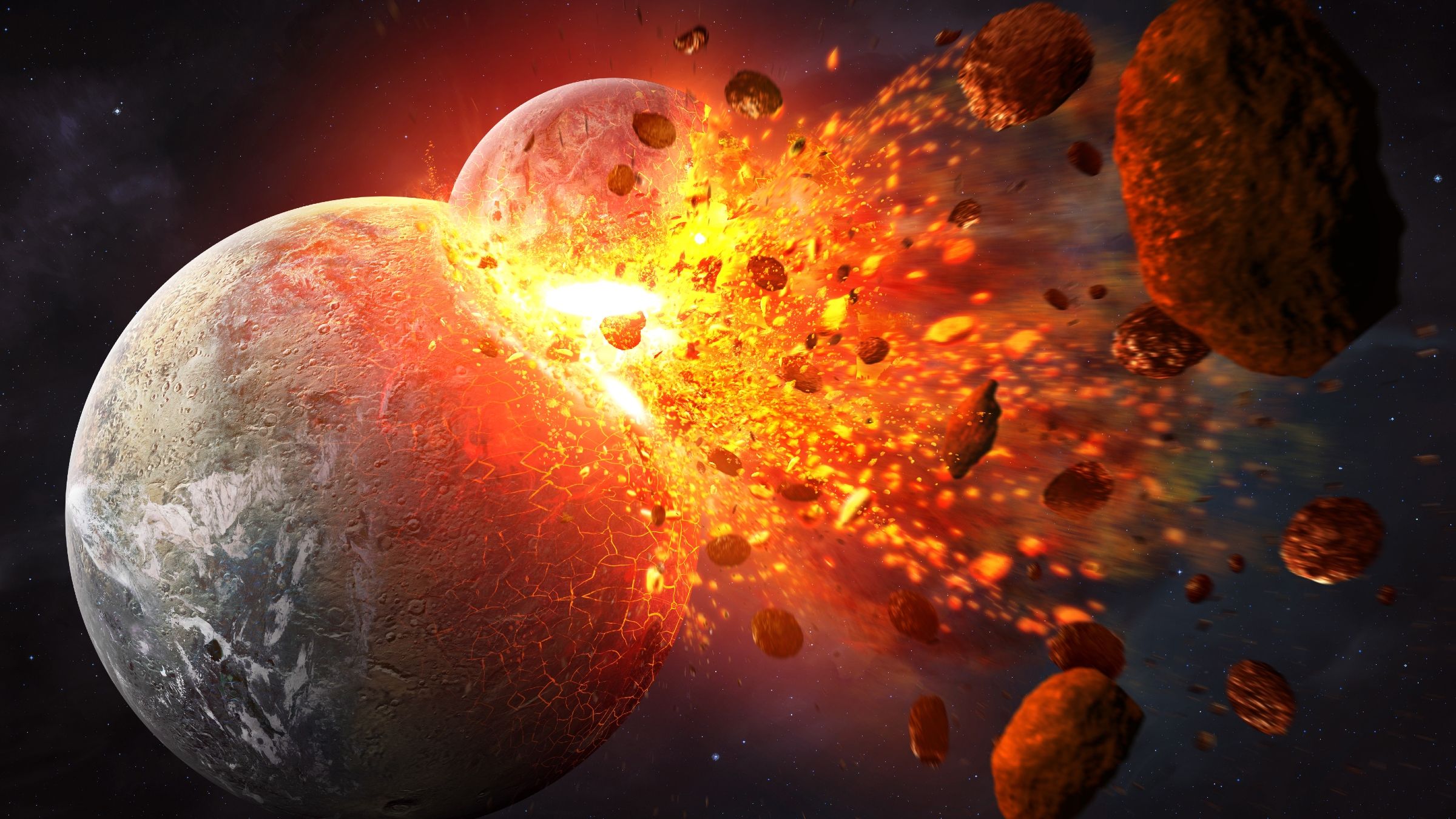
New simulations indicate that the moon could have formed within just five hours following a catastrophic collision between Earth and the protoplanet Theia. This research revises our understanding of the formation timeline of the moon, which is believed to have originated about 4.5 billion years ago, merely 100 million years post-sun formation.
Previously, simulations mainly emphasized the masses of the two colliding bodies. However, researchers now highlight that the geological properties — particularly the hardness of their surfaces — significantly influence moon formation. Initial assumptions posited that the impact occurred when the two bodies had cooled and hardened, producing more debris and extending the formation time.
Key findings reveal that if both Earth and Theia were still hot and molten during the collision, the debris would coalesce more quickly into a moon. With ideal conditions, the simulations suggest a lunar formation time of just five hours, a stark contrast to previous beliefs.
The research emphasizes the role of material strength in impacts and could provide insights into other significant cosmic collisions, such as those impacting other planets and their moons. Additionally, these findings may reshape our search strategies for exomoons — moons orbiting exoplanets — in the vast universe.


