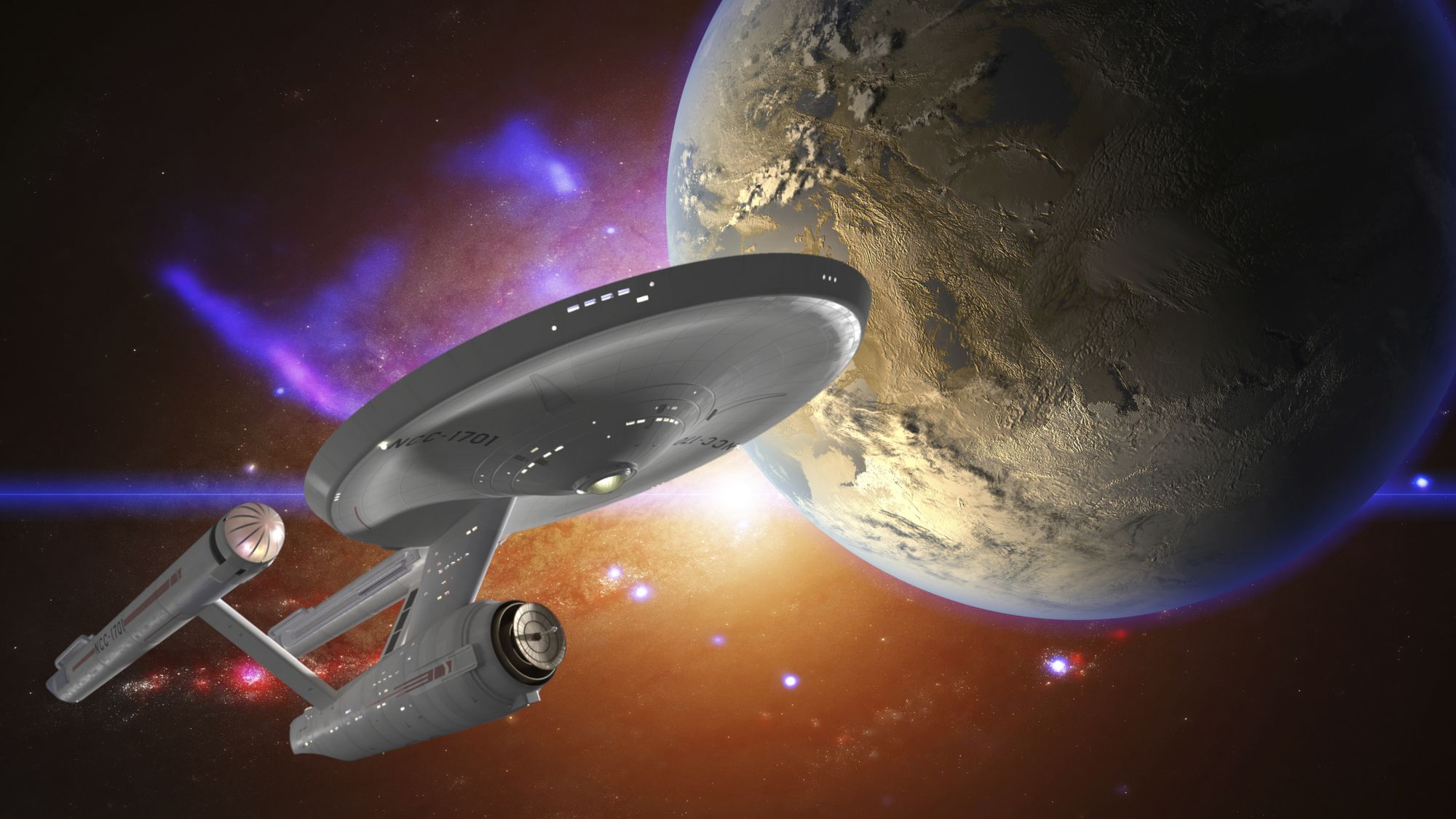
On September 8, 1966, “Star Trek” first aired, introducing a visionary universe that became a cultural landmark. While exoplanets were undiscovered at the time, the series captivated audiences with its imaginative worlds. Fast forward sixty years, astronomers have confirmed over 6,000 exoplanets.
Intriguingly, our current discoveries sometimes mirror “Star Trek” concepts, yet often exceed those imaginative bounds. For instance, the fictional planet Vulcan is envisioned as dry and rocky, orbiting around the real star 40 Eridani A. Though a candidate planet named Vulcan was once detected, it was later explained as a stellar anomaly.
In stark contrast, real exoplanets can be incredibly hostile. For example, ultra-hot planets like WASP-76 b feature vaporized iron, potentially creating “iron rain.” “Star Trek” also posited water-covered planets, echoing findings like those of TOI-1452 b, which might harbor vast water reserves.
Another fascinating aspect is the series’ depiction of planets orbiting multiple stars, paralleled today by the discovery of circumbinary planets like Kepler-16 b.
Ultimately, “Star Trek” expanded our space imagination by suggesting a diverse galaxy. The reality, as we’ve discovered, often goes beyond those early visions, showcasing a universe that is as wonderfully complex and bizarre as the tales spun by the creators of “Star Trek.”