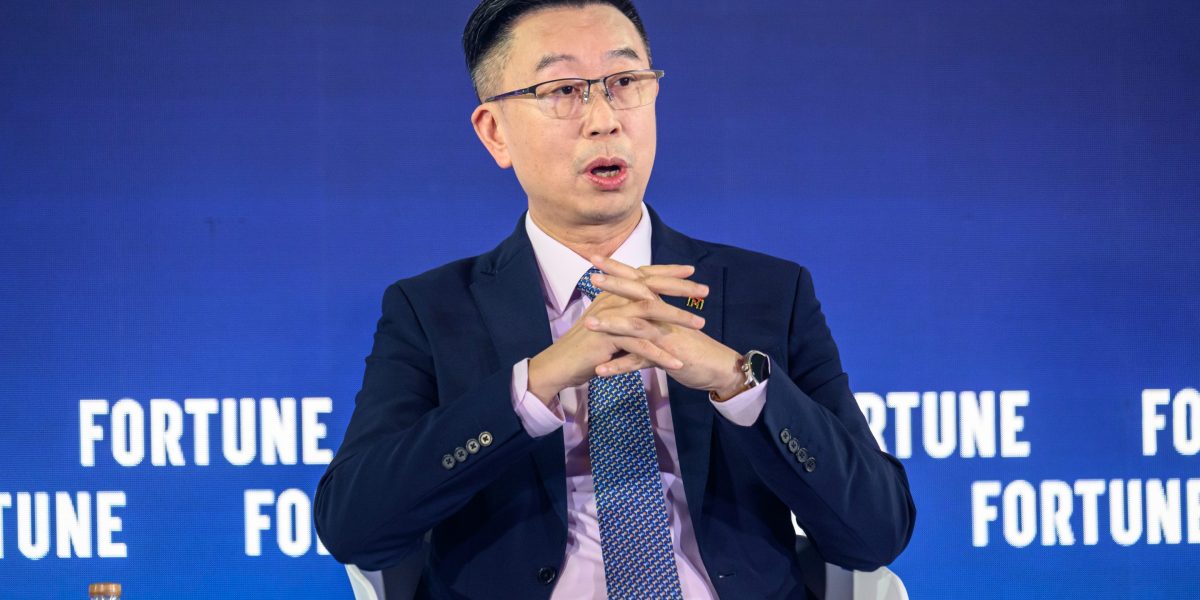
Macau is aiming to transition from a “tourism city” to a “business city,” as stated by Alex Che Weng Keong, president of the Commerce and Investment Promotion Institute of the Macao SAR. During the Fortune Leaders Forum on September 8, he pointed to Las Vegas as a role model, demonstrating that a gambling hub can also thrive as a center for business, conferences, and exhibitions.
Currently, gaming accounts for about 45% of Macau’s GDP and is crucial for the government’s revenue, contributing around 80%. Macau has implemented a new five-year plan (2026-2030) to diversify its economy, committing 130 billion patacas (approximately $16.1 billion) to emerging industries, with a goal for non-gaming sectors to contribute 60% of GDP by 2030.
With its unique legal and economic autonomy as a special administrative region of China, Macau can attract industries that require regulatory flexibility. Central to this diversification is the Guangdong-Macao In-Depth Cooperation Zone on Hengqin Island, which is vital for the future development of the Greater Bay Area.
Macau’s distinct Portuguese heritage positions it to foster trade with European and Portuguese-speaking countries, enhancing its business prospects. However, experts like Edward Au from Deloitte China suggest that the region must create a clearer division of labor among its cities to enhance innovation and collaboration.
By 2036, Che hopes that Macau will be viewed not just as a casino hub, but as a unified “tech city” that encompasses Hengqin, achieving a broader, expansive identity.