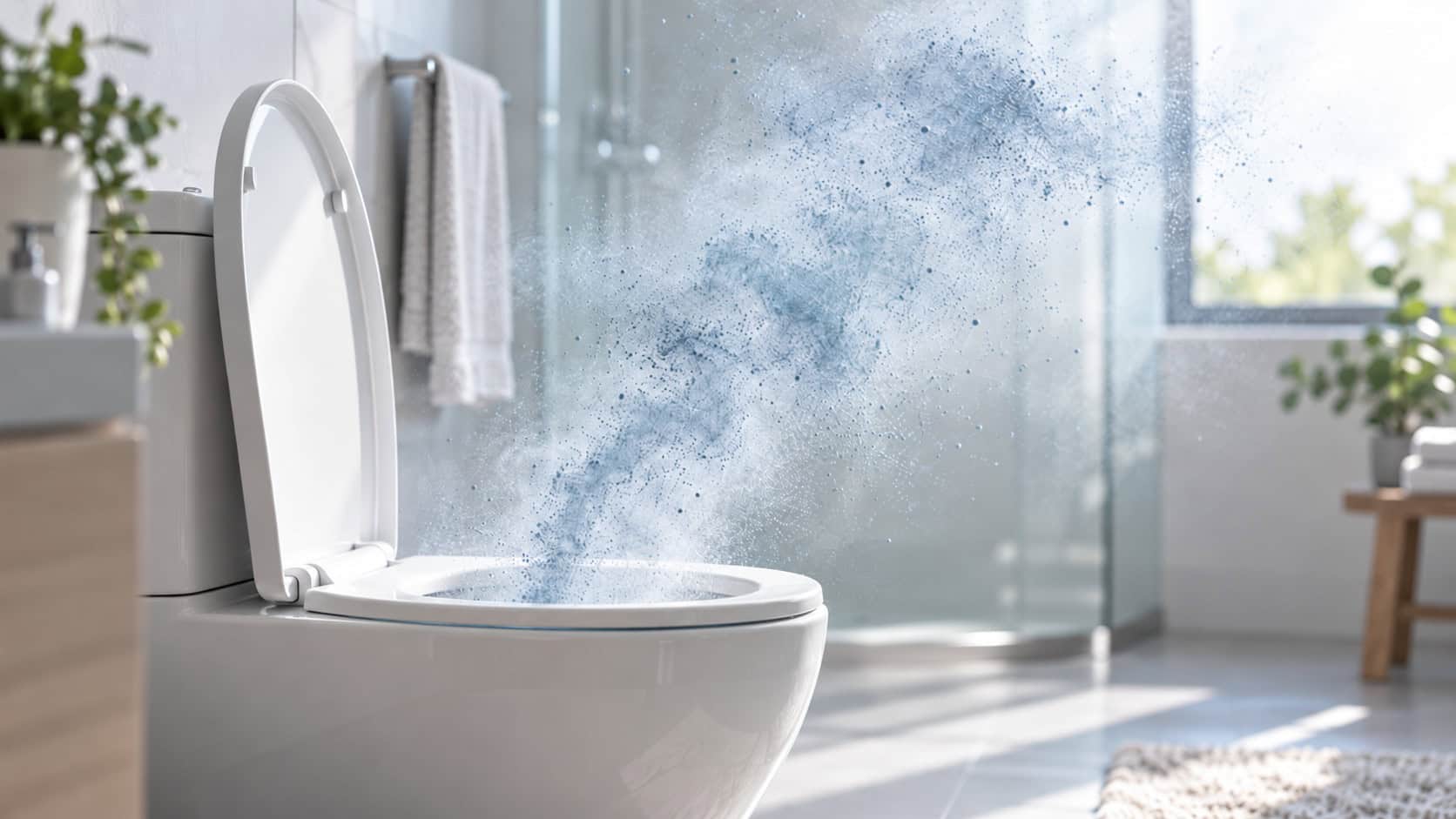
The article discusses the often-overlooked health concerns associated with toilet flushing, specifically the release of aerosols that can carry microbes into the air. Here’s a summary of the key points:
Toilet Aerosols and Health Risks
-
Aerosol Generation:
- Flushing a toilet creates turbulence, which can release microscopic droplets into the air.
- These droplets can contain bacteria, viruses, and other biological materials, potentially inhaled by people nearby.
-
Research Findings:
- A systematic review of 22 studies revealed that aerosols can reach over five feet in height and remain airborne for at least 20 seconds post-flush.
- Factors influencing aerosol release include the amount of microbes in the toilet water and the flush volume; higher concentrations lead to increased airborne particles.
-
Toilet Design and Plume Size:
- Energetic flushing systems and more water per flush produce larger aerosol clouds.
- Studies using controlled experiments indicated a direct correlation between microbial concentration and aerosol levels.
-
Lid Position Mitigation:
- Closing the lid may reduce but not eliminate aerosol escape, with gaps allowing some particles to escape.
- Evidence on the effectiveness of this measure is limited, highlighting the need for more comprehensive studies.
-
Preventive Measures:
- Recommendations include regular cleaning, handwashing, using dual-flush options, and potentially closing the lid before flushing.
- Ventilation may aid in clearing remaining particles.
-
Public vs. Private Concerns:
- The flush plume poses more significant risks in public bathrooms where vulnerable populations may be exposed.
- Further research is necessary to develop interventions that minimize aerosol generation in high-risk environments.
Conclusion
Understanding and mitigating toilet-generated aerosols is essential, especially in public health contexts. The research emphasizes the need for improved toilet designs and hygiene practices to reduce potential health risks.