Key Insights on the Arrow of Time in Neural Networks
Researchers have delved into the intricacies of how irreversibility manifests in complex systems, particularly focusing on neural interactions. Here’s a summary of the findings:
-
Methodology: An information-theoretic approach was developed to dissect the local arrow of time in complex systems. This enables researchers to identify how much irreversibility is contributed by individual components and their interactions in groups of varying sizes.
-
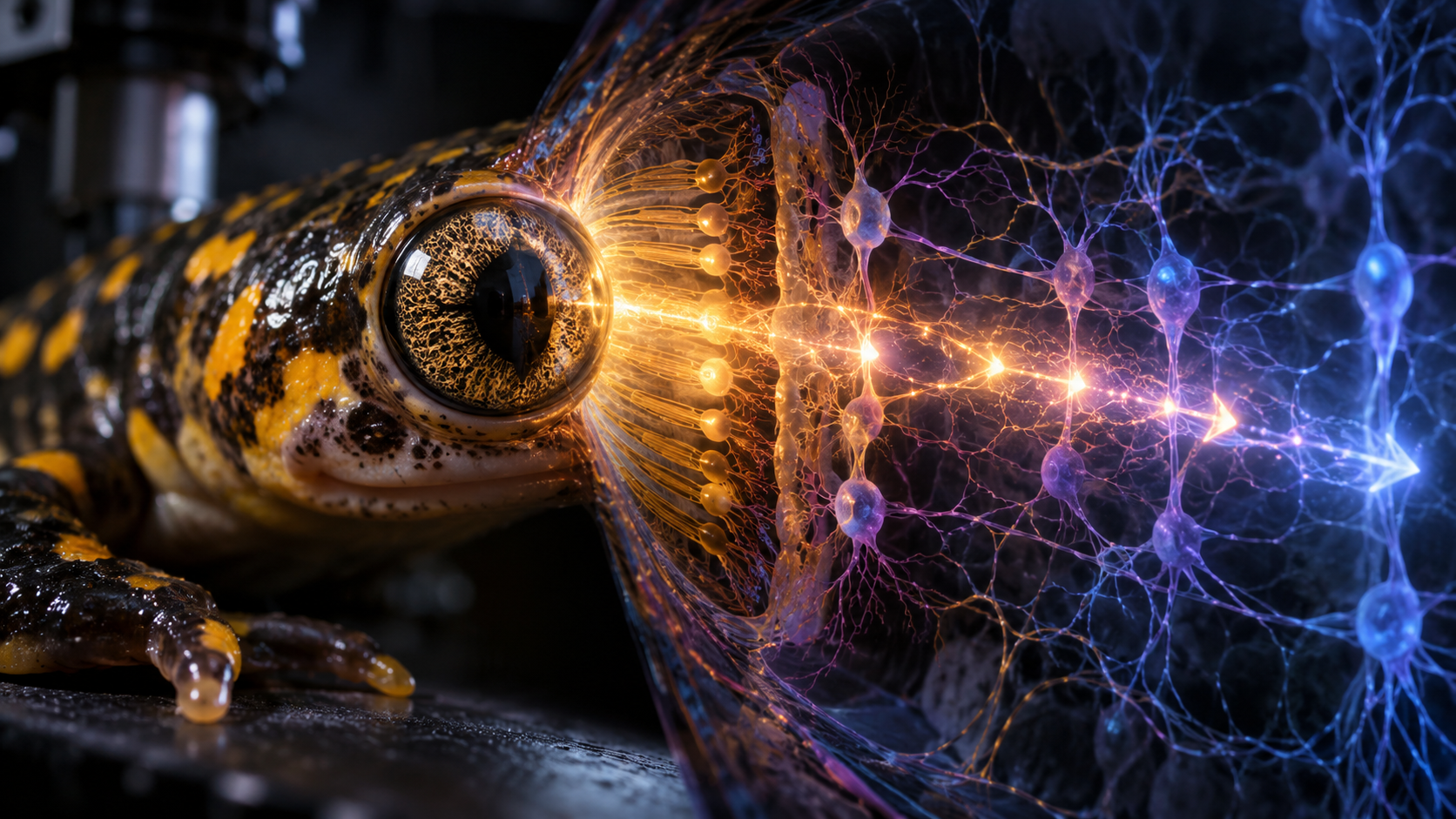
Neuronal Activities: Observations from 53 neurons in the salamander retina revealed that interactions between pairs of neurons accounted for 66% to 74% of observed local irreversibility.
-
Surprising Findings: Notably, retinal activities appeared to exhibit a stronger arrow of time while viewing a statistically reversible stimulus than while viewing a natural movie, challenging the assumption that neural irreversibility just reflects the external world.
-
Definition of Time’s Arrow: The fundamental asymmetry between past and future is dubbed the arrow of time. This paper investigates the origins of such irreversibility within complex systems, suggesting that simple interactions can generate apparent complexity.
-
Experimental Design: The research analyzed local irreversibility within the dynamics of retinal ganglion cells as they reacted to different stimuli—one involving a natural movie and the other depicting Brownian motion, designed to be time-reversal invariant.
-
Result Variations: The neural network displayed significant local irreversibility even with the Brownian stimulus, indicating that the internal dynamics of the retina contribute to irreversible behavior, irrespective of the external input.
-
Framework’s Broader Implications: The mathematical framework is applicable beyond neuroscience, offering insights into various biological and physical systems with multiple interacting components.
Conclusion
This research highlights the potential for simple interactions to give rise to complex behaviors and temporal asymmetry, inviting further exploration into how such dynamics manifest across different systems. Understanding these microscopic relationships might elucidate broad features of irreversibility observable in everyday life.