Dinosaur Healing Insights from a Broken Rib
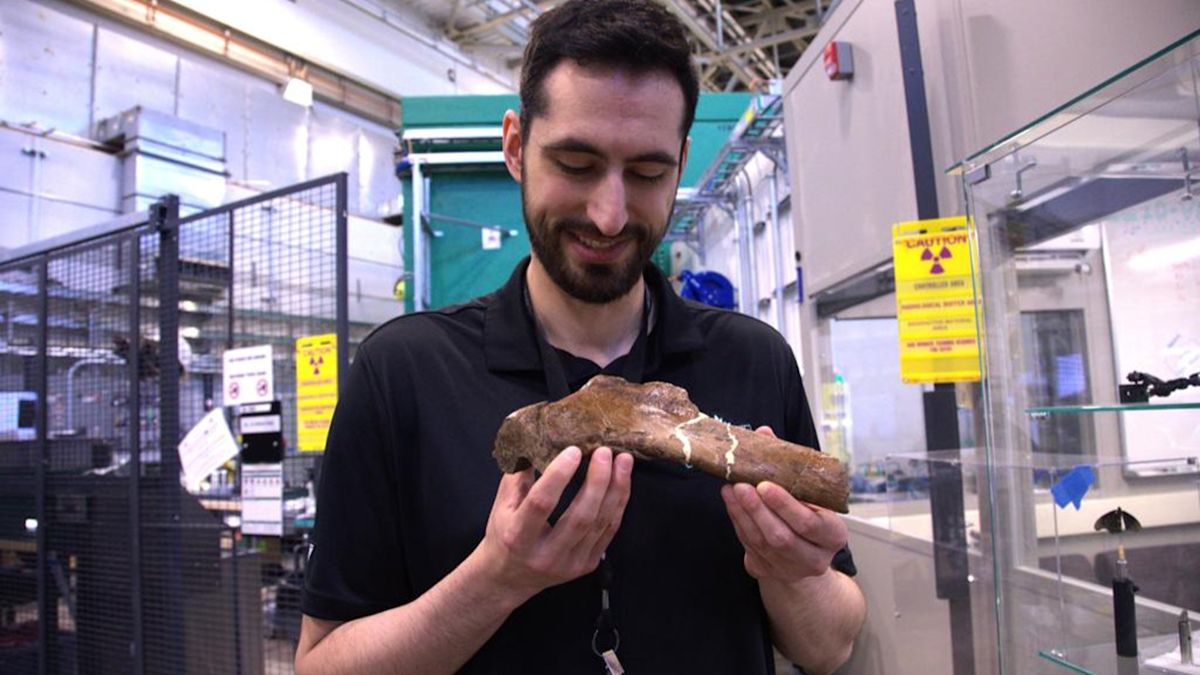
A unique fossil offering insight into dinosaur biology has been discovered through the study of a broken rib from Scotty, the largest Tyrannosaurus rex ever found. Researchers employed neutron imaging techniques at Oak Ridge National Laboratory to analyze the rib, which is about 66 million years old, allowing them to create detailed 3D visualizations without harming the fossilized material.
Noteworthy Findings
Scotty’s rib showcased a remarkable network of mineralized blood vessels, a find considered extraordinarily rare among fossils. Mauricio Barbi, a physics professor from Canada, likened this discovery to a lottery win, highlighting the exceptional preservation of soft tissues like blood vessels during fossilization.
The Wound’s Journey
When Scotty’s rib sustained its injury, iron-rich blood flowed to the site, initiating the healing process through the formation of new blood vessels. Unfortunately, the dinosaur did not survive this injury; it perished in a saline marsh that ultimately helped preserve the fragile blood vessel network from decomposition.
Advanced Imaging Techniques
The research team, led by doctoral candidate Jerit Mitchell, initially identified blood vessels in 2020 using micro-CT scanning. The combination of neutrons and X-rays allowed for a more detailed investigation. Neutrons are particularly effective in visualizing light elements, while X-rays excel in revealing denser structures, similar to how MRIs and standard X-rays function in human medicine.
Cutting-Edge Instruments
In April 2026, the researchers used two specialized instruments at ORNL: the Multimodal Advanced Radiography Station (MARS) and the Virtual Environment for Neutron Sciences (VENUS). These tools revealed further details about soft tissue preservation, confirming earlier findings while enhancing the analysis without damaging the fossil.
Future Research Directions
The neutron imaging technologies are pivotal not only for battery and materials research but also for exploring ancient life. Researchers believe that numerous fossils in collections around the world still contain unexplored information, and they plan to use their imaging techniques to analyze additional fossils. This could lead to a deeper understanding of healing patterns and diseases across various dinosaur species.