Unexpected Findings in Arctic River Erosion Research
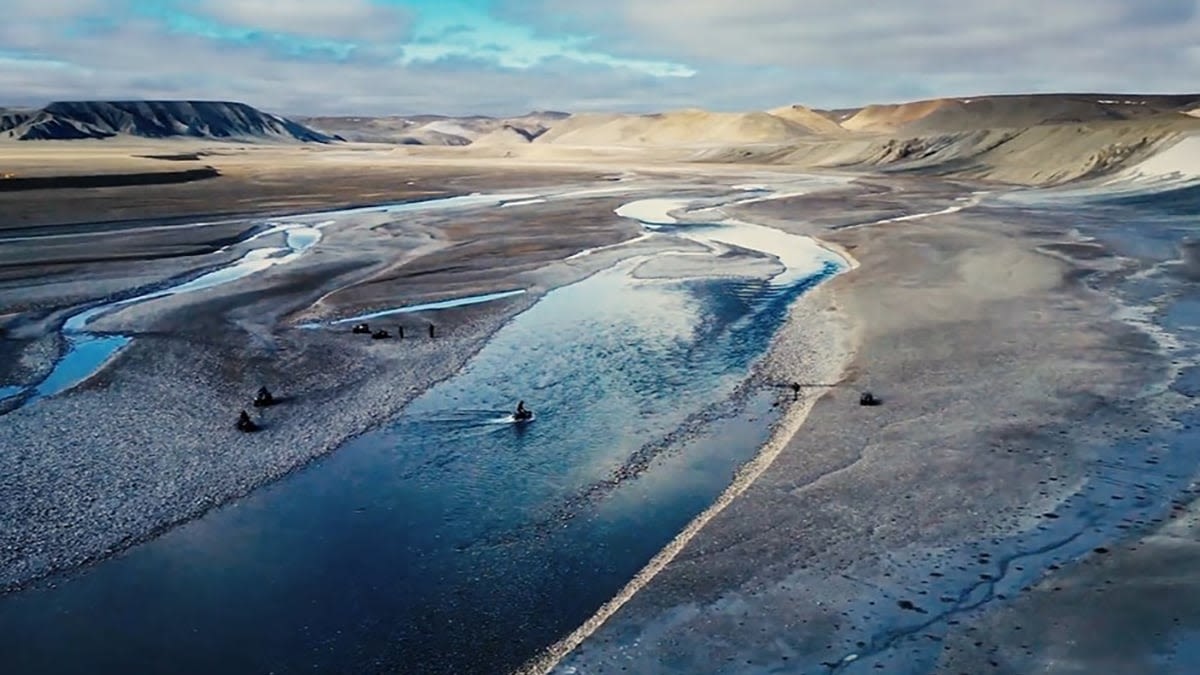
Researchers from Simon Fraser University and the University of British Columbia have discovered surprising insights into river erosion in the Canadian High Arctic, challenging existing notions about how frozen ground affects this natural process.
Background
Traditionally, scientists believed that frozen ground would slow down river erosion because the ice inside would stabilize the surrounding sediment. However, evidence from field recordings indicated that new river channels can form rapidly in this region, suggesting that erosion might actually occur faster than in temperate landscapes.
Lab Experiments
In controlled lab experiments, scientists utilized a glass-sided flume to simulate river conditions. They found that sediment erosion occurred at rates approximately ten times higher than expected for unfrozen ground conditions. Environmental scientist Jonas Eschenfelder expressed disbelief at these results, stating they initially expected the opposite outcome. Their skepticism led them to repeat the experiments multiple times until the results were confirmed.
Mechanism of Erosion
The research highlighted that during periods when the ground is fully frozen, erosion is minimal. However, as seasonal thawing occurs, a shallow layer melts while the ground below remains frozen. This causes water to divert in various directions, increasing its ability to erode sand and soil particles.
Implications
These findings are crucial for understanding the Arctic landscape as it transforms due to climate change. Researchers emphasize that the Arctic region is “waking up” as temperatures rise, leading to the emergence of new river systems. They aim to conduct more detailed field studies throughout the year to better understand the accelerated erosion process.
Conclusion
The research underscores the importance of continually observing and adapting scientific theories in light of new data. As the Arctic continues to evolve, understanding its dynamics becomes increasingly vital for climate predictions and environmental management.
For more in-depth information, you can access the full research published in Communications Earth & Environment here.