New Insights on River Erosion in the Canadian High Arctic
Recent research led by scientists from Simon Fraser University and the University of British Columbia challenges existing beliefs about river erosion in frozen landscapes. Traditionally, it was assumed that frozen ground would slow down erosion, as ice acts like glue to hold sediments in place. However, field recordings and controlled lab experiments revealed that new river channels in the Arctic can form significantly faster than expected, often outpacing erosion rates in temperate regions.
Key Findings
-
Unexpected Erosion Rates: Lab tests revealed erosion rates around ten times faster in frozen conditions than previously thought. This contradicts the notion that frozen ground would minimize erosion.
-
Experimental Setup: Researchers created a glass-sided flume mimicking Arctic river conditions, using glass beads to represent river gravel. Running water over frozen and unfrozen sediment yielded surprising results that were consistent across multiple experiments.
-
Mechanism of Erosion: During seasonal thawing in the Arctic, a thin layer of sediment melts while the permafrost remains intact beneath. Instead of flowing downward, water is diverted, contributing to increased erosion as it carries away more sand and soil.
-
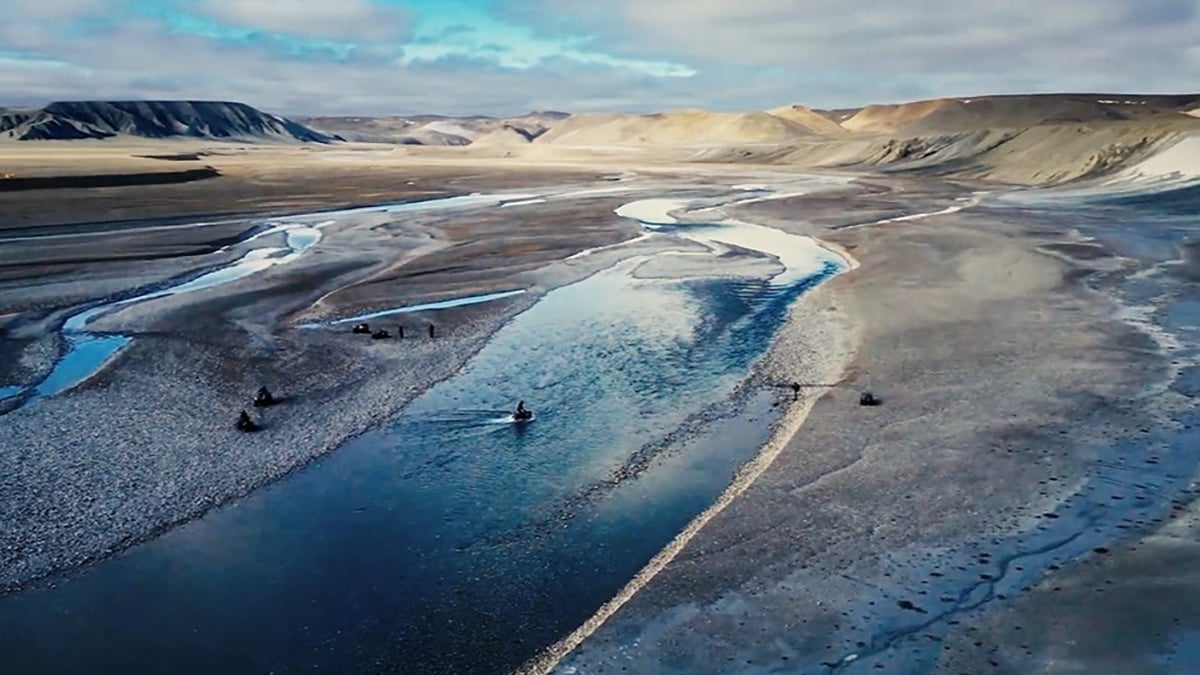
Field Validation: To validate their findings, the team traveled to Tallurutit (Devon Island) in the Arctic, applying mathematical models to their observations in the field.
Implications
This research has crucial implications for understanding the dynamics of the Arctic landscape as climate change progresses. The accelerated erosion and formation of river systems signify significant ecological shifts in a region that has been stable for millennia. As temperatures continue to rise, understanding these processes will be essential for predicting future conditions and managing geopolitical and environmental concerns in the Arctic.
Future Research
The team aims to conduct more field recordings throughout the year to observe erosion processes under varying temperature conditions, continuing to build on these groundbreaking findings.
For more details, check the study published in Communications Earth & Environment and see related insights on the changing Arctic in the context of climate change.