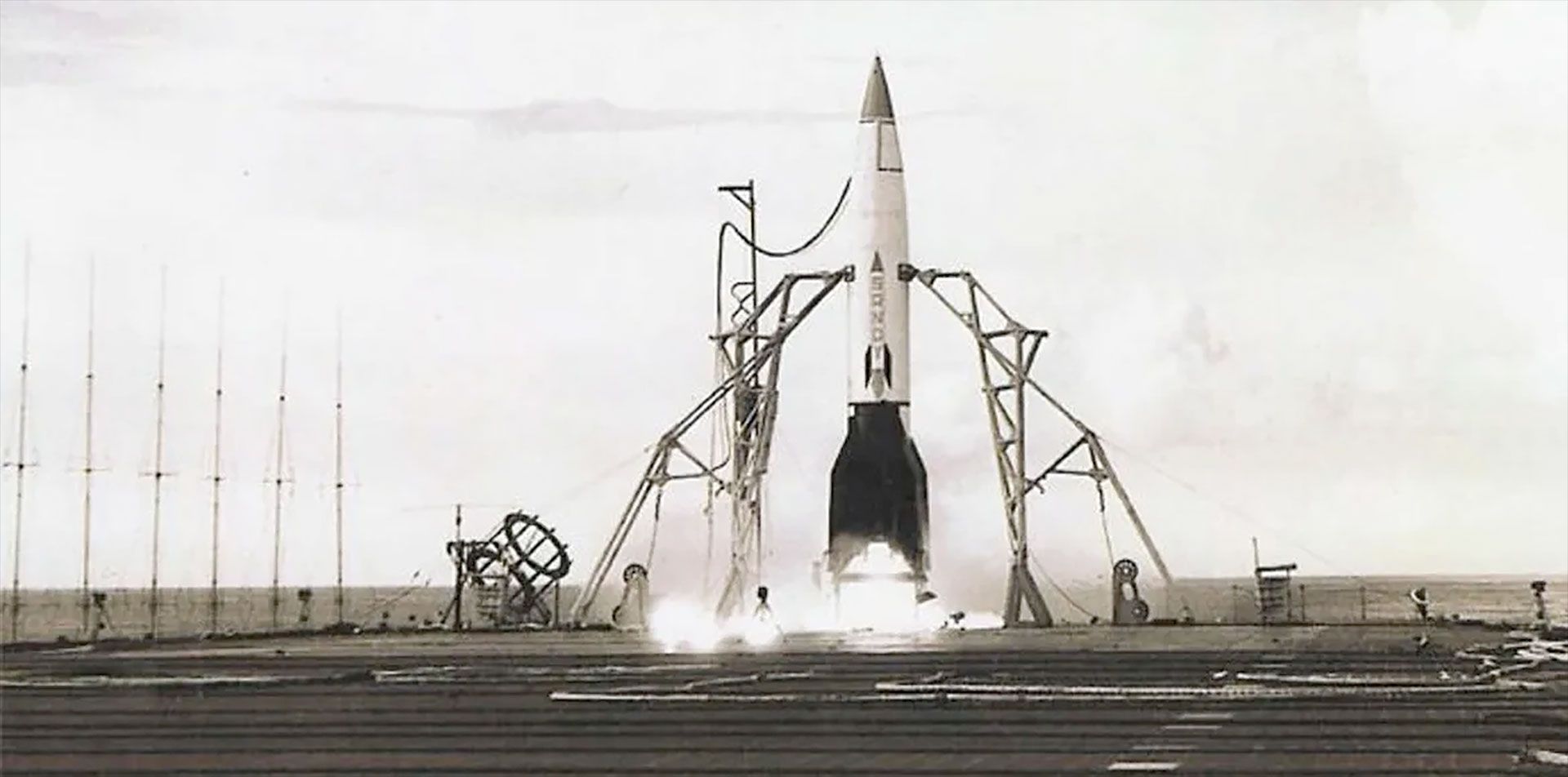
On September 6, 1947, a significant milestone in aerospace history occurred: the first rocket launched from an aircraft carrier. The V-2 rocket, which had been developed by German scientist Wernher von Braun during World War II, was fired from the USS Midway, a U.S. Navy ship, during “Operation Sandy,” south of Bermuda.
Despite its historical importance, the maiden launch was somewhat problematic; the V-2 veered off course and only reached an altitude of 15,000 feet before descending back to Earth.
The V-2 rocket is notable for being the first long-range guided ballistic missile, with its origins firmly rooted in military applications. The U.S. military’s interest in such technology led to Operation Paperclip, which facilitated von Braun’s relocation to the U.S. post-war, where he would eventually contribute to NASA’s space endeavors.
This event marked the beginning of missile launches at sea, laying the groundwork for future advancements in U.S. missile technology, which would evolve into the complex orbital rockets of the following decades. The V-2’s launch highlighted the potential of aerospace technology beyond military uses, setting the stage for the advent of space exploration.