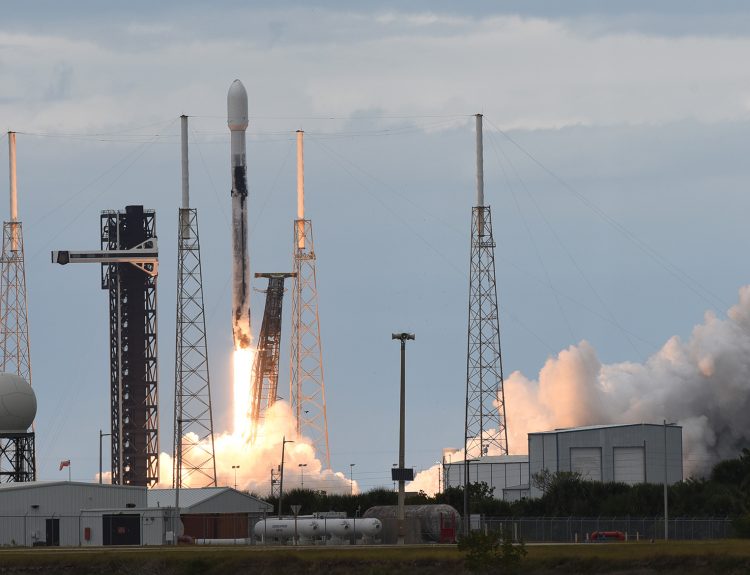
The Nancy Grace Roman Space Telescope (Roman) is NASA’s upcoming flagship space observatory, following the legacy of the Hubble and James Webb Space Telescopes. The project emerged from the 2010 Decadal Survey, which identified Roman as a top priority in astronomy, leading to its design and development since that year.
Key Features
- Field of View: Roman has a similar-sized mirror to Hubble, but with a field of view that is 100 times larger. This immense area coverage allows for comprehensive survey missions across a significant portion of the universe.
Scientific Goals
-
Dark Energy & Dark Matter: Roman aims to investigate these mysterious components of the universe, gathering large-scale data to understand their roles and effects on cosmic evolution.
-
Exoplanets: The telescope will search for planets around other stars, particularly those similar in size to Earth and Mars, providing insights into the diversity of planetary systems.
Data Management
- Roman will generate vast amounts of data, approximately 1.4 terabytes per day, which is significantly more than Hubble’s total archive accumulated over 36 years. This data will be processed using modern cloud storage technologies, and all of it will be made publicly available.
Operation and Collaboration
- Roman will operate alongside Hubble and Webb, at a similar orbit known as the L2 point, about a million miles from Earth. Roman’s broad imaging will guide Hubble and Webb for more detailed observations of interesting targets.
Namesake
- The telescope is named after Dr. Nancy Grace Roman, NASA’s first chief of astronomy, often referred to as the “mother of Hubble” due to her vital contributions to the realization of space telescopes and ensuring data accessibility for the public.
Future Endeavors
- Roman’s advanced engineering includes a lightweight mirror that’s one-fourth the weight of Hubble’s, achieved through innovative design to maintain stability and image sharpness. This experience will inform future projects in space telescope technology.
Keeping Updated
- The first science observations from Roman are expected to commence about 90 days after launch. Exciting images and data will be shared through various channels to engage the public in the telescope’s discoveries.
Overall, the Nancy Grace Roman Space Telescope is set to expand our understanding of the universe, offering new insights into fundamental cosmic questions while engaging both the scientific community and the public in its findings.