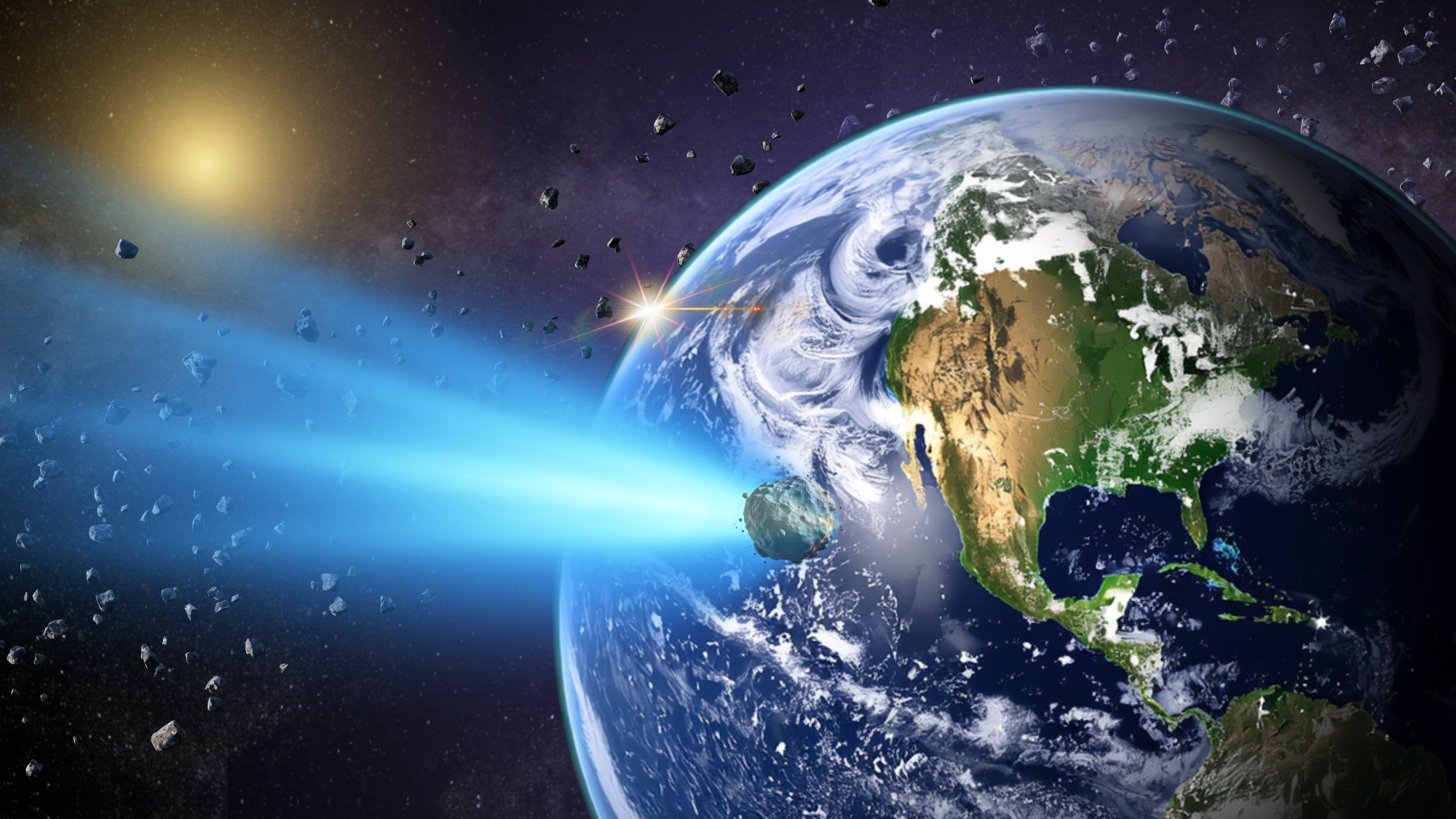
Scientists studying 75 meteorites that fell to Earth have outlined seven stages these space rocks undergo during their atmospheric entry, influenced by various physical processes. Their research indicates that mass and speed reduction is not solely due to evaporation; instead, melting and fragmentation also play significant roles.
Key Stages of Meteorite Entry
-
Phase 1: The meteorite generates a shock wave upon entering Earth’s atmosphere, heating itself and surrounding gases, creating a “shooting star.”
-
Phase 2: As the meteor encounters denser air, it brightens. Changes in brightness can indicate the rock’s spin.
-
Phase 3: The meteor becomes a fireball, losing significant mass through melting as fast-moving air strips away melted material.
-
Phase 4: At around 40 miles above the Earth, the meteor reaches a state where melting balances out, potentially losing up to 40% of its mass.
-
Phase 5: The meteorite begins to fragment, shedding pieces that flare up as they break off. This often happens due to pre-existing cracks from previous space collisions.
-
Phase 6: Fragmentation accelerates, sending pieces flying at higher speeds. Observations show that larger meteorites scatter over a wider area.
-
Phase 7: The remaining fragments cool down sufficiently to stop glowing. Melting ceases, and a thin crust forms on their surfaces.
Implications of the Study
This research enhances understanding of meteorite behavior, which might aid in predicting the effects of larger, potentially hazardous asteroids entering the atmosphere. Such knowledge is crucial for assessing threats from objects that could cause airbursts or significant impacts on Earth.
For further details, the findings are presented in a paper in the Wiley Online Library.