The recent establishment of the Mecca Joint Deterrence Agreement marks Türkiye’s entry into two military alliances focused on countering Russia and Iran. Although Ankara actively seeks to diminish the influence of these regional powers, its strategic location often necessitates cautious engagement to avoid significant economic repercussions. The neo-Ottoman vision aligns closely with many Western Zionist objectives, anticipating that as Russian and Iranian dominion wanes, Turkish influence will rise.
To some extent, this is unfolding, with Türkiye taking the lead in regions such as Syria, the Caucasus, and Central Asia, where the grip of Russia and Iran appears to be loosening.
However, Türkiye’s concerns are becoming increasingly evident. The modest gains it has enjoyed are overshadowed by the strengthening of both Russia and Iran, with the former poised to secure Ukraine’s Black Sea coastline and the latter consolidating its command over the Strait of Hormuz, thus reinforcing its supremacy in the Middle East.
Türkiye now finds itself at a crossroads: to accept these developments or to engage more actively in efforts to counteract them, a course of action that poses a risk of severe economic fallout—or worse.
NATO has started to rely more heavily on Türkiye’s involvement in the Black Sea. The Mecca Agreement is likewise expected to outline Türkiye’s role in undermining Iran and possibly in combating Ansarallah in Yemen.
Despite being a nuclear-armed nation, Pakistan significantly relies on arms imports, ranking among the world leaders in this area alongside Saudi Arabia. The Pakistani military is also heavily dependent on Chinese support. Meanwhile, Türkiye’s defense industry is experiencing a trend toward “indigenization,” but still leans on the United States and Western European technologies.
A fundamental aspect of Islamic NATO is that Pakistan provides the nuclear capabilities, Saudi Arabia offers the financial backing, while Türkiye contributes the defense industry expertise. NATO 3.0 also looks to Türkiye to assist its proxies. But can Türkiye actually meet these expectations?
NATO 3.0 and Turkish Military Industry
NATO’s hopes hinge on the performance of the Turkish defense industry, which recently faced scrutiny in a ProPublica article detailing a Texas ammunition plant where Turkish-made robotics repeatedly caught fire:
The robots, with large metal arms ending in clamps, would accumulate oil, which ultimately resulted in fires when they transferred steel blocks heated to 1,800 degrees in and out of a machine that repeatedly belched flames.
This incident, while severe, was not solely the fault of Repkon, the Turkish manufacturer. It became apparent that the U.S. had assumed the machinery could undertake a job it had never performed before:
Army officials discovered that the production line Repkon intended to sell was designed to manufacture an older, simpler model of 155 mm shells using a different type of steel. Uncertainty remained about whether the Turkish equipment could produce the newer 155 mm model, as it had never been tasked with it before, according to four former General Dynamics and Army officials.
Nonetheless, they pressed ahead.
On a broader scale, discussions abound regarding Türkiye’s potential role in rearming Europe and becoming a major supplier for NATO. At this year’s NATO summit in Ankara, Türkiye was included in three out of four high-profile projects launched at the July gathering: Ground-Based Precision Strike Capabilities, Generic NATO Indirect Fire Round, and Airbus A400M Multinational Fleet. The alliance also made a five-year $40 billion commitment for drone defense capabilities, which bodes well for Turkish firms like Baykar and Turkish Aerospace Industries, prominent players among NATO nations in drone technology.
Despite the recent growth of Türkiye’s defense sector, significant limitations remain. Can Kasapoğlu, a Turkish NATO expert, noted:
Türkiye is emerging as a more vital player in defense manufacturing within NATO, but the term “hub” should be considered cautiously. A true hub extends beyond merely exporting platforms; it encompasses production depth, maintenance, upgrades, spare parts, training, software support, industrial security, and interoperability across the system’s full lifecycle.
Türkiye is trending in that direction, especially with drones, yet the next phase demands more extensive supply chains.
My conclusion would be that Türkiye has the potential to become a significant NATO defense manufacturing hub, though long-term maintenance is essential…
Türkiye can contribute to NATO’s innovation drive, but the crux lies in integration. Emerging technologies hold little significance in isolation; advancements in AI, autonomy, cyber capabilities, and space-based systems can only be militarily pivotal when homogenized into sensors, command-and-control, electronic warfare, secure communications, and operational decision-making.
Türkiye has laid a robust foundation with unmanned systems, defense electronics, sensors, electronic warfare, and command-and-control technologies—all pertinent for AI-driven and autonomous warfare. However, the next step will be more challenging. NATO’s future battle networks will necessitate secure data standards, cyber resilience, coalition interoperability, cloud architecture, and trustworthy software supply chains.
This is where Türkiye should establish itself—not merely as a drone exporter but as a contributor to NATO’s future combat-data ecosystem.
In summary, while Türkiye’s ability to deliver on rearming Europe and serving as the military industrial powerhouse for Islamic NATO appears limited currently, this remains a long-term ambition. Even with an enhanced Turkish defense capacity and resources for NATO-aligned states, they would still not match the military might of Russia, Iran, or China—especially in terms of critical industrial resources necessary for advanced weaponry.
Nevertheless, Türkiye can still provide substantial contributions.
CIA Islamic Mercenaries
On another front, Türkiye is grappling with similar challenges. The difficulty—if not impossibility—of inflicting a military defeat on Iran has become evident, creating potential for an even graver regional conflict than the one currently underway.
Alongside the target of Iran, Zionist and allied factions continue to focus on Iran-aligned groups such as Hezbollah and Ansarallah.
As per Mohammed Marandi, the Mecca Agreement predominantly revolves around Yemen, particularly Ansarallah’s capacity to resist the Saudis once again. Riyadh’s reliance on Türkiye and Pakistan for support raises questions about their likelihood of success, especially given past failures against Ansarallah.
A crucial aspect often overlooked in discussions about Islamic NATO is that the involved nations have a historical tendency to nurture and deploy what Professor Marandi terms CIA Islam—a radicalized ideology often aimed at advancing imperial interests.
An evident instance is Türkiye, which for years served as the primary supporter of jihadist factions in northern Syria. With backing from Washington and Tel Aviv, these groups ultimately succeeded in overthrowing the government in Damascus in 2024.
The Al-Qaeda-affiliated government in Syria, now backed by Western powers, has unsurprisingly aimed to engage Hezbollah in combat, but Iran has intervened—at least temporarily—to disrupt those plans.
🇮🇷🇱🇧🇸🇾 BREAKING: Iran notified Syria through Türkiye that multiple locations would be targeted with drones and missiles throughout Syria, including the Presidential Palace, if the Syrian Army intervened in Lebanon against Hezbollah – Tasnim
Following the warning, Syria moderated its actions…
— DD Geopolitics (@DD_Geopolitics) August 13, 2026
This could imply that Iran effectively cautioned Türkiye, causing it to back down. What recourse does an Al-Qaeda-aligned Syrian army have? How might the Mecca Pact factor in?
Supporters of Islamic NATO often tout the potential for Saudi funding to enhance Turkish defense production capabilities, particularly in drone technology and weaponry likely to be distributed to CIA-supported groups in Syria and beyond.
Black Sea Breakdown
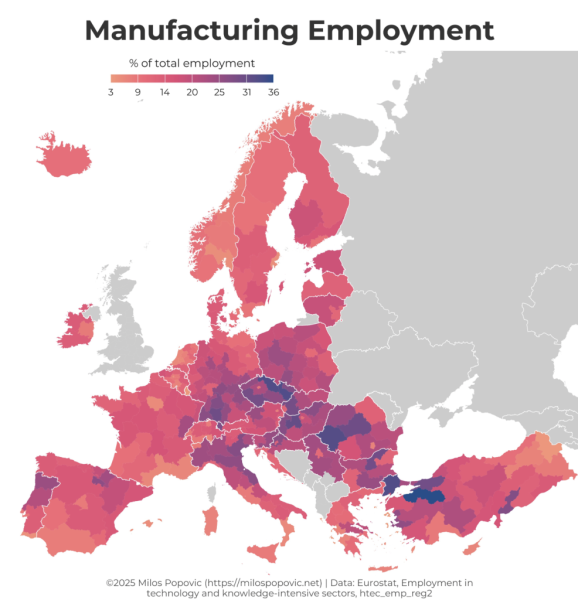
One reason for the competitive edge of the Turkish industry, alongside restrained wages and suppressed unions, is its access to affordable Russian gas and oil. The TurkStream pipeline transports gas from Russia to Türkiye across the Black Sea, which then supplies neighboring Bulgaria, Hungary, Romania, Serbia, and Slovakia.
The following 2025 map illustrates high levels of industrial employment clustered along the TurkStream route.

However, the supply of gas (and oil) from Russia appears increasingly precarious. Ukrainian forces have reportedly attempted to disrupt TurkStream for years, while assaults on Black Sea tankers have compelled Türkiye to reduce its imports of Russian oil.
Now, as Türkiye revives its support for a diplomatic resolution between Iran and the United States—an agreement likely to be disregarded at Washington’s convenience—Ankara is showing renewed interest in establishing a ceasefire in the Black Sea. Previously silent during Ukraine’s strikes and the ensuing Western media praise, Türkiye’s stance has shifted as Russia retaliates forcefully.
Controlling access to the Black Sea from the Mediterranean, Türkiye seemed to contemplate imposing a “moratorium” on attacks by closing the Bosphorus and Dardanelles Straits, effectively blockading Russia. Recently, numerous vessels were delayed at the straits before being permitted to pass.
Uncertain if Moscow intervened to address this potential threat continues to linger.
Türkiye heavily relies on Russian and Ukrainian grain imports, and Russia holds considerable leverage over Türkiye’s economy through oil, gas, tourism, and agricultural imports.
This raises the question: What options does Erdoğan have? Should he watch as Russia takes control of the Ukrainian Black Sea coast?
Some might argue that such an outcome would serve long-term regional stability better than the Azovites reportedly planning to sabotage TurkStream.
However, the aspiration of Erdoğan and much of Türkiye’s ruling elite for decades has been to “restore” Turkish power. Achieving this neo-Ottoman vision necessitates bolstering influence in areas currently dominated by Russia and Iran before it can emerge as a true global power. While this might seem far-fetched, ambitions like those depicted in maps showcasing unified Turkish territories across Central Asia, extending into Russia and China, reflect this lucrative long-term goal.

In 2021, Devlet Bahceli presented the “Turkic World” map to Turkish President Recep Tayyip Erdogan.
After years of stagnation in pursuing such a strategy, which saw Turkish influence abroad dwindle and Erdoğan narrowly avoid electoral defeat, the tide has recently begun to turn. The overthrow of Bashar al-Assad in Syria stands as a key achievement, alongside the successful establishment of a corridor through southern Armenia connecting Türkiye and Azerbaijan, as Ankara deepens its influence in Central Asia.
Türkiye’s reintegration into NATO reflects its ongoing aspirations, particularly through the formation of its Islamic NATO. Although close to facing downfall, Erdoğan’s expansion strategy is finally yielding results. Yet, the unexpected empowerment of both Iran and Russia presents a challenge.
Erdoğan is now tasked with finding a delicate balance. How can Türkiye effectively counter Moscow and Tehran without igniting direct conflict that could lead to severe economic ramifications? The answers are not straightforward.
While Russia continues its blockade of Odessa, striking an air-defenseless Ukraine, NATO seems powerless to intervene. Türkiye is planning to send additional arms to Ukraine, including cluster munitions, but this will not provide the air defense the nation desperately needs. The resulting harm inflicted on Russian troops and civilians, while potentially significant, will not alter the course of the war and will likely damage Turkey-Russia relations.
Russia demanded explanations from the U.S. and Türkiye over reports of plans to transfer a “substantial arsenal” of American weaponry held by Ankara to Ukraine, warning it would cause “serious harm” to bilateral relations, according to the spokeswoman for Russia’s…
— Faytuks Network (@FaytuksNetwork) August 15, 2026
If these relations deteriorate significantly, Türkiye’s ambitions to become a defense industrial hub would face serious setbacks. Approximately 40% of Türkiye’s gas imports come from Russia, and it sources nearly half of its oil imports from there as well. Moreover, Türkiye imports a significant amount of gas from Iran.
This reality underscores the limitations of Turkish-Washington strategic alignment. While advocates of a new Cold War may hastily advocate for Türkiye to confront Iran and/or Russia, Erdoğan possesses a knack for navigating through conflicts, maintaining economic ties with both nations, while also collaborating with NATO—and maneuvering so Türkiye thrives in the power dynamics. Although skilled, Erdoğan is approaching 73 and appears fatigued. The question remains whether his successor can match his geopolitical expertise.


