For over thirty years, Theodore Postol, a physicist and professor emeritus at MIT, has stood as a vocal critic of U.S. missile-defense initiatives. Having served as a scientific advisor to the Chief of Naval Operations and as an analyst at the Congressional Office of Technology Assessment, Postol is equipped with the technical expertise that typically commands respect within the defense establishment. Yet, his continual challenges to the government’s assertions about missile-defense effectiveness have often set him apart from mainstream consensus.
Postol’s enduring critique raises a significant question that transcends missile defense: Why is it that critical information about the performance of defense programs often fails to stop or significantly alter their trajectory when it could potentially save vast resources downstream? The easy answer might be corruption or incompetence, but neither notion fully captures the reality. The defense community includes numerous capable professionals, and dissent is not silenced. Engineers highlight shortcomings, testing organizations report failures, the Government Accountability Office (GAO) issues critical assessments, Congress conducts hearings, journalists investigate, and external experts raise alarms. Much of this criticism is technically sound and, in many instances, validated by subsequent events.
The more complex issue lies in the inability of critical information to shape the advancement of programs. Weapons initiatives progress through pivotal decisions—development phases, design evaluations, production approvals, budget allocations, operational tests, and full-scale production. These milestones determine a program’s destiny. Not every critique needs to be satisfactorily resolved for a program to move forward; it only needs to clear the next hurdle. Understanding how persistently troubled programs manage to do this is the focus of this analysis.
The Remarkable Professor Postol
Ted Postol gained prominence as a missile-defense skeptic following the Gulf War in 1991. The Patriot missile was heralded during the conflict for its alleged impressive success rates against Iraqi Scud missiles, with President George H. W. Bush even proclaiming it as proof of effective missile defense. Postol was unconvinced. Collaborating with George Lewis from MIT and analyzing television footage of Patriot engagements, he asserted little evidence existed to confirm that the Patriot missile had effectively destroyed enemy warheads. In testimony before Congress in 1992, he posited that the interception rate might have been below 10 percent, and potentially zero. A subsequent House investigation corroborated that there was scant evidence of successful interceptions against Scuds.
This critique did not stem from a novice; Postol had previously assessed the MX missile for the Congressional Office of Technology Assessment and had acted as a scientific adviser at the Pentagon on a range of topics, including ballistic missile defense. Throughout his career in various esteemed roles, including time spent at Stanford’s Center for International Security and Arms Control and MIT, he remained firmly embedded within the defense technical community he was questioning.

Yet, an unusual aspect of Postol’s journey is his persistent isolation within the critique of missile defense. The U.S. is home to a vast array of engineers and scientists capable of evaluating missile-defense assertions, backed by national labs, research centers, defense contractors, intelligence bodies, and governmental testing organizations. Remarkably, when Postol presented his challenges regarding missile defense performance, very few practitioners from this establishment publicly aligned with him.
A telling situation arose during the discourse over National Missile Defense and the capability of an interceptor to differentiate a warhead from decoys in mid-flight, an essential ability. In space, lightweight decoys can accompany a warhead without atmospheric clues that might assist in their identification. A high-accuracy interceptor might fail if it could not ascertain the appropriate target.
In a 1997 flight test that collected sensor data on a simulated warhead and decoys, disputes involving TRW, Boeing, the Missile Defense Agency, MIT Lincoln Laboratory, and engineer Nira Schwartz emerged regarding data interpretation. Postol contended that the results indicated simple decoys plausibly could not be reliably distinguished from the mock warhead, and the supporting analyses were scientifically flawed. He took his objections to Congress and the White House, navigating conflicts over classified information and the adequacy of independent technical reviews.
This controversy was not merely an academic debate over missile defense technology. The National Missile Defense program ultimately transitioned into the Ground-based Midcourse Defense (GMD) system, aimed at shielding the U.S. from long-range ballistic threats. Postol’s concerns were fundamental to the mission’s success: effective interception hinged on reliably distinguishing the incoming warhead from its accompanying decoys.
Nevertheless, the unaddressed discrimination challenge did not preclude deployment. In 2002, President George W. Bush mandated the development of an initial missile-defense capability to begin by 2004. However, the GAO later revealed that GMD had not undergone testing under unscripted, realistic conditions and that its expedited timeline permitted only cursory evaluation of performance prior to fielding. The Director of Operational Test and Evaluation flagged target discrimination as a major concern, concluding that the existing testing program was insufficient to yield reliable performance estimates for the GMD system. Yet, in 2004, GMD interceptors began entering operational silos.
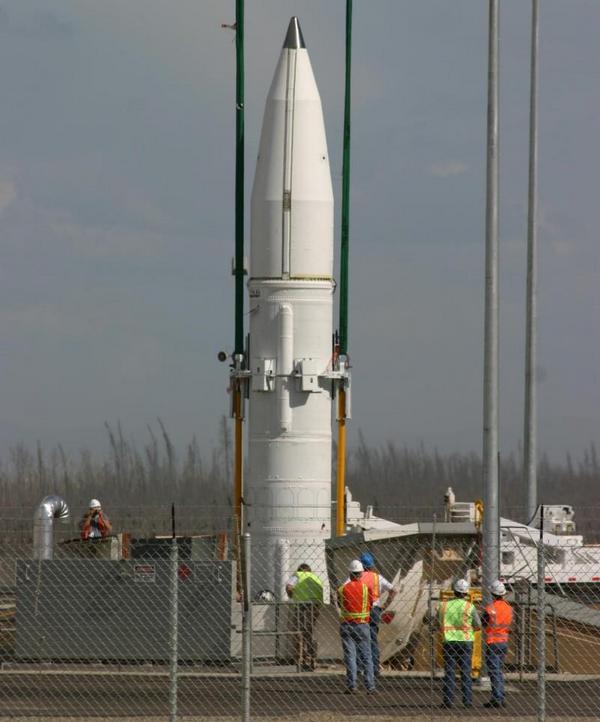
First GMD interceptor lowered into its silo at Fort Greely, Alaska, July 2004 — ready or not?
The GMD situation thus presents two interlinked puzzles. Why did Postol have so few technically equipped allies willing to amplify the discrimination critique, and why was the system deployed without demonstrable capability in such a crucial area?
The challenges Postol faced were monumental. He was contesting technical assertions from organizations wielding far greater institutional clout than his singular voice. Program officials, contractors, government labs, and other recognized experts could easily counter his claims. For a Congressman or journalist lacking the capacity to independently verify the technical analysis, the situation might have appeared to pit a stubborn professor against an impressive body of expert consensus. However, expert headcount does not equate to the quality of evidence.
Many specialists defending defense programs are affiliated with organizations responsible for the program’s design, manufacturing, testing, or management, or are indirectly linked to them. While this doesn’t imply bad faith or indicate that their technical assessments are erroneous, it does suggest that any supposed expert consensus may not represent independent evaluations. The same institutions whose performance is in question often contribute much of the expertise invoked to legitimize it.
The incentives for potential dissenters are similarly skewed. An engineer identifying a significant issue might only be responsible for reporting it and lack the authority to determine the program’s future. Publicly supporting an external critic would entail challenging colleagues, supervisors, and long-standing institutional commitments, as well as questioning technical judgments critical to the enormous expenditures at stake.
These dynamics do not necessitate conspiracy or intentional misrepresentation. Technical experts may reasonably defer to higher authorities, reviewers may believe deficiencies can be adequately mitigated, contractors may have faith in their designs, and officials might accept remaining uncertainties. While each individual position is rational, collectively they can fortify an institutional consensus against an argument suggesting that the underlying premise is flawed.
Postol’s isolation underscores a deeper systemic failure. The defense establishment may not be devoid of competent criticisms; instead, it struggles to convert these critiques into effective feedback necessary for robust development program management. Notably, it is remarkable that Ted Postol sustained his voice, yet neither his objections nor the overarching technical uncertainties surrounding GMD influenced the crucial decision: whether the system would be deployed.
The Silence of the Insiders: Criticism Without Control
The scarcity of individuals like Postol doesn’t imply major defense programs lack internal criticism. Troubled programs frequently generate substantial documentation regarding technical flaws, failed tests, budget overruns, schedule delays, and unmet requirements. Engineers raise alarms, testing organizations note failures, review teams investigate, the GAO provides assessments, and Congress holds hearings. The enigma lies not in the absence of dissent but in the inability of that dissent to dictate program trajectory.
A contributing factor here is the fragmented responsibility within the defense establishment. An engineer pinpointing a serious flaw may lack the authority to decide on the program’s continuation. The engineer registers the issue, a technical organization assesses it, a contractor suggests remedies, program management gauges cost and schedule impacts, and a review board classifies the deficiency. Higher officials ultimately decide whether the remaining risks are acceptable. Each party fulfills a rational and expected role, yet none is tasked with answering the broader question: Should this problem halt the program?
This is a manifestation of fractional sanity: while individual actions are rational, they can converge to create an irrational collective result. The engineer has flagged the issue, the contractor has proposed a fix, the review board has evaluated, and the program manager has weighed technical, financial, and scheduling factors. However, responsibility for the final outcome is diffused throughout the system.
The procedure can also lead to a state of procedural absolution. Once an objection is documented, investigated, and formally assessed, the organization can assert that it has taken the matters seriously. The protocol becomes a form of institutional accountability, even if it fails to impact the program’s direction.
Criticism and control are not synonymous. A thermostat accurately reporting the temperature does not regulate a furnace unless its information is linked to a mechanism that can shut the furnace off. Similarly, an acquisition system might have excellent sensors—engineers, testers, auditors, the GAO, congressional oversight—yet lack robust negative feedback if their findings aren’t tied to decisions capable of ceasing or redirecting a program.
The sheer volume of criticism can cloud this distinction. A troubled program may accrue hundreds of issues, each warranting its own investigation or mitigation. Critics often believe that the cumulative weight of these objections strengthens their position. However, institutionally the opposite may occur.
What truly matters is where criticism gains potency. A defense program must move through development approvals, design reviews, budget allocations, production authorizations, operational tests, acceptance, and full-scale production. These are the key junctures where criticism could either halt or redirect a program.
Proponents of a program therefore do not need to address every objection; they simply need to survive each hurdle until the next pivotal decision. While critics may contest various technical issues, the program must only navigate a limited number of critical gateways.
The process does not require silencing criticism. Those critiques may remain documented, technically accurate, and officially acknowledged—it is just that they cease to be decisive. The critical question is not whether a problem has emerged, but whether it possesses the authority to keep the next gate closed.
Candidate Show-Stoppers That Did Not Stop the Show
The GMD initiative is not an outlier; a similar pattern can be observed across the U.S. defense apparatus. Major programs have subjected themselves to significant concerns that should have raised fundamental questions about the wisdom of ongoing investment. Yet, these programs pressed ahead.
Labeling these deficiencies as candidate show-stoppers does not imply that each one warranted cancellation. The crucial question is whether the acquisition framework had predetermined which failures would be severe enough to preclude passage through the next vital commitment gate.
Stalling at a gate does not inherently mean terminating a program. It typically signals a less dramatic recommendation: delay the next major commitment until the identified issues are rectified and the required capability is shown. Development can persist, redesigns can occur, and testing can be repeated. Cancellation becomes imperative only when correcting a deficiency proves impractical within acceptable costs or timelines.
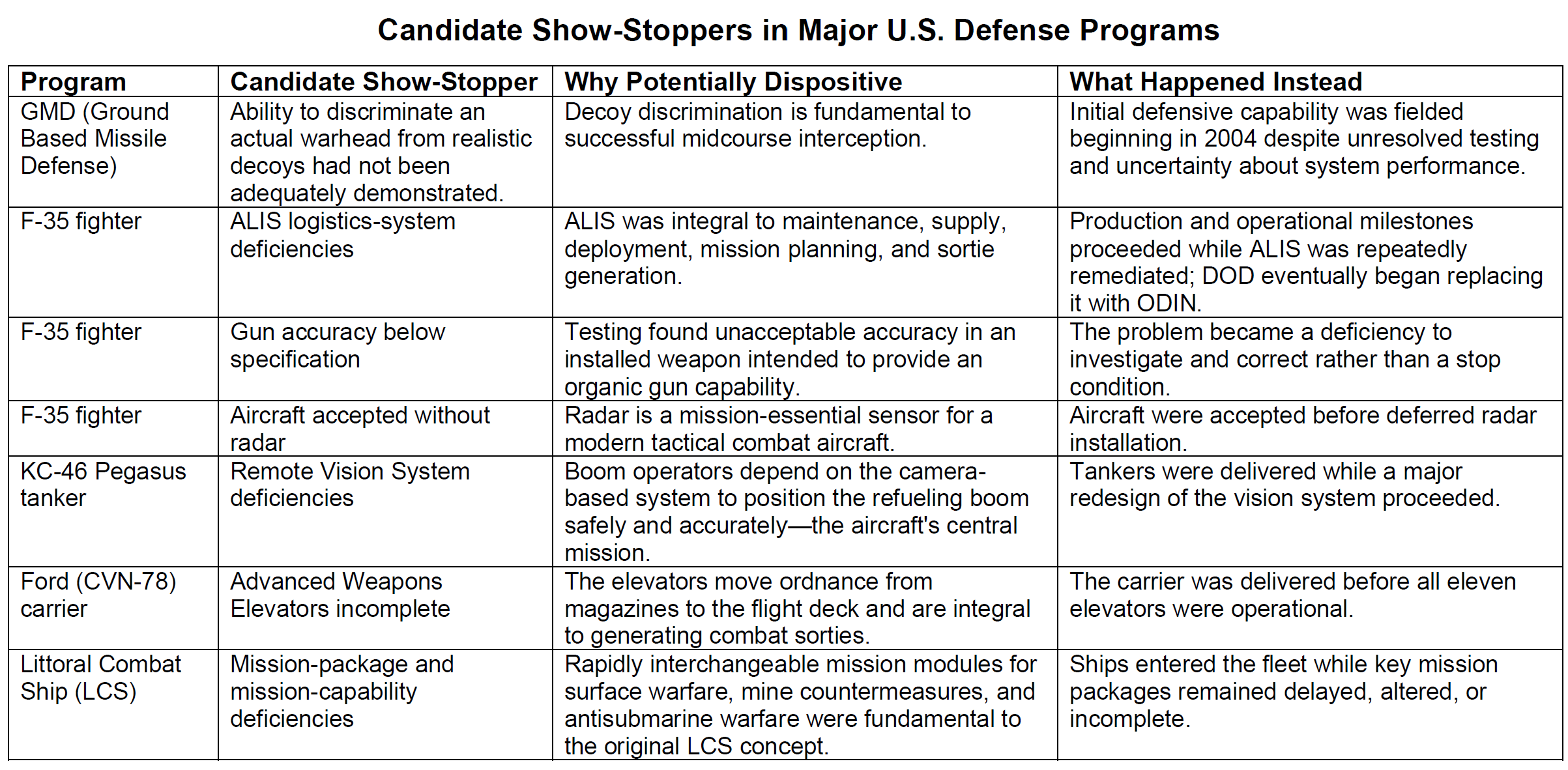
While these instances vary technically and operationally, some deficiencies were eventually resolved. What they uniformly share is encountering an issue that could reasonably spur fundamental questions about operational readiness yet still saw institutional commitment persist as the deficiency traversed downstream. This shift alters the nature of the problem; before production, an inadequate design is primarily an engineering concern. After production begins, it evolves into a mix of engineering, retrofitting, costs, scheduling, and operational complexities. Once equipment is delivered, reversing course becomes increasingly difficult.
The GMD case offers particularly valuable insights as it connects directly to Postol’s critiques. Distinguishing between a warhead and plausible decoys was not a secondary capability; it was essential for successful midcourse interception. Yet the program advanced toward deployment without operationally realistic tests demonstrating that ability. What should have been a prerequisite for fielding transformed into an aspect to be investigated and improved post-deployment.
The scenarios raise a more pressing question than whether a particular deficiency justified cancellation: What, precisely, would have prevented these programs from crossing to the next stage? If the assessment is made only after a problem comes to light, then requirements are susceptible to reinterpretation. A capability that is deemed essential during the program’s justification can be deemed non-essential when a failure threatens progress. A prerequisite can be transformed into a future upgrade, and an unacceptable test result can become an acceptable risk.
A genuine show-stopper operates differently. Its implications are set prior to the results: If criterion X has not been validated by gate Y, the program cannot advance past gate Y. The defense acquisition system already encompasses numerous check-ins where such a stipulation could function. The pressing inquiry is whether those gates retain proper stopping power.
The Gates of Defense Program Fate
The gates discussed herein are not mere metaphors; they exist as formal milestones, technical evaluations, testing decisions, production approvals, budget allowances, and government acceptances. Each serves as an opportunity to assess whether a program is advanced enough to warrant further commitment.
The Department of Defense’s acquisition framework has experienced numerous changes, with current programs potentially following varied pathways. However, the traditional Major Capability Acquisition framework presents a basic outline: a Materiel Development Decision marks the initiation of potential solutions; Milestone A may authorize technology maturation and risk reduction; Milestone B generally commences engineering and manufacturing development; and Milestone C permits the transition to production and deployment. Operational testing and the Full-Rate Production Decision offer additional chances to evaluate readiness for mass procurement.
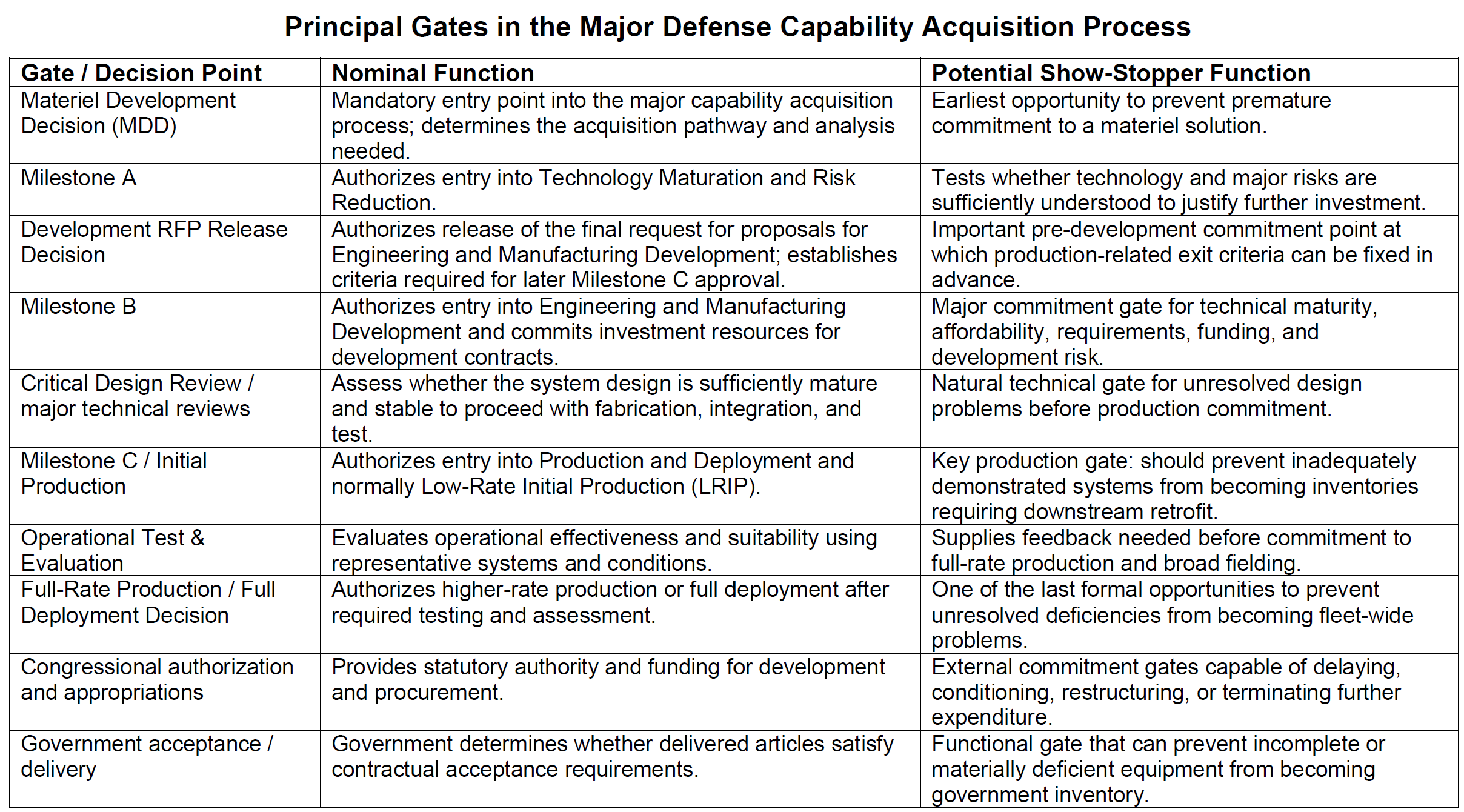
Formal milestones are not the only consequential gates. Design reviews, budget approvals, contract announcements, subsequent production lots, operational declarations, and acceptance of received equipment can all ramp up commitment. Their shared characteristic is straightforward: each can increase the cost of saying no later.
However, the strength of a gate is contingent on the criteria controlling its passage. If unmet requirements can be waived, failed tests postponed, immature capabilities accepted as future improvements, or missing components added post-delivery, the gate might retain administrative significance while becoming functionally ineffective.
Not all gates hold equal weight. The most significant are those that notably increase the cost of reversal. The measure of discipline in acquisition hinges not on how many reviews a program undergoes or the volume of documentation produced, but on whether recognizable conditions exist under which the reviewing authority will reject permission to move ahead. A genuine decision gate necessitates an authentic stop criteria.
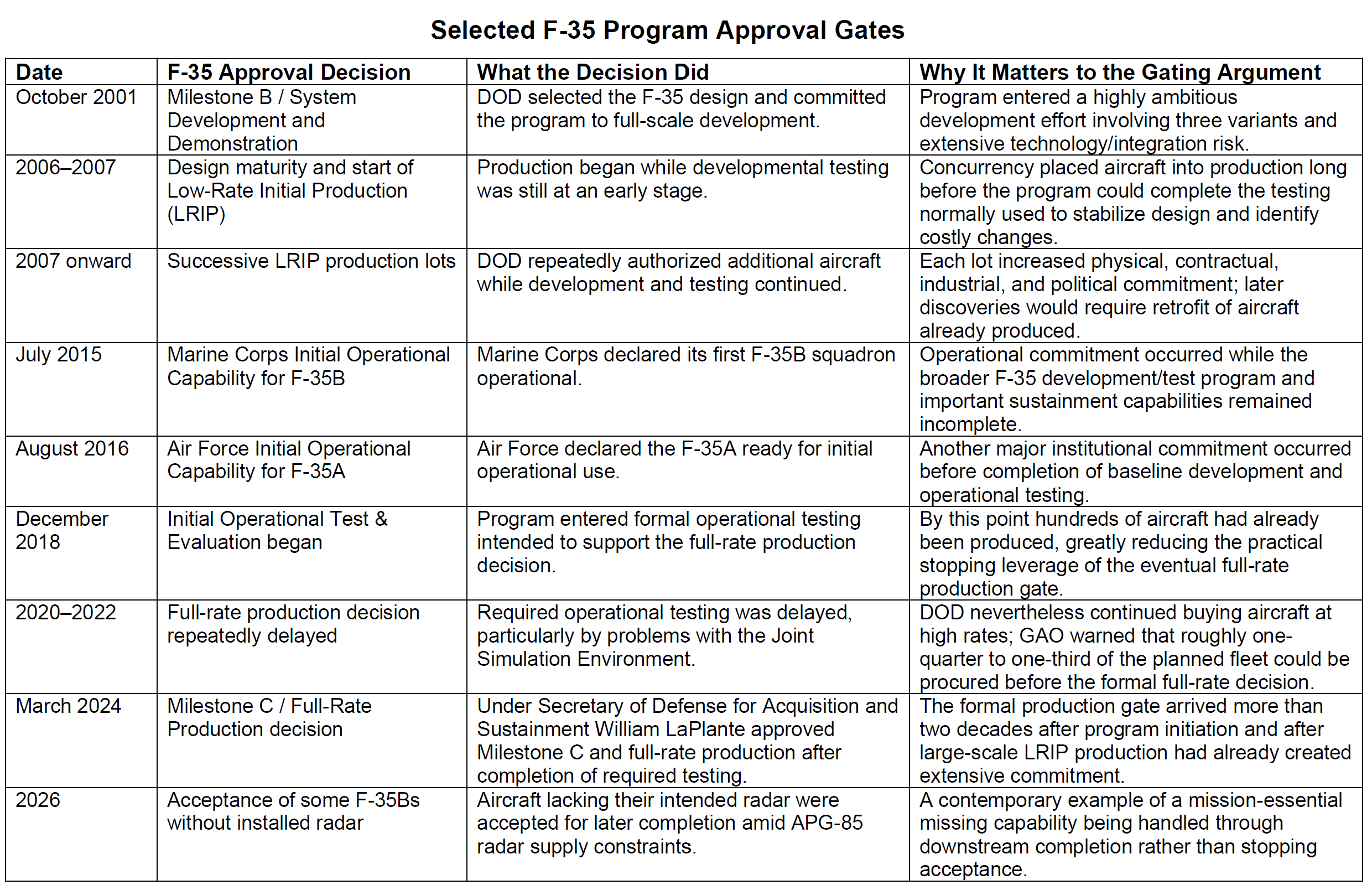
The F-35 provides a striking illustration of how these gates can lose their controlling function. The table below highlights the key decision gates that the program traversed.
The F-35: How a Program Became Unstoppable
The F-35 serves as a remarkable case study illustrating what transpires when program commitment overwhelms the gates designed to regulate it. As the most expensive weapons initiative in Department of Defense history, aimed at producing thousands of aircraft for U.S. and allied forces, its scale renders errors particularly consequential and remediation efforts extremely costly.
A pivotal decision within the F-35 program was concurrency: the overlapping of development, testing, and production stages. While this approach promised expedited fielding, it resulted in aircraft entering production before testing could identify necessary design adjustments that could have been incorporated beforehand. Each aircraft produced prior to design finalization consequently increased the requirement for potential alterations down the line.
Thus, concurrency altered the feedback architecture of the acquisition system. Traditionally, testing provides information that prevents an immature design from propagating into production. However, under excessive concurrency, testing began to report problems in aircraft already built or ordered. Reasons not to produce became requirements for later retrofitting.
Subsequent low-rate production lots exacerbated the situation. Each additional batch of aircraft deepened the commitment from suppliers, military units, allies, and planning organizations, raising potential costs of remediation. The formal Full-Rate Production decision was still years away even as the decision to produce aircraft in high volumes was being undertaken incrementally.

F-35s at Hill Air Force base – too many produced too soon?
By the time the formal decision arrived in March 2024, over two decades post-initiation, manufacturing had already been operating at or near maximum capacity for several years with hundreds of aircraft delivered. The gate that was meant to ascertain readiness for larger-scale production arrived only after such production had already proceeded.
The F-35’s Autonomic Logistics Information System (ALIS) further illustrates how a critical problem evolved into a downstream remediation issue. ALIS was crucial for maintenance, supply, deployment, mission planning, and other essential functionalities. Yet, the Marine Corps declared the F-35B operational in 2015 without comprehensive testing of the ALIS system for deployability. The GAO subsequently raised concerns about serious infrastructural and operational challenges. Rather than hindering the operational milestone, ALIS became an ongoing project to be resolved. Persistent problems led to the Pentagon ultimately replacing the system with ODIN. A function deemed critical to F-35 operations did not halt the program’s progress.
Issues surrounding gun accuracy provide a simpler example. Operational testing indicated that the internally mounted F-35A gun produced unacceptable accuracy and could not meet its specifications. However, rather than becoming a stop condition, it became just another issue to investigate and correct. One might reasonably comment that gun accuracy should not determine the fate of an aircraft whose primary abilities lie elsewhere. But this raises a crucial gating question: Was acceptable gun accuracy a mandatory capability that had to be demonstrated prior to advancing through a designated gate, or wasn’t it?
If failure to meet a requirement does not impede the next commitment, it leaves that requirement with little capacity to constrain the program. The same logic applies to ALIS and other major deficiencies. The challenge does not lie in retrospective judgments about whether any single problem warranted halting or canceling the program. Instead, it involves whether the acquisition system established beforehand which failures would preclude further commitment.
The history of the F-35 exemplifies how a program can incrementally convert uncertainty into steadfast commitment. Production occurred prior to the completion of testing; testing revealed flaws after aircraft had been produced; problems transitioned into programs for retrofitting and remediation; and successive production and operational decisions made reversal increasingly costly. The F-35 did not become unstoppable because its issues vanished. Rather, it gained momentum because it kept advancing through approval milestones regardless of enduring serious problems.
The Defense Program Protection Playbook
The F-35 case reveals a larger institutional playbook. Critics of programs and their advocates aim at differing targets. Critics focus spotlighting technical flaws since those are often what their investigations uncover. In contrast, program advocates concentrate on approval decisions since those ultimately dictate whether programs persevere.
This inherently creates a significant asymmetry. Critics presume that the accumulation of objections bolsters their argument. Yet, an extensive list of deficiencies may dilute opposition. Each issue spawns its own point-counterpoint: one component is under redesign; software is anticipated to improve; reliability shows positive trends; another test is on the docket. Numerous concerns can thus be reframed as the typical challenges encountered in a complex development cycle. Meanwhile, the clock ticks toward the next program approval date.
Program proponents do not need to disprove every critique; instead, they only need to show that the remaining issues do not justify delaying the next approval. The process generally follows a recurring pattern:
Fragment the criticism. Treat foundational objections as disparate deficiencies requiring unique resolutions.
Process the objections. Investigate, document, mitigate, and plan for corrective measures. Criticism is enveloped rather than silenced.
Run out the clock. Technical discussions persist as the next program approval decision approaches.
Soften the criteria. A mandatory capability morphs into a remediation target; demonstrated performance morphs into expected performance levels; failure evolves into an acceptable risk for fixed future plans.
Pass the gate. Added funding gets allocated, contracts signed, equipment produced, and organizations tied in.
Move the problems downstream. Issues that could have postponed approval evolve into matters to be resolved within an already sanctioned program.
Then, this cycle resumes from a position of strengthened program momentum.
This approach has arisen from the specific incentives within the institution. Program offices aim to deliver their projects. Contractors strive to fulfill their agreements. The military branches plan around expected capabilities, congressional districts seek job security, and allied nations fulfill commitments. Each participant has valid reasons to continue advancing.
Thus, every gate successfully navigated reshapes the dynamics of the next encounter. More resources become irretrievably tied up; more organizations start depending on the program; and more viable alternatives get eliminated. The acquisition framework develops a commitment ratchet: every subsequent gate becomes easier to cross.
This dynamic explains how highly critical testing findings, GAO reports, congressional inquiries, and engineering evaluations can coexist alongside the continued growth of a program. The criticism may be entirely valid, yet it does not factor into the critical decision-making processes. The lesson for reform advocates is counterintuitive: effective criticism is less about quantity and more about leverage. A hundred valid concerns scattered throughout may carry less weight than a single unmet criterion that must be satisfied before the next gate can open.
Restoring Effective Defense Program Approval Practices
If program continuity relies on successfully navigating successive decision gates, the strategy for reform is clear: make those gates more stringent when significant requirements are unmet. This does not necessitate establishing an entirely new layer of defense bureaucracy; the acquisition system already encompasses milestone reviews, design assessments, production decisions, operational testing, budget authorizations, and acceptance resolutions. What is essential are reinforced stop conditions at the most critical gates.
Congress holds the authority to enhance rigor at these decision junctures. Through authorization and appropriations legislation, it can require specific findings before allowing progress or expenditures, mandate independent testing prior to substantial production commitments, and stipulate the conditions necessary to waive essential requirements. Congress need not adjudicate technical performance directly; it can strengthen rules governing decision points at which commitment becomes challenging to reverse.
Prior to critical decisions, a small set of show-stopper criteria should be defined for major programs. These should be objectively verifiable and clearly linked to a gate, determined prior to ascertaining if the program will fulfill them: “If criterion X is unmet, the program cannot advance past gate Y.”
Critics should then focus on safeguarding these criteria rather than attempting to catalog every deficiency. A show-stopper must retain its status as such even after a program fails to meet it. An essential requirement should not quietly transform into an objective, a mandated demonstration should not shift to projected performance, and a failure should not automatically evolve into a downstream issue for correction.
Strict approval criteria do not have to be inflexible. Exceptional situations may warrant progress despite unmet criteria, but the burden should lie heavily on those advocating for exceptions. They ought to identify the failure, justify the necessity of advancement, evaluate technical and operational risks and downstream remediation costs, and undergo independent technical review. For the most consequential gates, Congress could enforce a requirement for notification or approval before implementing exceptions.
Most importantly, the decision to bypass a criterion should be transparent, with names attached. The public record should identify the officials who requested and authorized the exception along with the date and justification. Sensitive performance details can remain classified; secrecy about military capabilities does not necessitate obfuscation regarding decision-making processes. The goal is not to penalize officials whose sound judgments later prove wrong but to ensure that responsibility remains tied to identifiable individuals, compelling key issues to be resolved while commitments can still be adjusted.
The proposed reform agenda calls not for increased reports or more critics but for fewer, more stringent criteria linked to consequential decisions. The acquisition system already includes gates; the task at hand is to restore their intended controlling function.
Conclusion
Ted Postol’s journey serves as a cautionary tale, not merely due to his concerns about missile defense systems but emphasizing a broader issue: a defense establishment with vast technical capabilities should not rely solely on rare individuals willing to engage in prolonged public disputes to bring serious technical criticisms to light.
The challenge is not a lack of critiques. Troubled weapons programs are often plagued with warnings, test failures, audits, and congressional inquiries. Defense critics have made valid points, exposing issues, questioning official assertions, and frequently being validated by ensuing developments. However, the establishment appears to be prevailing in securing government endorsements while simultaneously racking up a record of poorly managed programs.
What truly counts is not the tally of identified deficiencies or arguments won, but whether a troubled program receives developmental approvals, appropriations, production authorizations, operational declarations, or acceptance decisions. Program proponents merely need to circumvent the current approval gate; once they achieve that, further commitments complicate future challenges.
Moreover, Congress can bolster this strategy by fortifying existing gates: insisting on independent verification of essential criteria, imposing stringent justification requirements for exceptions, and ensuring accountability for overrides. The aim is not mere oversight for its own sake, but to reconnect critical feedback to decisions that dictate program outcomes.
The defense establishment requires a system in which valid technical concerns are heeded before programs achieve unstoppable momentum. The dysfunction experienced in the current defense program sustainment approach entails navigating approval gates by weakening or bypassing their stipulated criteria. The suitable reform strategy involves reinforcing those gates to restore their necessary regulatory function.
Ted Postol’s unwavering campaign may not have led to the results he sought, yet his profound isolation underscores a more significant issue: a defense establishment capable of producing ample internal technical critique while frequently disregarding those criticisms in ways that could undermine U.S. national interests.


