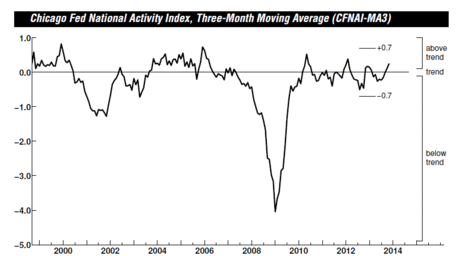
The outlook for the U.S. economy has shown some promising signs, suggesting a period of growth. Recent data indicates that economic expansion is gaining momentum, particularly highlighted by the Chicago Fed National Activity Index, which reached +0.25 in November—the highest reading since February 2012. This signals that the U.S. economy is operating at its most vigorous pace in nearly two years.
November also saw a notable increase in consumer spending. Personal consumption expenditures (PCE) rose by 0.5% compared to October, marking the strongest monthly growth since June and the seventh consecutive month of rising expenditures.
“Jobs are increasing, confidence is growing, and both households and asset values are on the rise,” states Paul Edelstein, director of financial economics at IHS. “There seems to be a building momentum in the economy.”
However, it’s not all optimistic news. A persistent concern is the sluggish increase in income growth, which has emerged as a critical issue. Disposable personal income (DPI) showed a modest rise of just 0.1% in November, failing to recover from the previous month’s 0.2% decline.
While monthly figures can be erratic, a year-over-year analysis offers a clearer picture of current trends. Unfortunately, this perspective is not encouraging. DPI’s annual change has continued to stagnate, with only a 1.5% increase last month compared to a year earlier, a decline from October’s 2.6% year-over-year rate. This also represents the second-slowest growth rate so far this year.
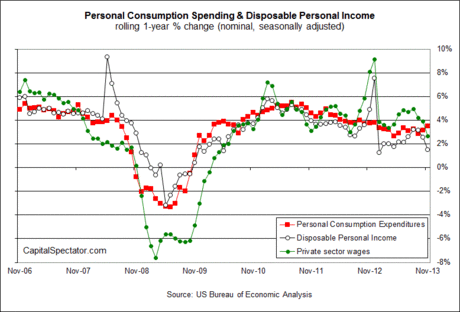
If this trend of slowing income persists, it could signal trouble for consumer spending. At present, consumer expenditures and income growth are moving in opposite directions, but this divergence is unlikely to continue. The pressing issue remains: Will spending taper off or will income improve?
The resolution to this conundrum may hinge on the labor market’s continued improvement. More job opportunities generally lead to increased income. Thankfully, recent reports indicate some positive news; for instance, the three-month average gain for private payrolls has exceeded 190,000 through October and November, surpassing the lower range of 158,000 to 167,000 seen earlier in the year.
Nonetheless, there’s a concern that this encouraging data may soon be overshadowed by troubling shifts in initial jobless claims. Recent figures indicate a surge in new unemployment claims, reaching the highest level since March for the week ending December 14. Could this be an early warning sign for 2014? It remains to be seen. Claims data tends to be volatile in the short term, but in light of the recent slowdown in personal income, we cannot overlook the possibility that the labor market could face challenges in the coming months. Updates on jobless claims expected Thursday may provide more insight, with predictions suggesting a decrease in new claims, according to Briefing.com.
In summary, while consumer spending is on the rise and economic growth shows signs of strength, the slowdown in income growth poses a potential obstacle. The forthcoming data on jobless claims may clarify whether consumers should be concerned about future trends.